The Blog

Plain-English retirement education.

Daily breakdowns of the rules, math, and decisions that shape your retirement. All current for 2026. All free.

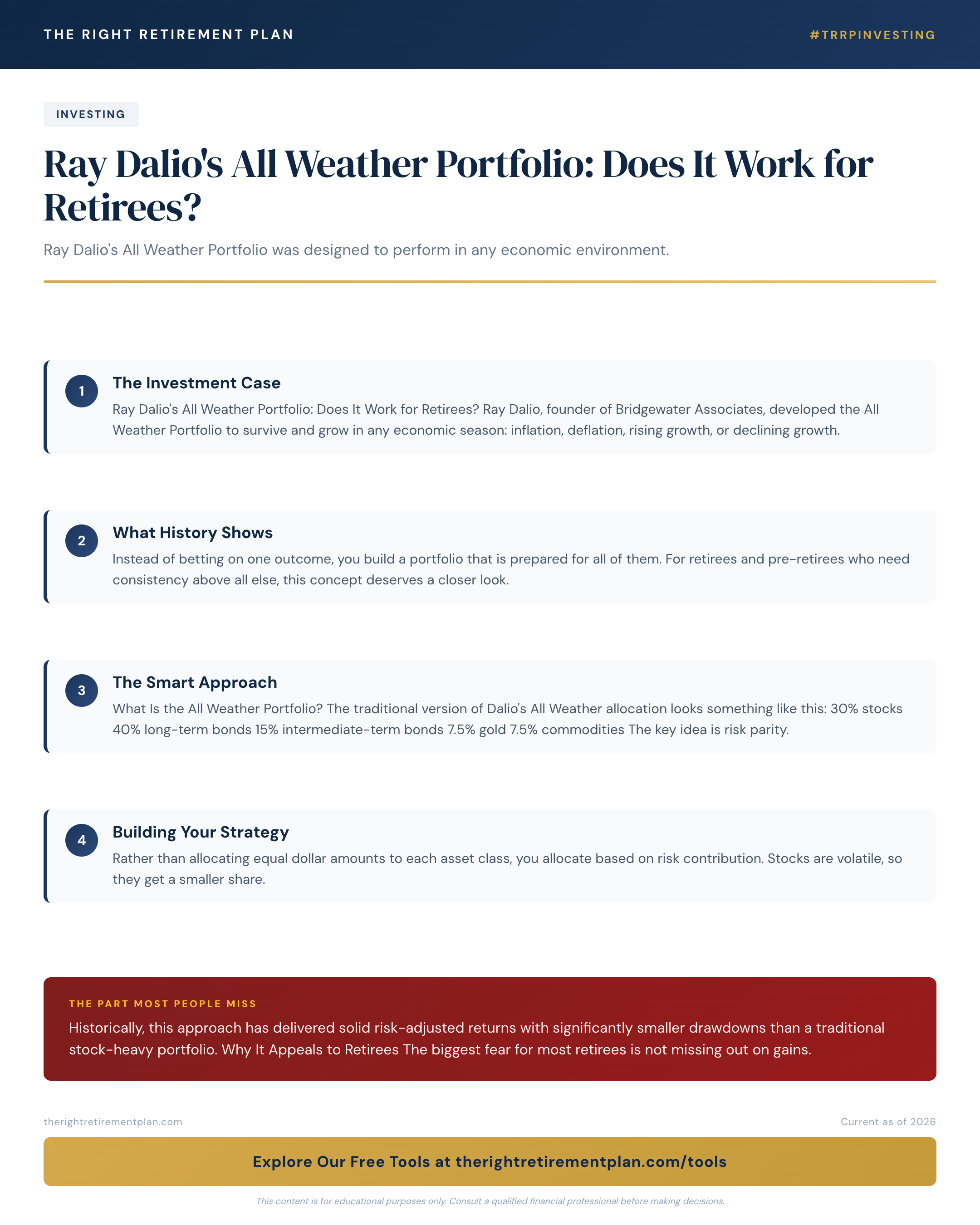
Ray Dalio's All Weather Portfolio: Does It Work for Retirees?

Ray Dalio's All Weather Portfolio: Does It Work for Retirees?

Ray Dalio's All Weather Portfolio was designed to perform in any economic environment. But does a strategy built by one of the world's largest hedge funds translate to the needs of everyday retirees? Here is what you should know before applying risk parity to your retirement savings.
Dividend Investing in Retirement: Reliable Income or False Promise?

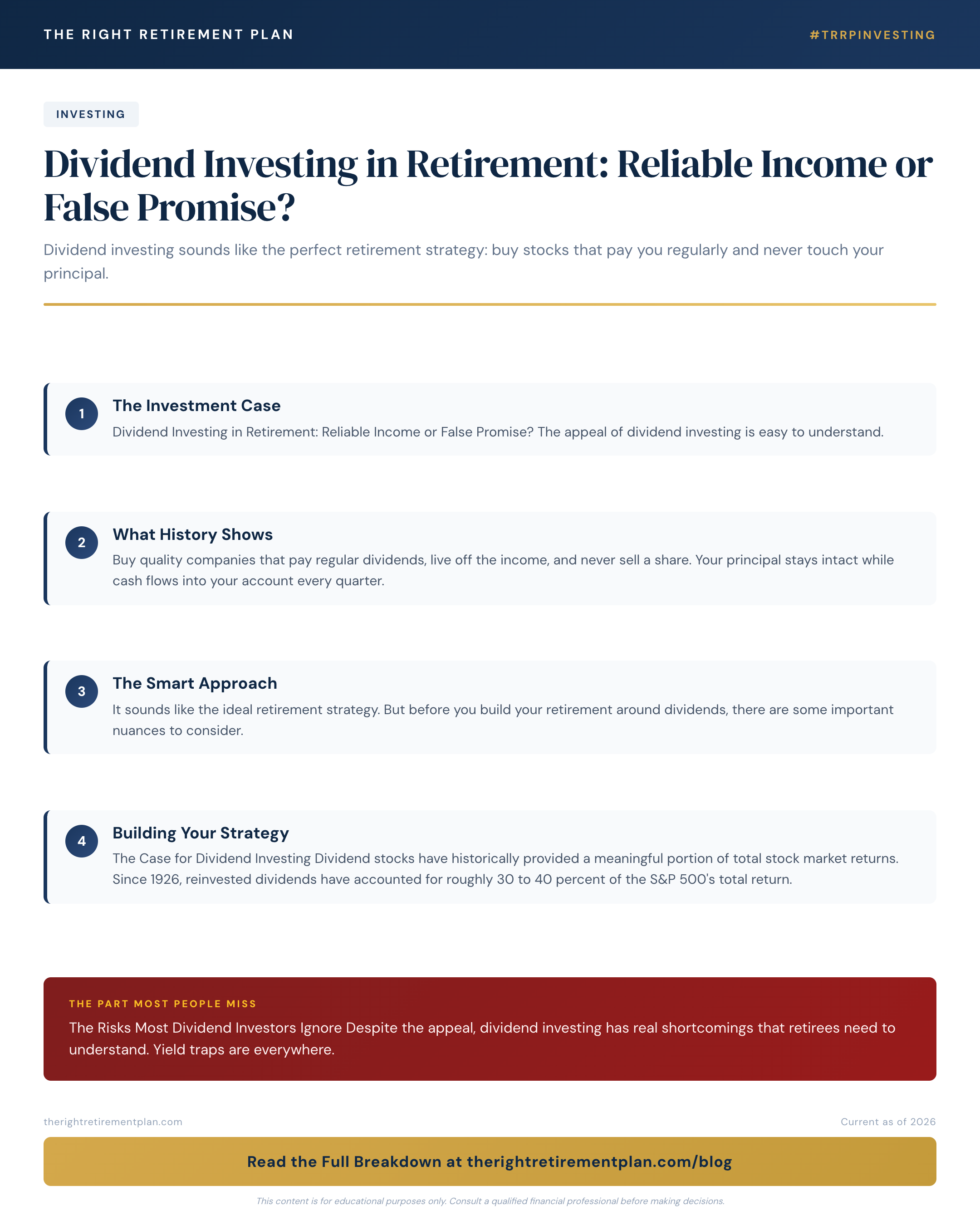
Dividend Investing in Retirement: Reliable Income or False Promise?

Dividend investing sounds like the perfect retirement strategy: buy stocks that pay you regularly and never touch your principal. But the reality is more complicated than the sales pitch. Here is what retirees need to understand before building a dividend-focused portfolio.

Index Funds vs. Active Management: What the Data Actually Shows

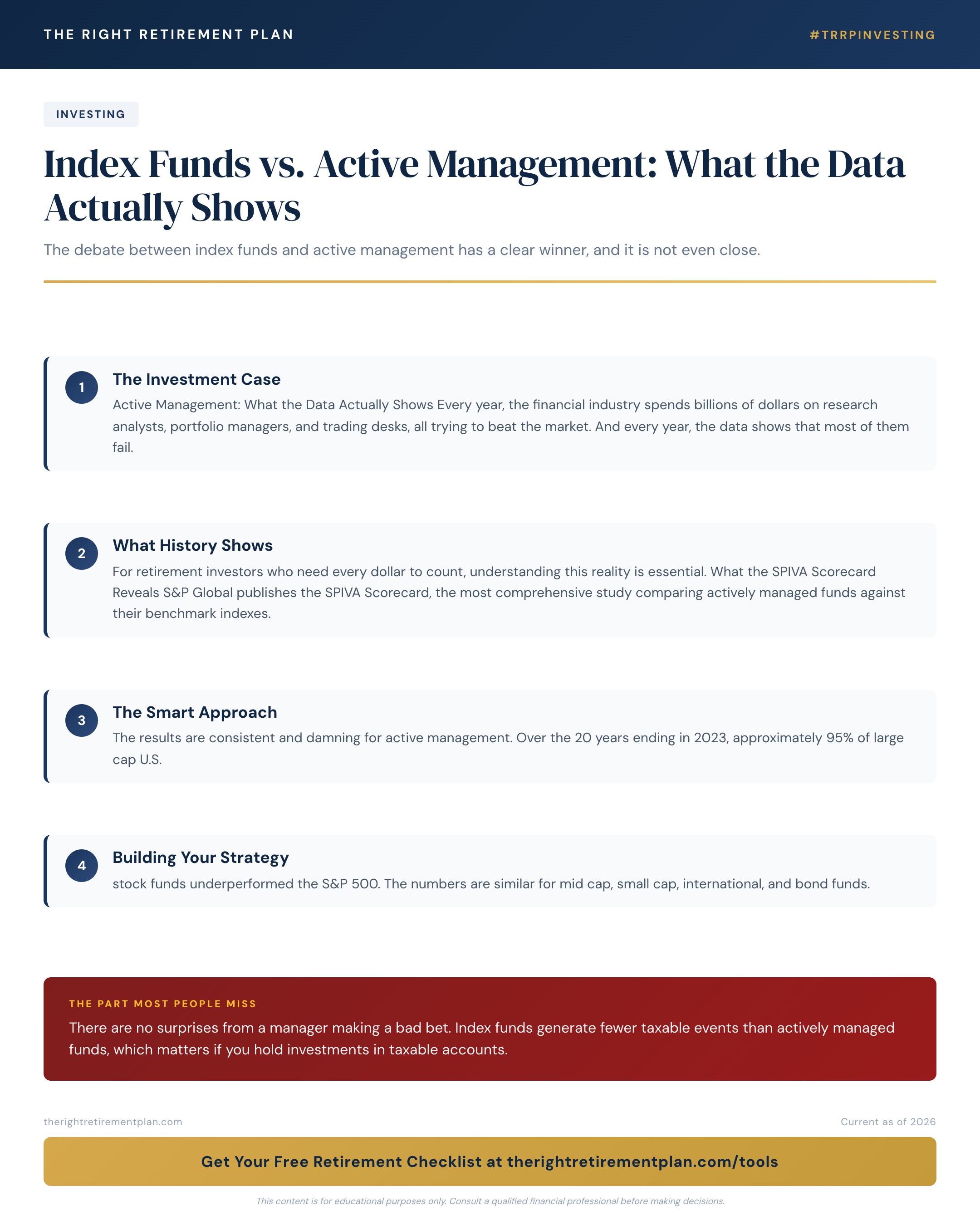
Index Funds vs. Active Management: What the Data Actually Shows

The debate between index funds and active management has a clear winner, and it is not even close. Here is what decades of data reveal about fund performance and why the cost difference matters even more when you are investing for retirement income.

Why International Diversification Matters Even in Retirement

Why International Diversification Matters Even in Retirement

Most American investors hold the vast majority of their stock portfolio in U.S. companies. That home country bias may feel comfortable, but it introduces a concentration risk that could cost you dearly in retirement. Here is why going global still matters after 60.

The Three Bucket Strategy: Organizing Your Retirement Portfolio

The Three Bucket Strategy: Organizing Your Retirement Portfolio

The three bucket strategy gives retirees a clear framework for organizing their money by time horizon. By separating short-term spending from long-term growth, you can weather market downturns without disrupting your income or your sleep.

Warren Buffett's Rules for Retirement Investors

Warren Buffett's Rules for Retirement Investors

Warren Buffett has spent decades building wealth with a handful of timeless principles. Here is how his buy and hold philosophy, margin of safety thinking, and circle of competence framework apply directly to investors who are 5 to 10 years from retirement.

The 60/40 Portfolio Is Not Dead: Why Balanced Investing Still Works

The 60/40 Portfolio Is Not Dead: Why Balanced Investing Still Works

After a brutal 2022 for both stocks and bonds, headlines declared the 60/40 portfolio dead. But decades of evidence say otherwise. Here is why balanced investing remains one of the most sensible approaches for pre-retirees building a retirement income plan.

Bond Laddering: The Retirement Income Strategy Most People Overlook

Bond Laddering: The Retirement Income Strategy Most People Overlook

Bond laddering is one of the most effective ways to create predictable retirement income, yet most investors have never heard of it. Here is how this straightforward strategy works and why it deserves a place in your retirement income plan.

What Every Pre-Retiree Should Know About Sequence of Returns Risk

What Every Pre-Retiree Should Know About Sequence of Returns Risk

Two retirees can earn identical average returns over 20 years and end up with wildly different outcomes. The difference is sequence of returns risk, and it is the single biggest threat to early retirement portfolios. Here is how it works and how to protect yourself.

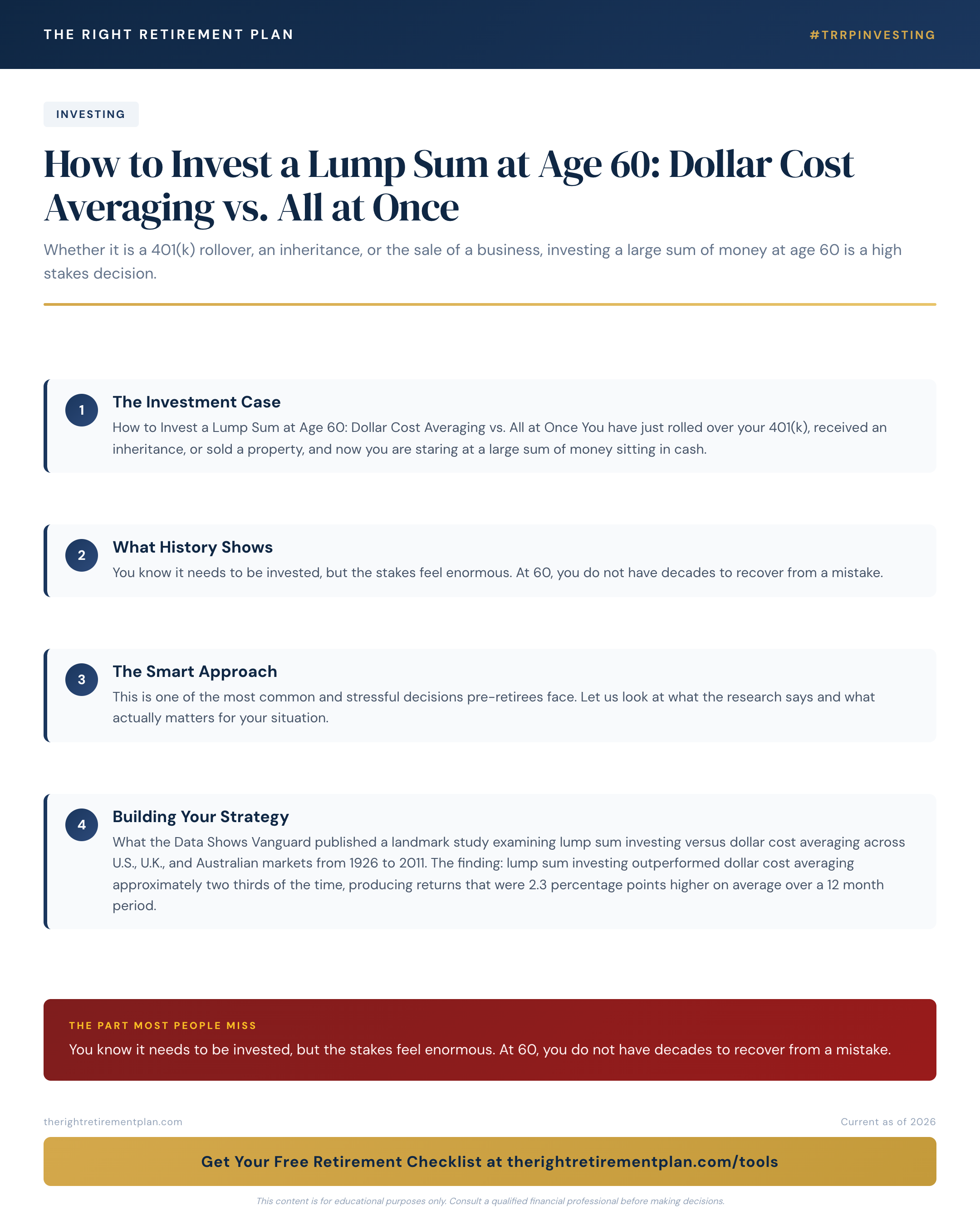
How to Invest a Lump Sum at Age 60: Dollar Cost Averaging vs. All at Once

How to Invest a Lump Sum at Age 60: Dollar Cost Averaging vs. All at Once

Whether it is a 401(k) rollover, an inheritance, or the sale of a business, investing a large sum of money at age 60 is a high stakes decision. Research shows that lump sum investing wins more often, but dollar cost averaging might still be the right choice. Here is why.

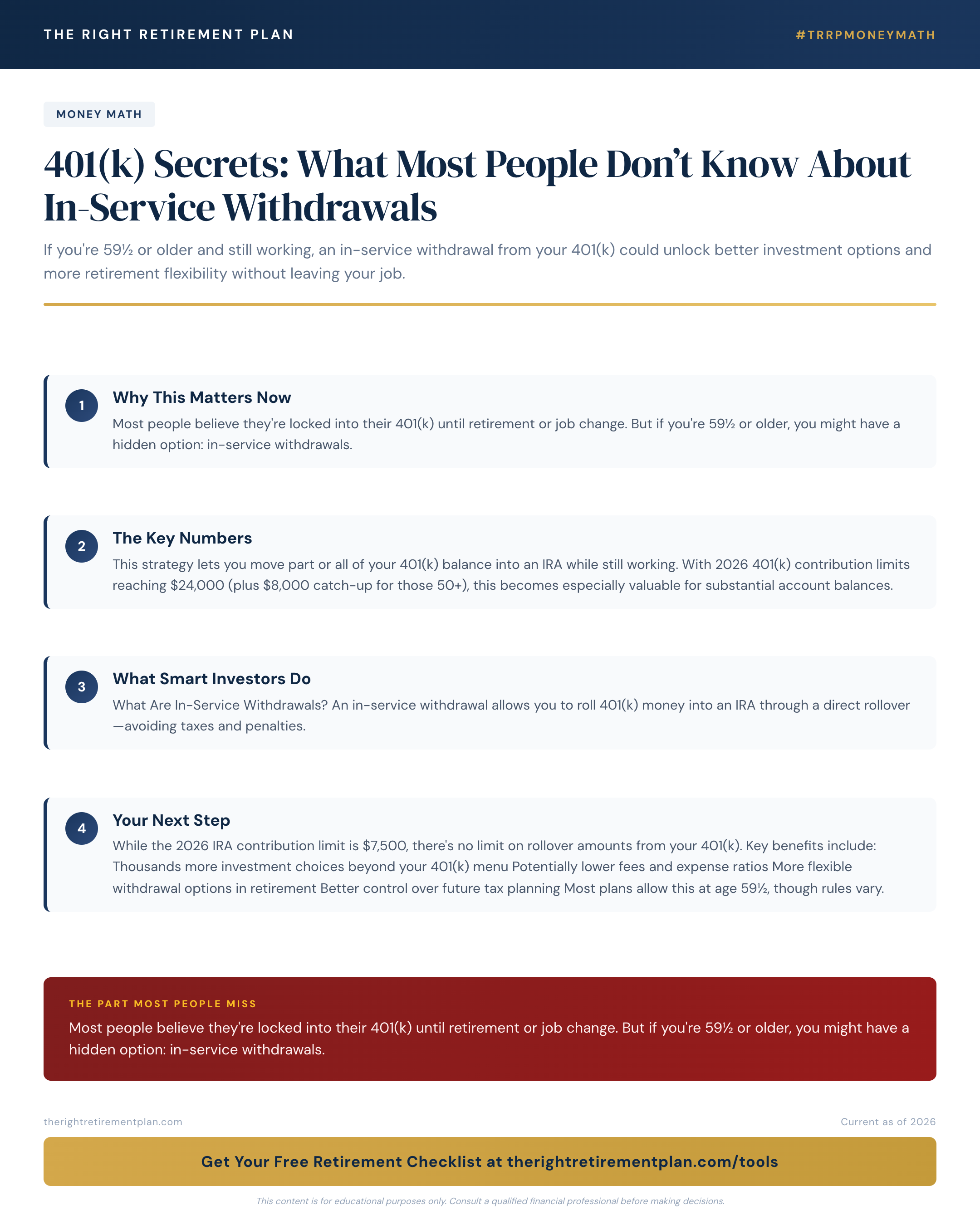
401(k) Secrets: What Most People Don’t Know About In-Service Withdrawals

401(k) Secrets: What Most People Don’t Know About In-Service Withdrawals

If you're 59½ or older and still working, an in-service withdrawal from your 401(k) could unlock better investment options and more retirement flexibility without leaving your job. Here's what Maryland pre-retirees need to know about this powerful but overlooked strategy.

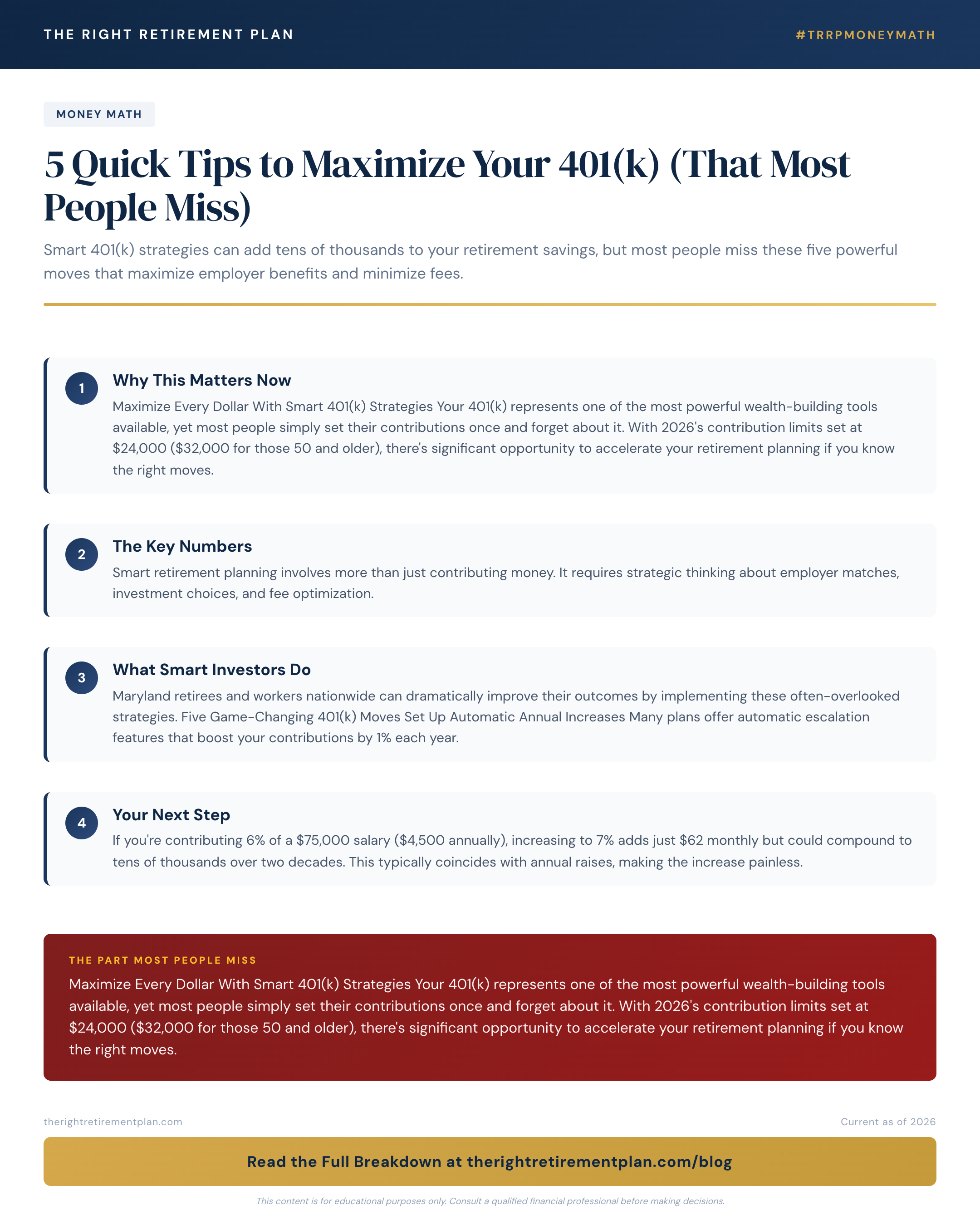
5 Quick Tips to Maximize Your 401(k) (That Most People Miss)

5 Quick Tips to Maximize Your 401(k) (That Most People Miss)

Smart 401(k) strategies can add tens of thousands to your retirement savings, but most people miss these five powerful moves that maximize employer benefits and minimize fees.

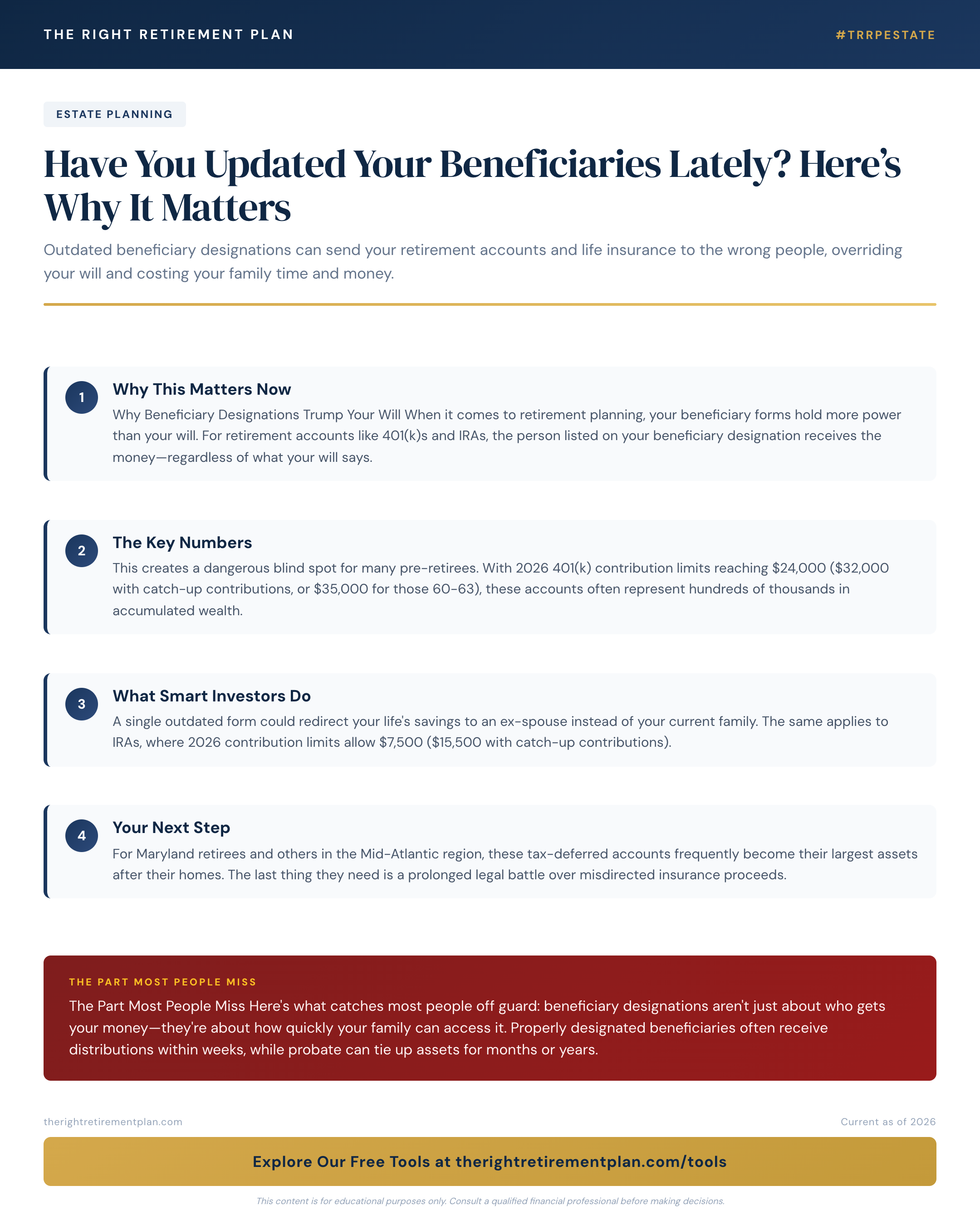
Have You Updated Your Beneficiaries Lately? Here’s Why It Matters

Have You Updated Your Beneficiaries Lately? Here’s Why It Matters

Outdated beneficiary designations can send your retirement accounts and life insurance to the wrong people, overriding your will and costing your family time and money. Here's why updating these critical forms should be on every pre-retiree's priority list.

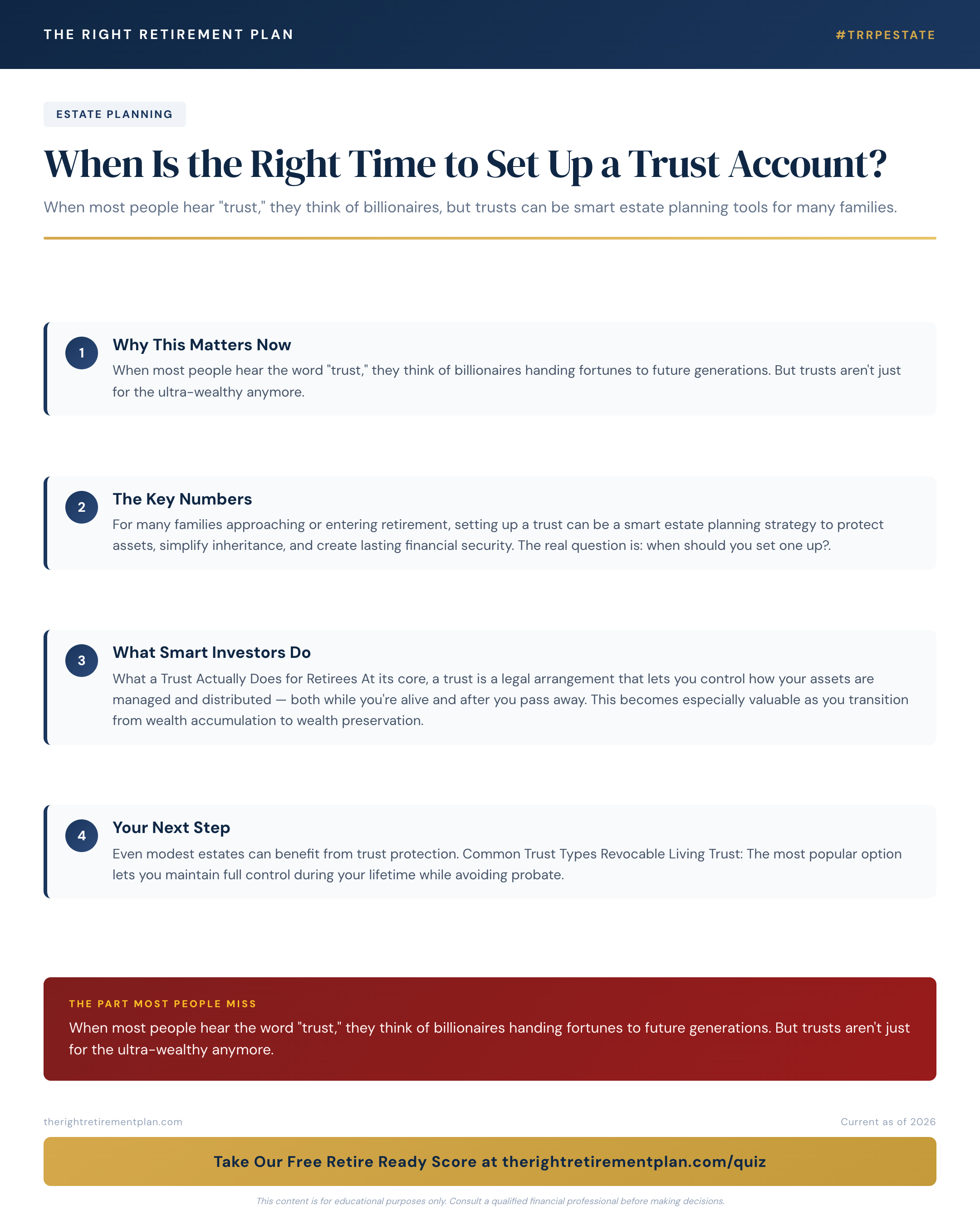
When Is the Right Time to Set Up a Trust Account?

When Is the Right Time to Set Up a Trust Account?

When most people hear "trust," they think of billionaires, but trusts can be smart estate planning tools for many families. Understanding the right timing can help protect assets, simplify inheritance, and create lasting financial security during retirement.

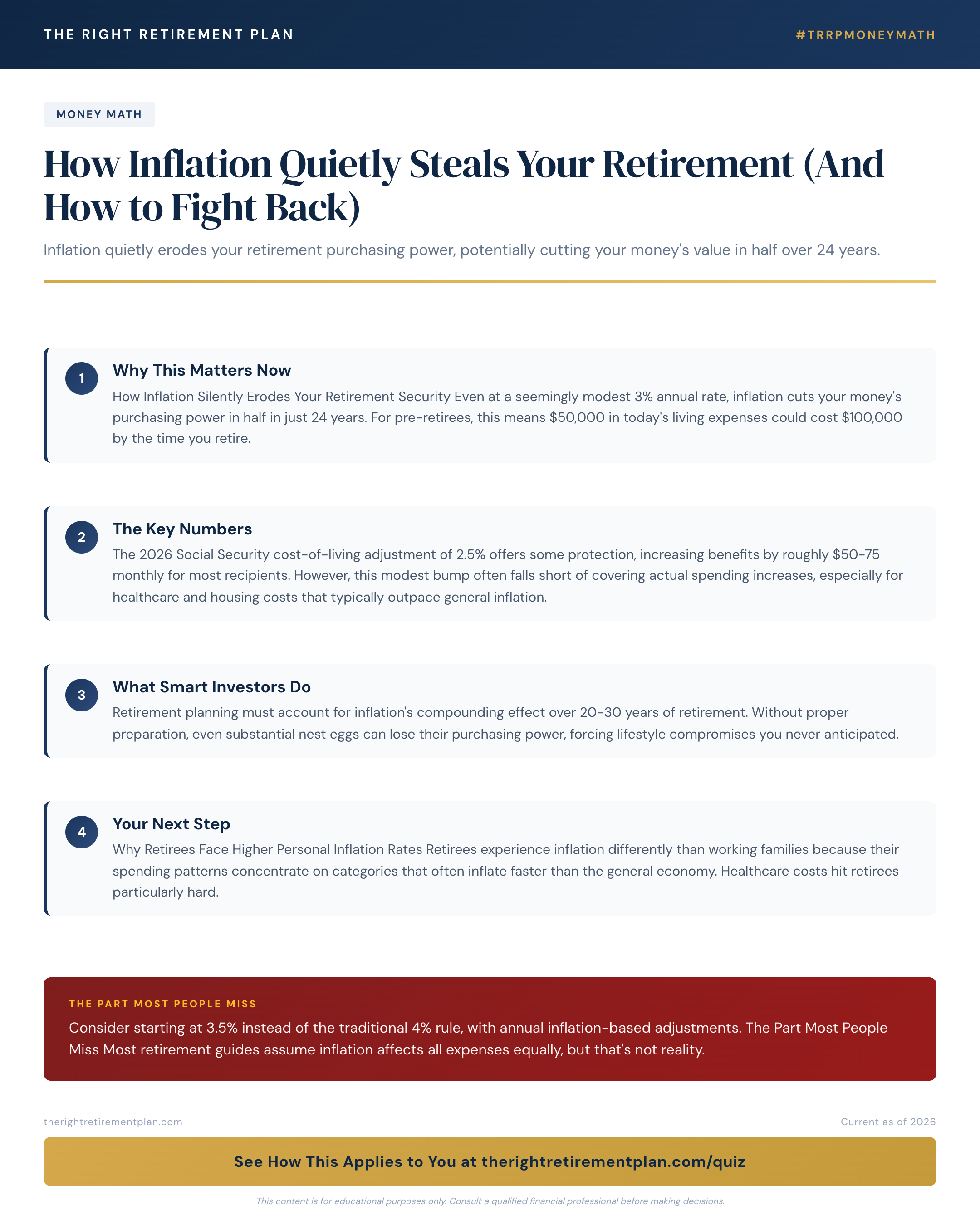
How Inflation Quietly Steals Your Retirement (And How to Fight Back)

How Inflation Quietly Steals Your Retirement (And How to Fight Back)

Inflation quietly erodes your retirement purchasing power, potentially cutting your money's value in half over 24 years. Learn how to protect your retirement savings with smart strategies that outpace inflation's silent impact.

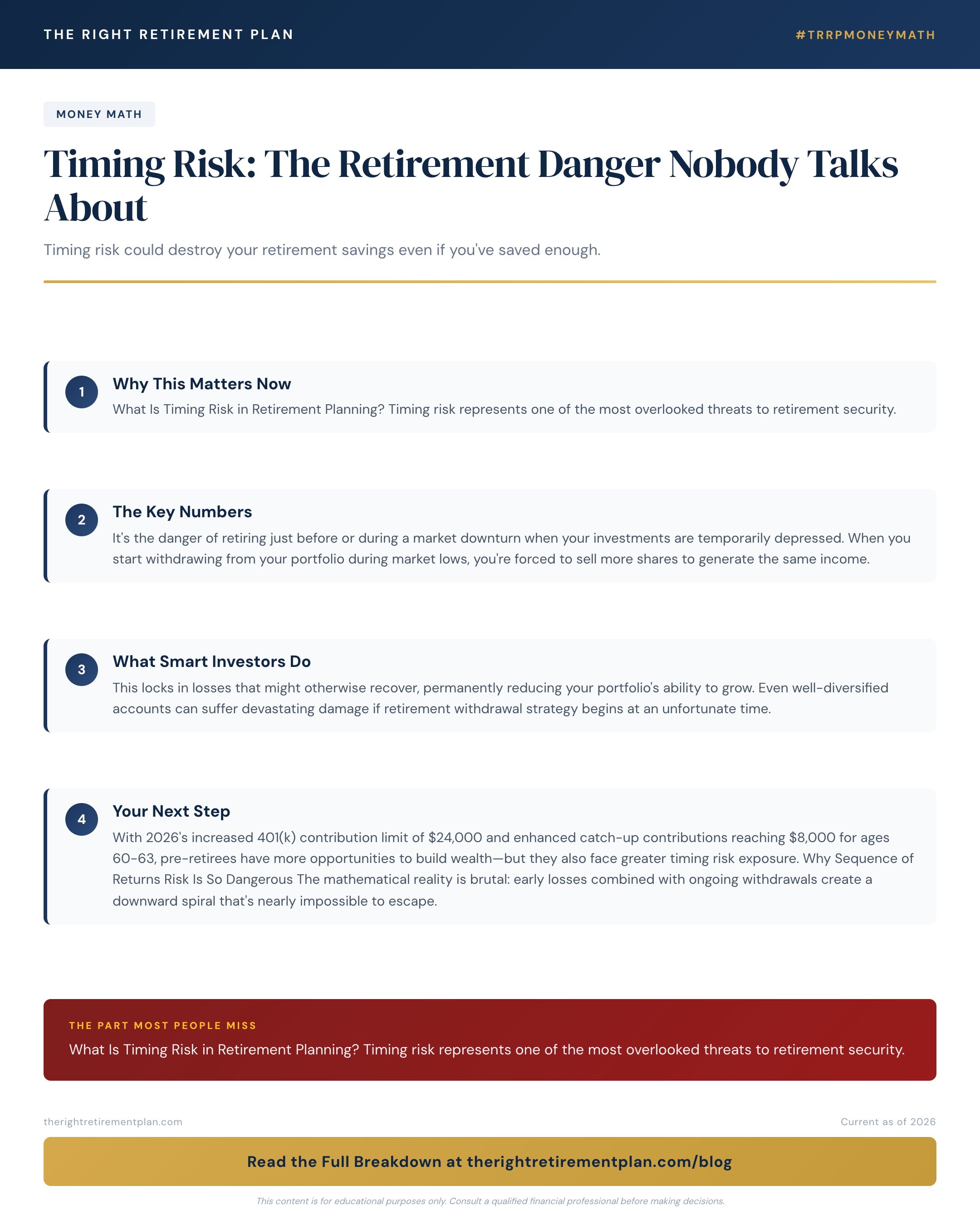
Timing Risk: The Retirement Danger Nobody Talks About

Timing Risk: The Retirement Danger Nobody Talks About

Timing risk could destroy your retirement savings even if you've saved enough. Learn how the sequence of market returns affects your withdrawal strategy and discover proven techniques to protect your portfolio from early retirement losses.

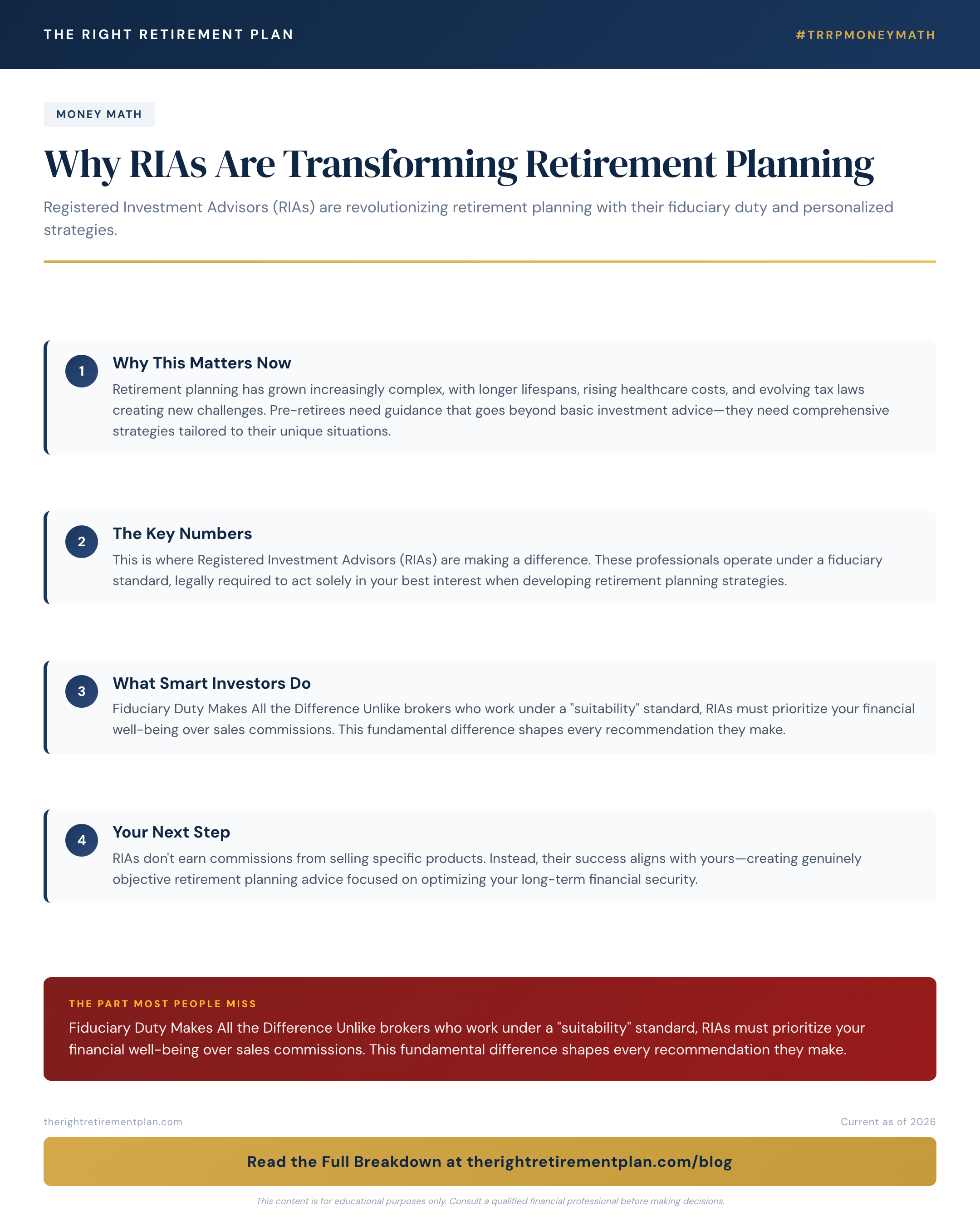
Why RIAs Are Transforming Retirement Planning

Why RIAs Are Transforming Retirement Planning

Registered Investment Advisors (RIAs) are revolutionizing retirement planning with their fiduciary duty and personalized strategies. Unlike commission-driven advisors, RIAs must act solely in your best interest, offering comprehensive guidance on tax efficiency, Social Security optimization, and estate planning.

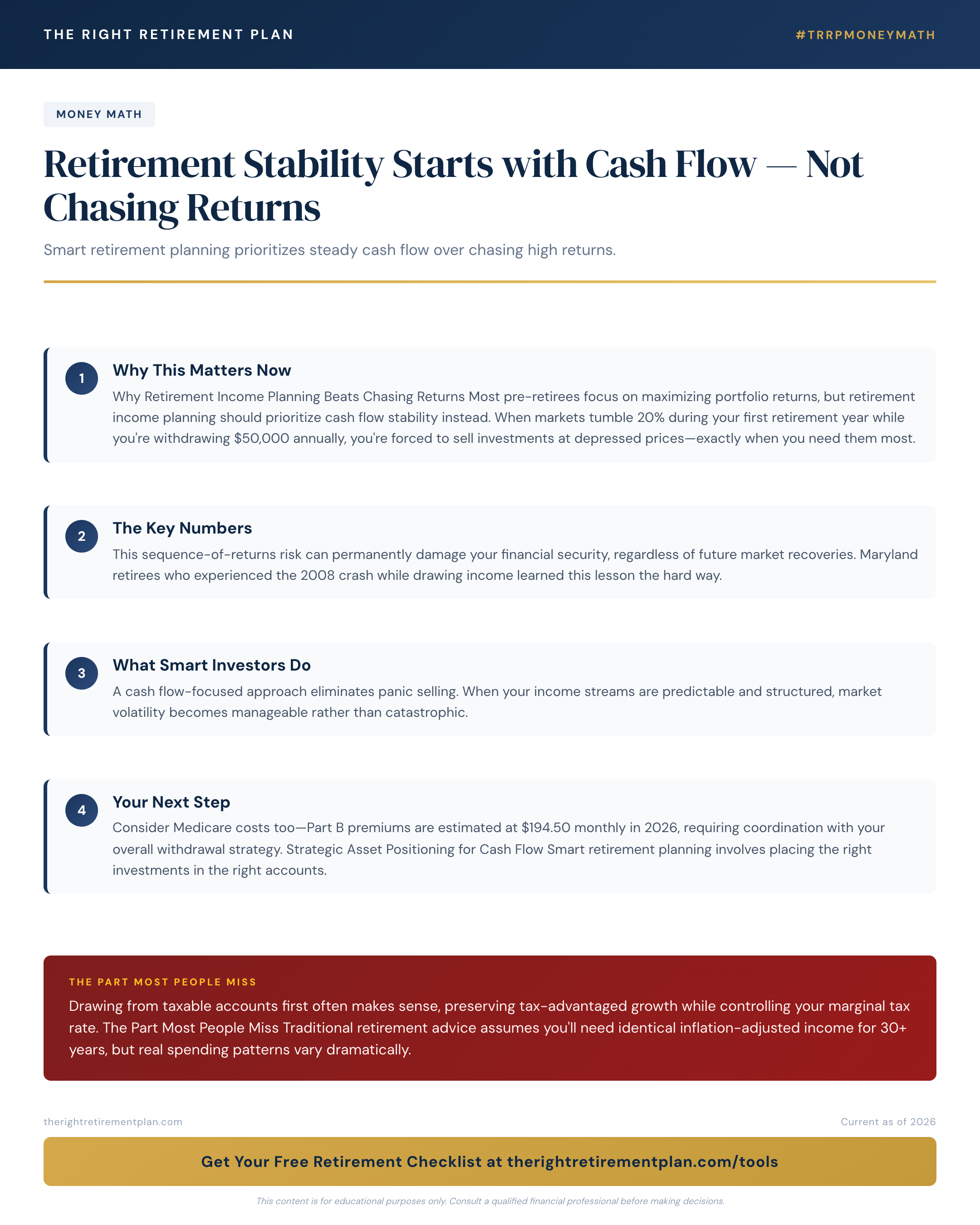
Retirement Stability Starts with Cash Flow — Not Chasing Returns

Retirement Stability Starts with Cash Flow — Not Chasing Returns

Smart retirement planning prioritizes steady cash flow over chasing high returns. A reliable income strategy protects you from market volatility and sequence-of-returns risk, ensuring your lifestyle stays secure even when portfolios drop.

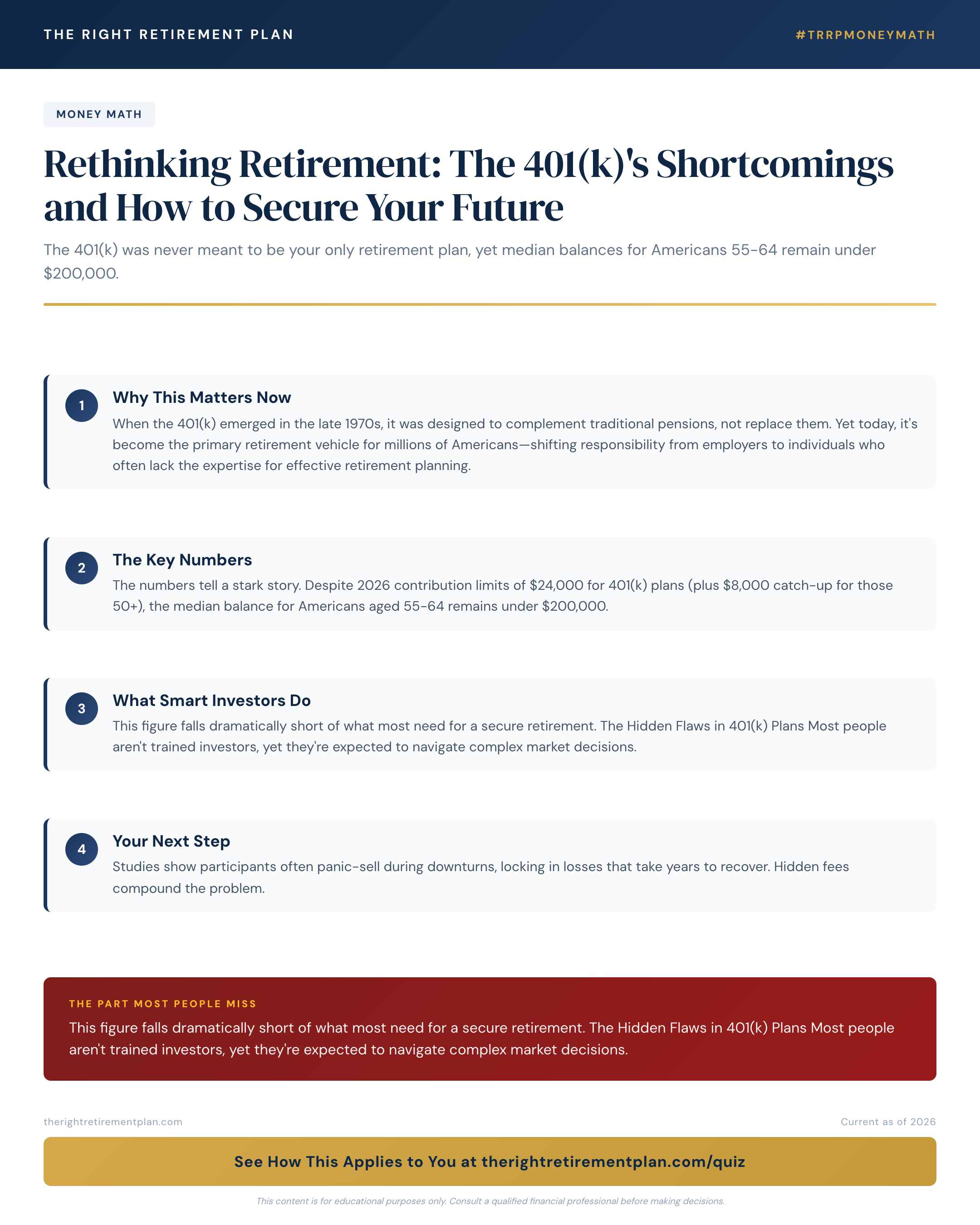
Rethinking Retirement: The 401(k)'s Shortcomings and How to Secure Your Future

Rethinking Retirement: The 401(k)'s Shortcomings and How to Secure Your Future

The 401(k) was never meant to be your only retirement plan, yet median balances for Americans 55-64 remain under $200,000. Learn why relying solely on employer plans falls short and discover comprehensive strategies to secure your financial future.

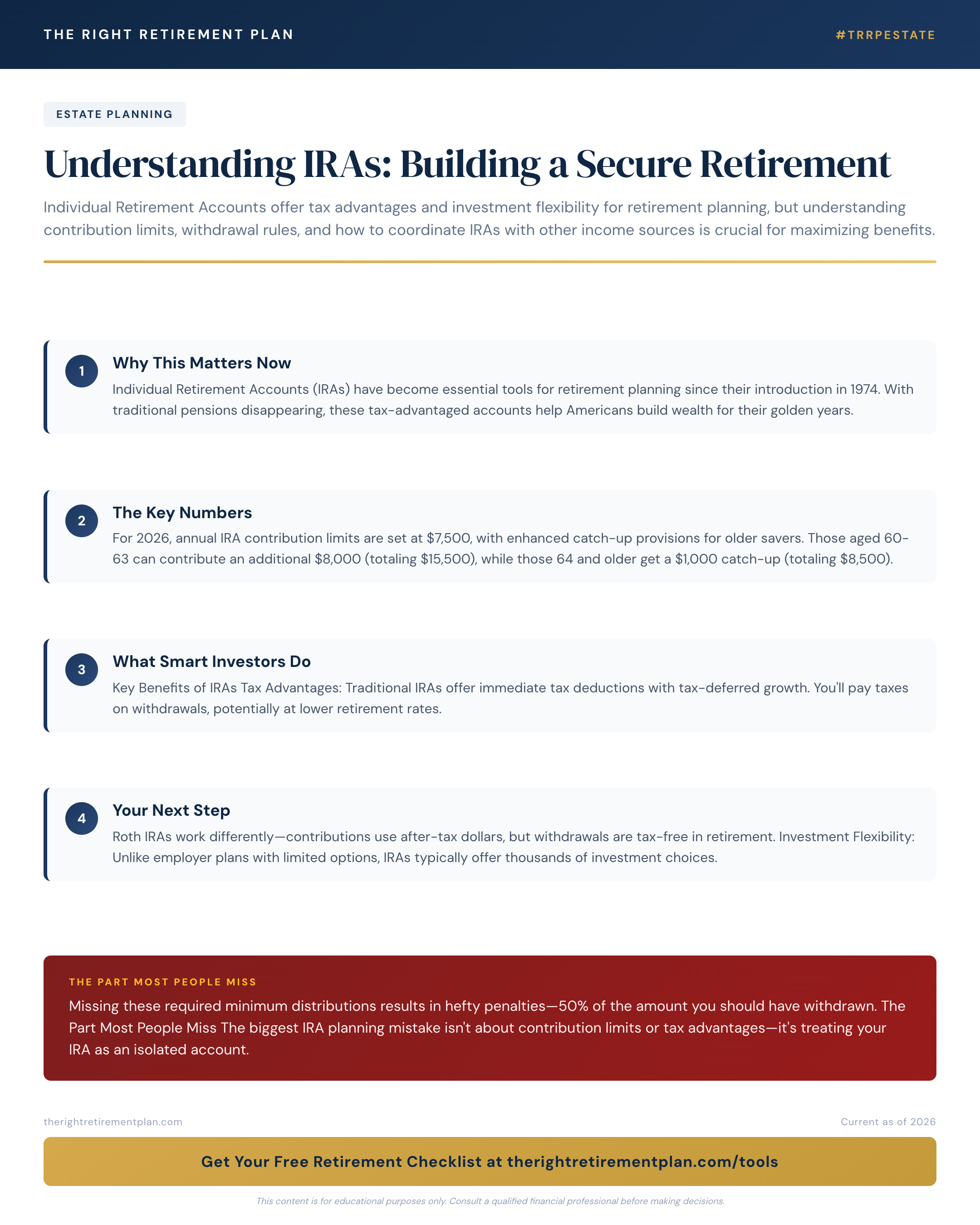
Understanding IRAs: Building a Secure Retirement

Understanding IRAs: Building a Secure Retirement

Individual Retirement Accounts offer tax advantages and investment flexibility for retirement planning, but understanding contribution limits, withdrawal rules, and how to coordinate IRAs with other income sources is crucial for maximizing benefits.

Why Every Retiree Needs an Estate Plan—Before It’s Too Late

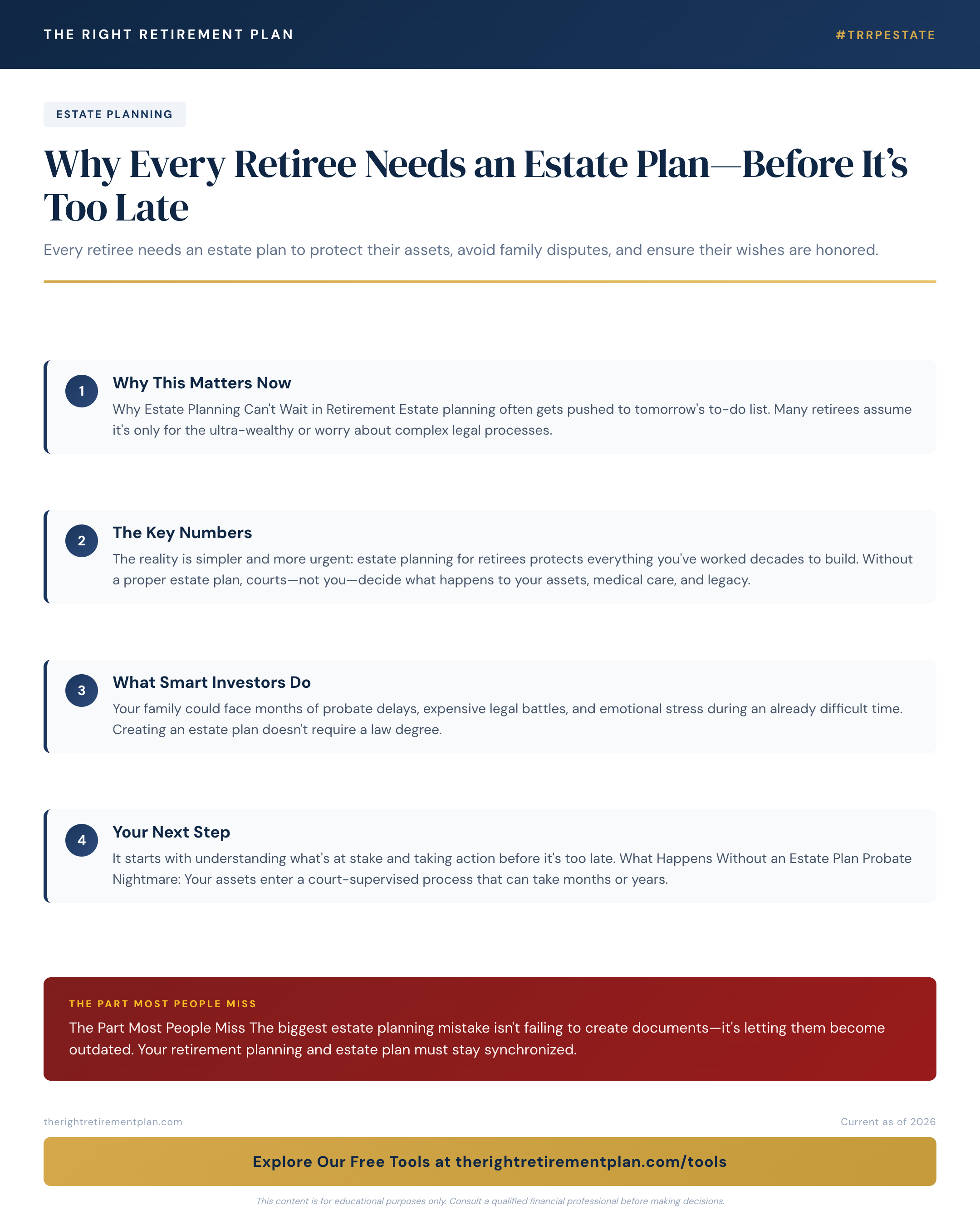
Why Every Retiree Needs an Estate Plan—Before It’s Too Late

Every retiree needs an estate plan to protect their assets, avoid family disputes, and ensure their wishes are honored. Without proper planning, courts decide your legacy—not you.

A $3,500 Monthly Earner Could Add $525/Month With This SS Strategy

A $3,500 Monthly Earner Could Add $525/Month With This SS Strategy

Dual-earner couples earning $3,500 monthly could boost their Social Security benefits by $525 per month using strategic claiming timing. The key is having the higher earner delay benefits to age 70 while the lower earner claims at full retirement age.

10-Year Marriage Unlocks Up to $4,125/Month in Divorced Spouse Benefits

10-Year Marriage Unlocks Up to $4,125/Month in Divorced Spouse Benefits

Divorced after 10+ years? You may qualify for up to $4,125 monthly in Social Security benefits based on your ex-spouse's work record—even if they remarried or don't know you're collecting.

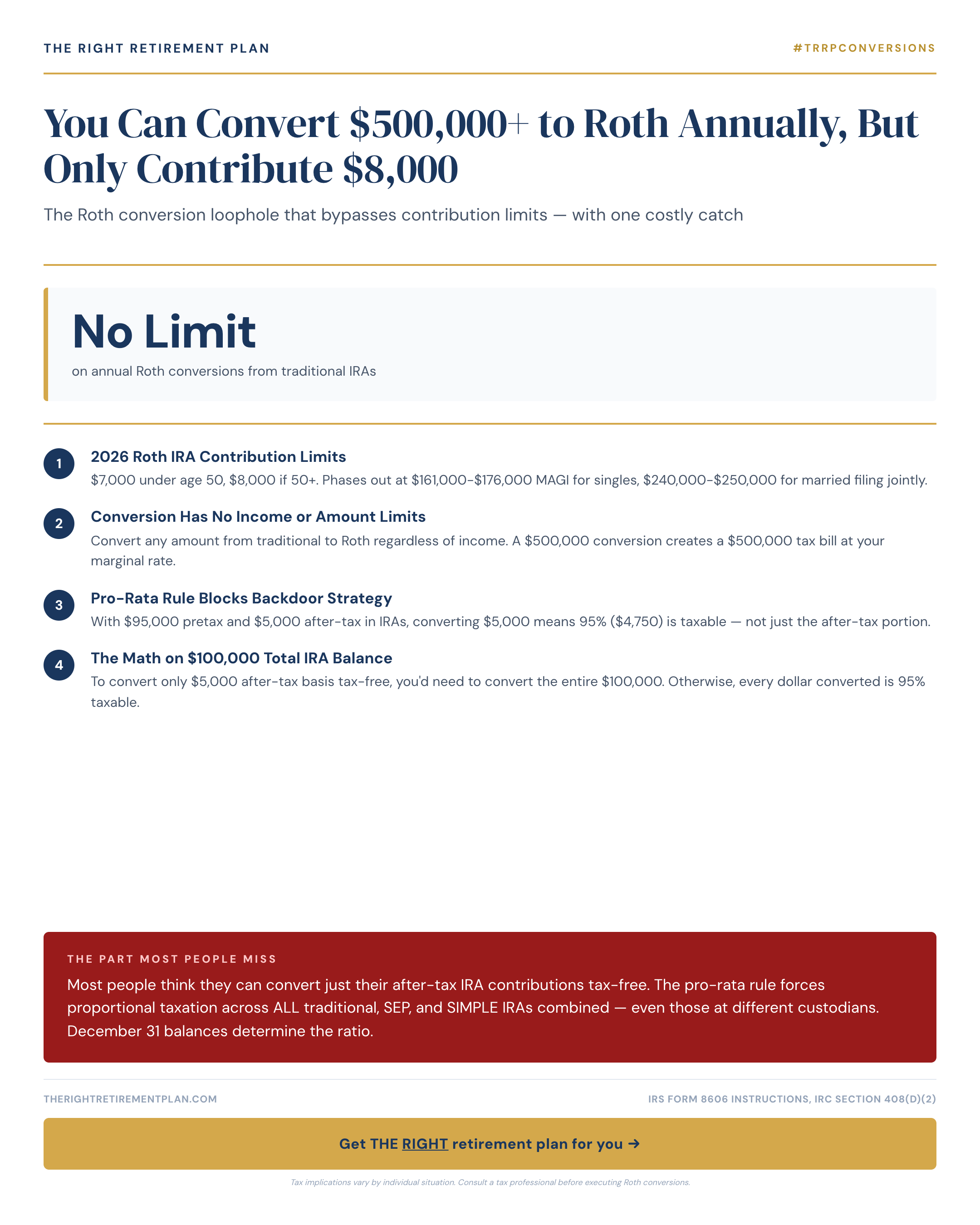
You Can Convert $500,000+ to Roth Annually, But Only Contribute $8,000

You Can Convert $500,000+ to Roth Annually, But Only Contribute $8,000

Learn how wealthy retirees convert unlimited amounts to Roth IRAs annually while contribution limits cap others at $8,000. The pro-rata rule creates a costly catch most advisors miss.

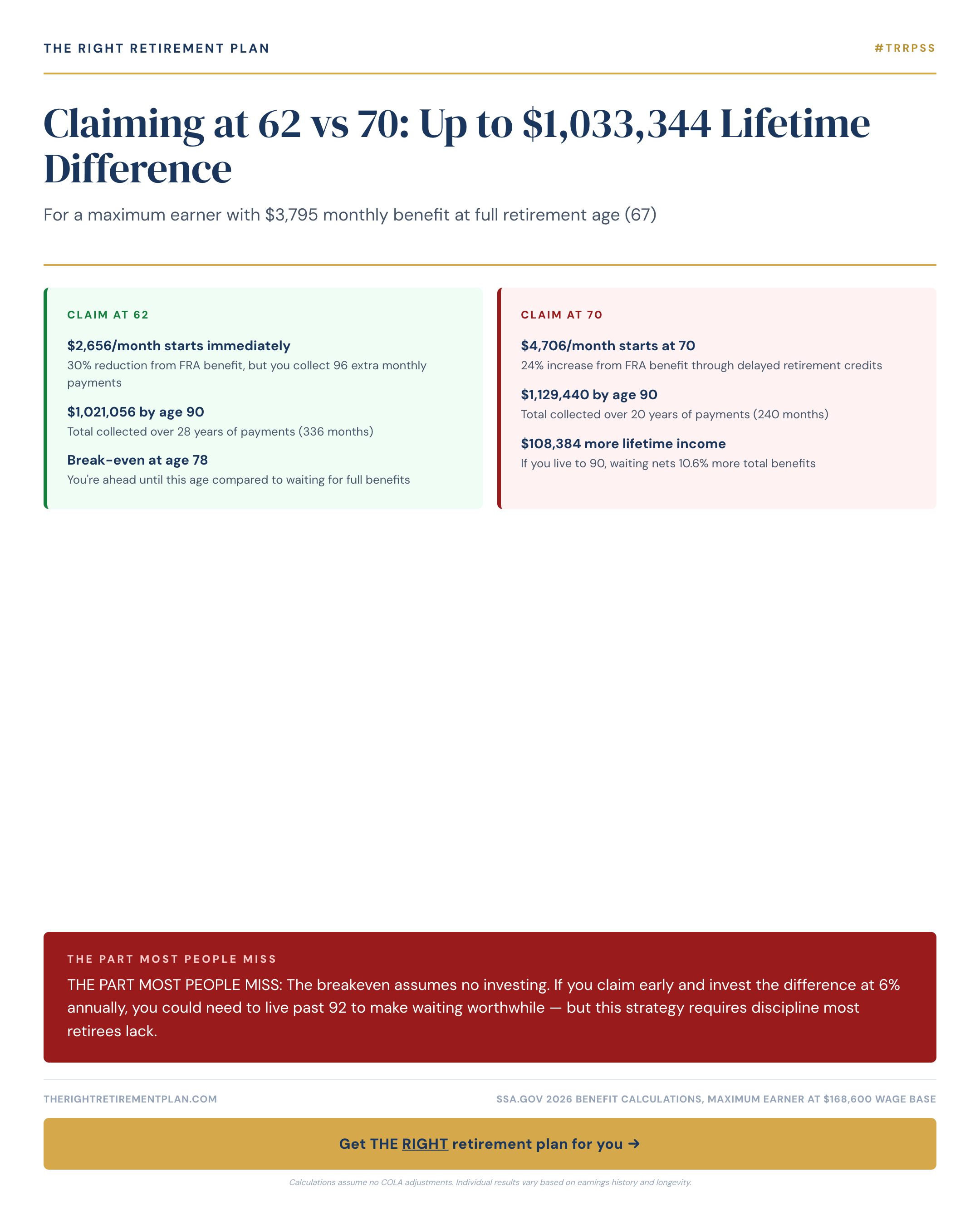
Claiming at 62 vs 70: Up to $1,033,344 Lifetime Difference

Claiming at 62 vs 70: Up to $1,033,344 Lifetime Difference

Claiming Social Security at 62 versus 70 can create a lifetime difference of over $1 million for high earners. Understanding the breakeven analysis and investment implications is crucial for maximizing your retirement income.

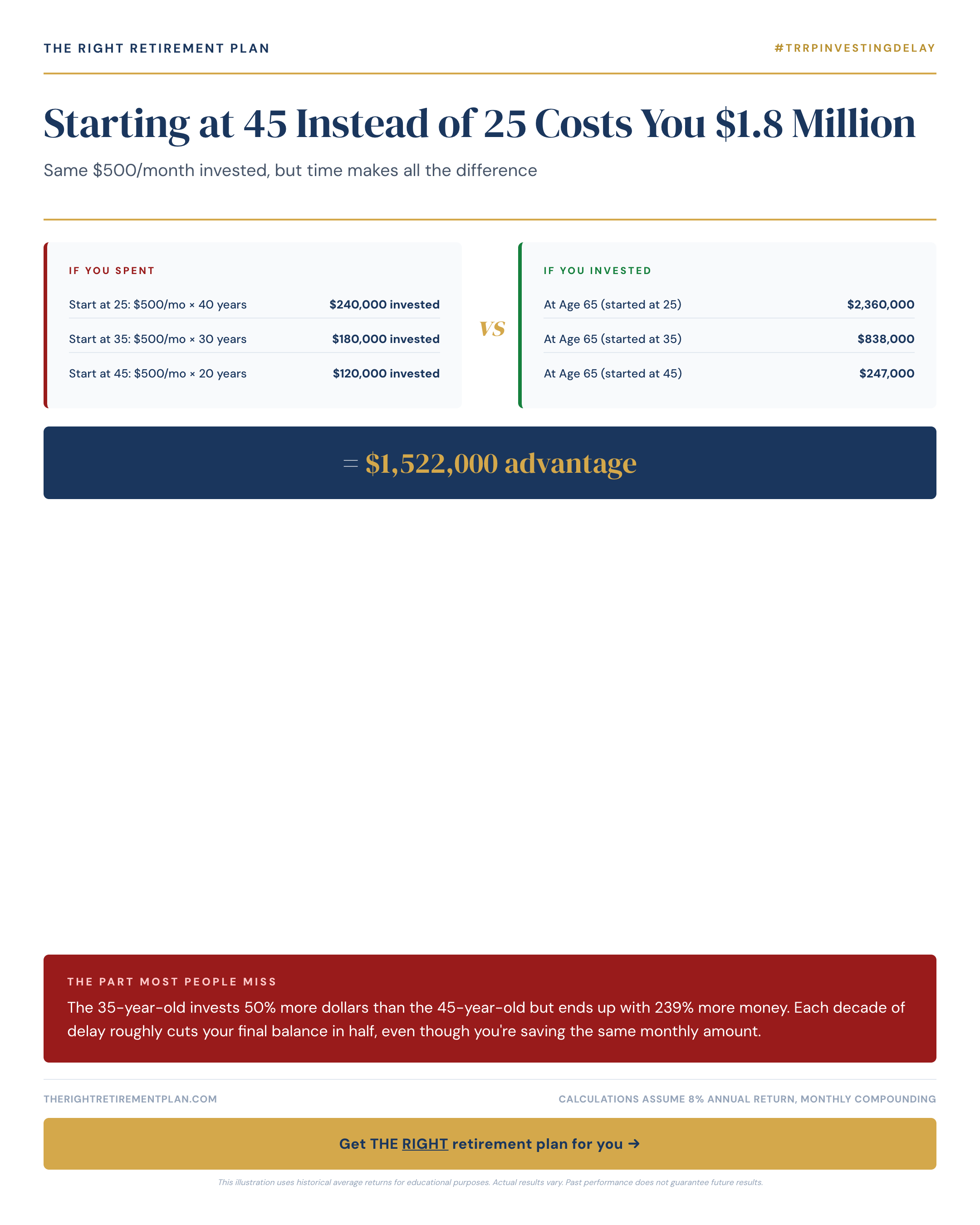
Starting at 45 Instead of 25 Costs You $1.8 Million

Starting at 45 Instead of 25 Costs You $1.8 Million

Starting retirement savings at 45 instead of 25 costs the average investor $1.8 million, even with identical monthly contributions. Time and compound growth make all the difference in retirement planning.

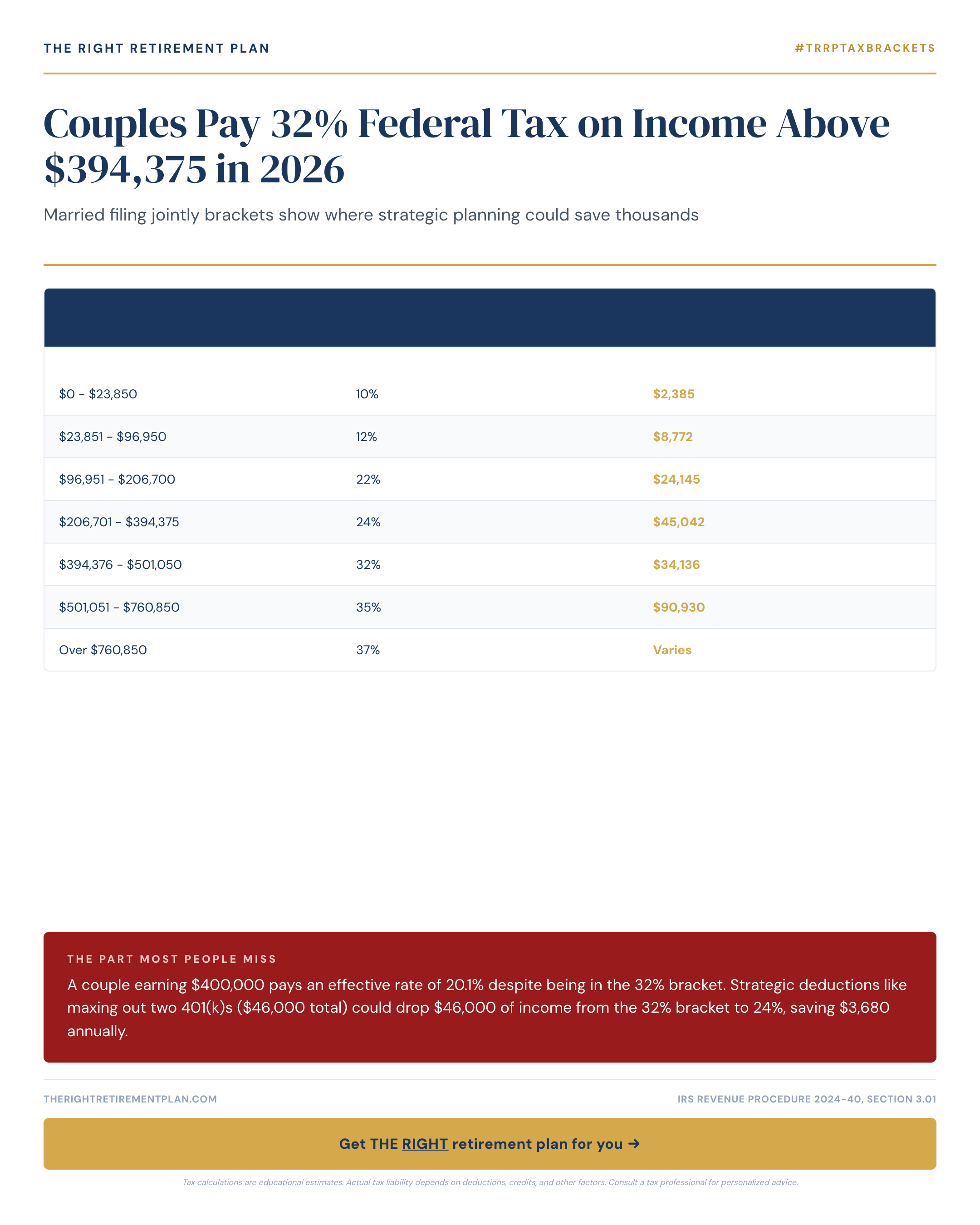
Couples Pay 32% Federal Tax on Income Above $394,375 in 2026

Couples Pay 32% Federal Tax on Income Above $394,375 in 2026

Married couples earning $400,000 in 2026 actually pay about 20.1% effective federal tax rate, not 32%, because only income above $394,375 hits the 32% bracket. Understanding this difference could help you save thousands through strategic retirement contributions and income timing.

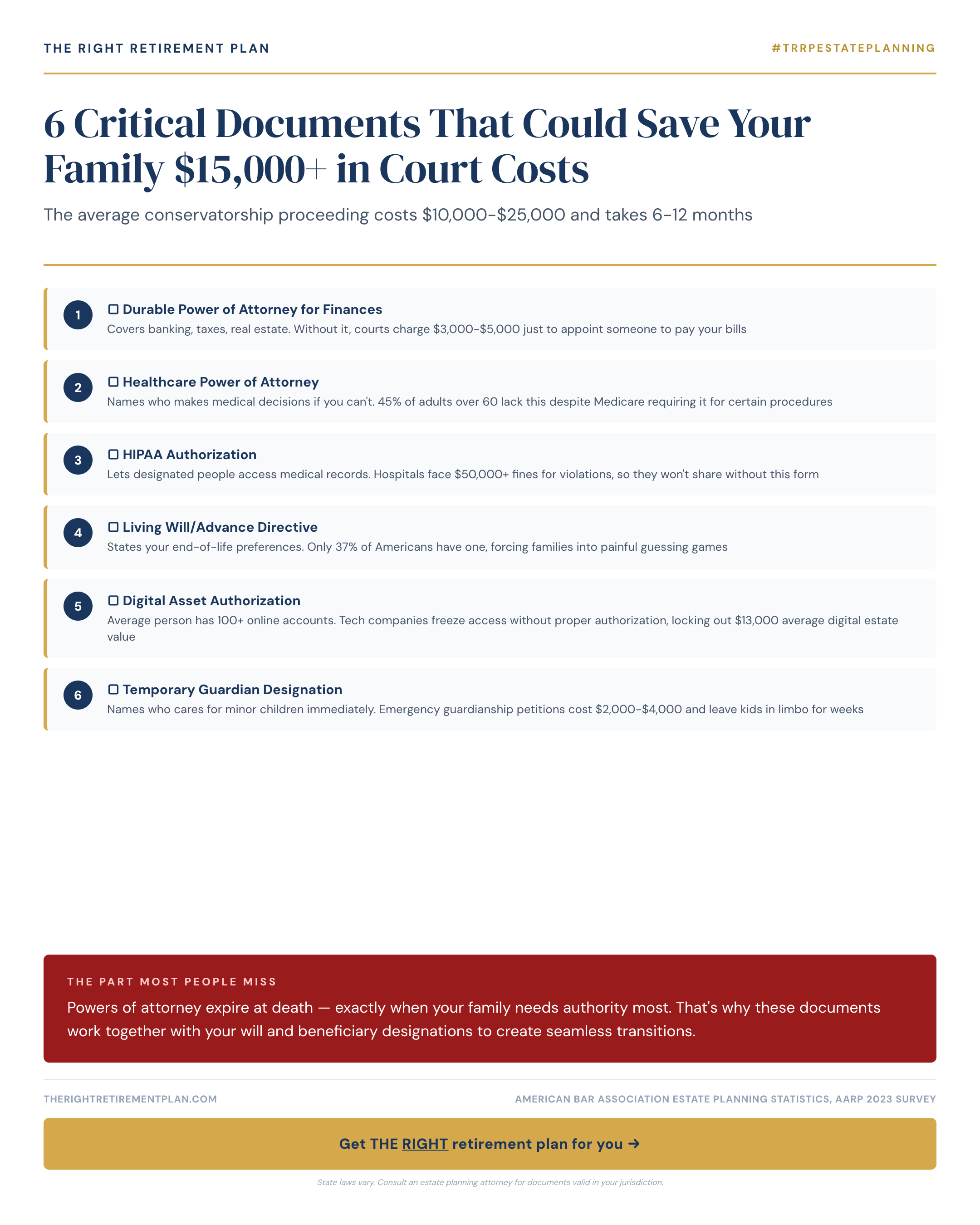
6 Critical Documents That Could Save Your Family $15,000+ in Court Costs

6 Critical Documents That Could Save Your Family $15,000+ in Court Costs

Essential estate planning documents can prevent conservatorship proceedings that cost $10,000-$25,000 and take 6-12 months, but many pre-retirees overlook critical gaps in their protection strategy.

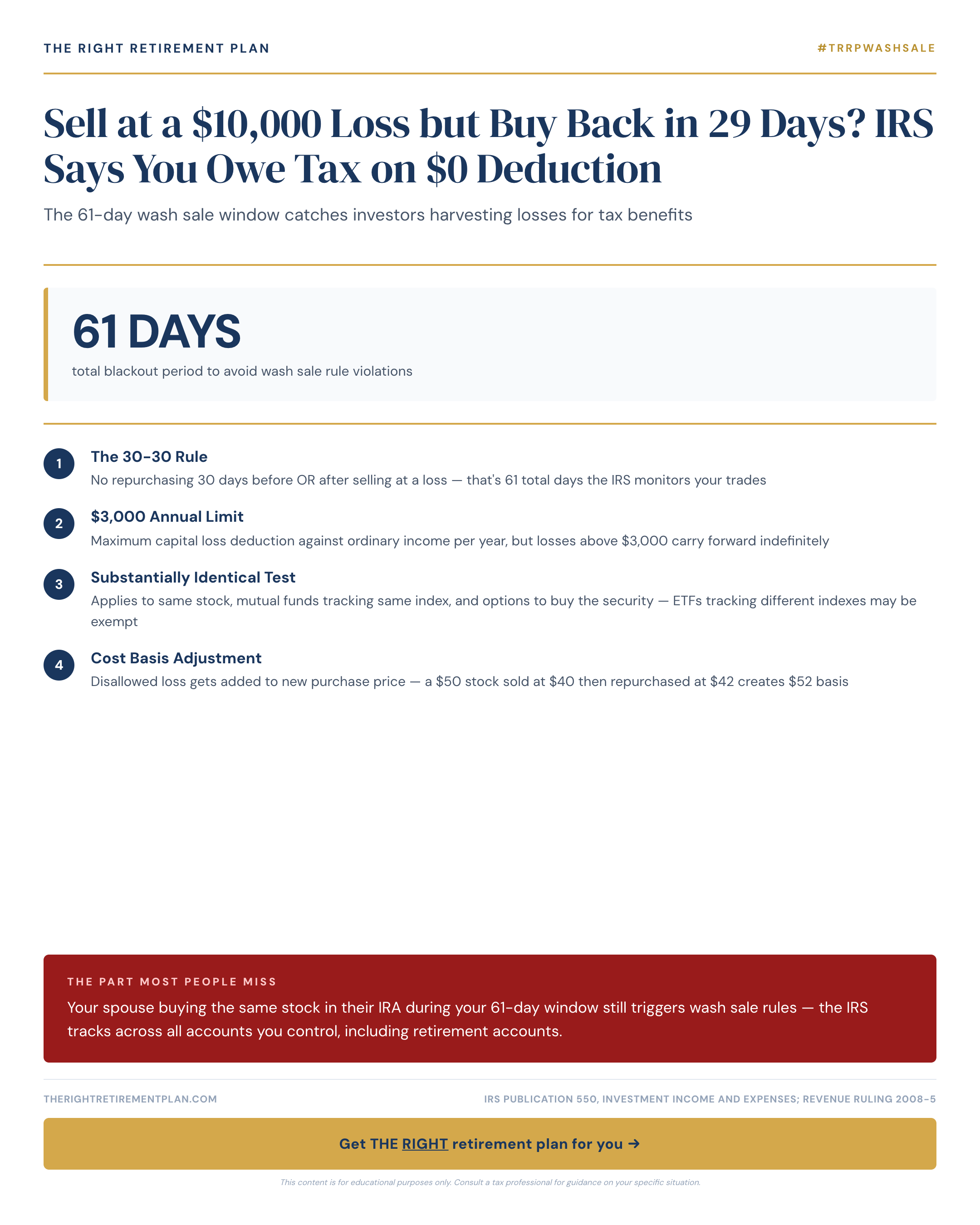
Sell at a $10,000 Loss but Buy Back in 29 Days? IRS Says You Owe Tax on $0 Deduction

Sell at a $10,000 Loss but Buy Back in 29 Days? IRS Says You Owe Tax on $0 Deduction

The wash sale rule's 61-day window can turn your $10,000 investment loss into zero tax deduction, even if you buy back the stock a month later. Understanding this rule could save Maryland retirees thousands in unnecessary taxes.

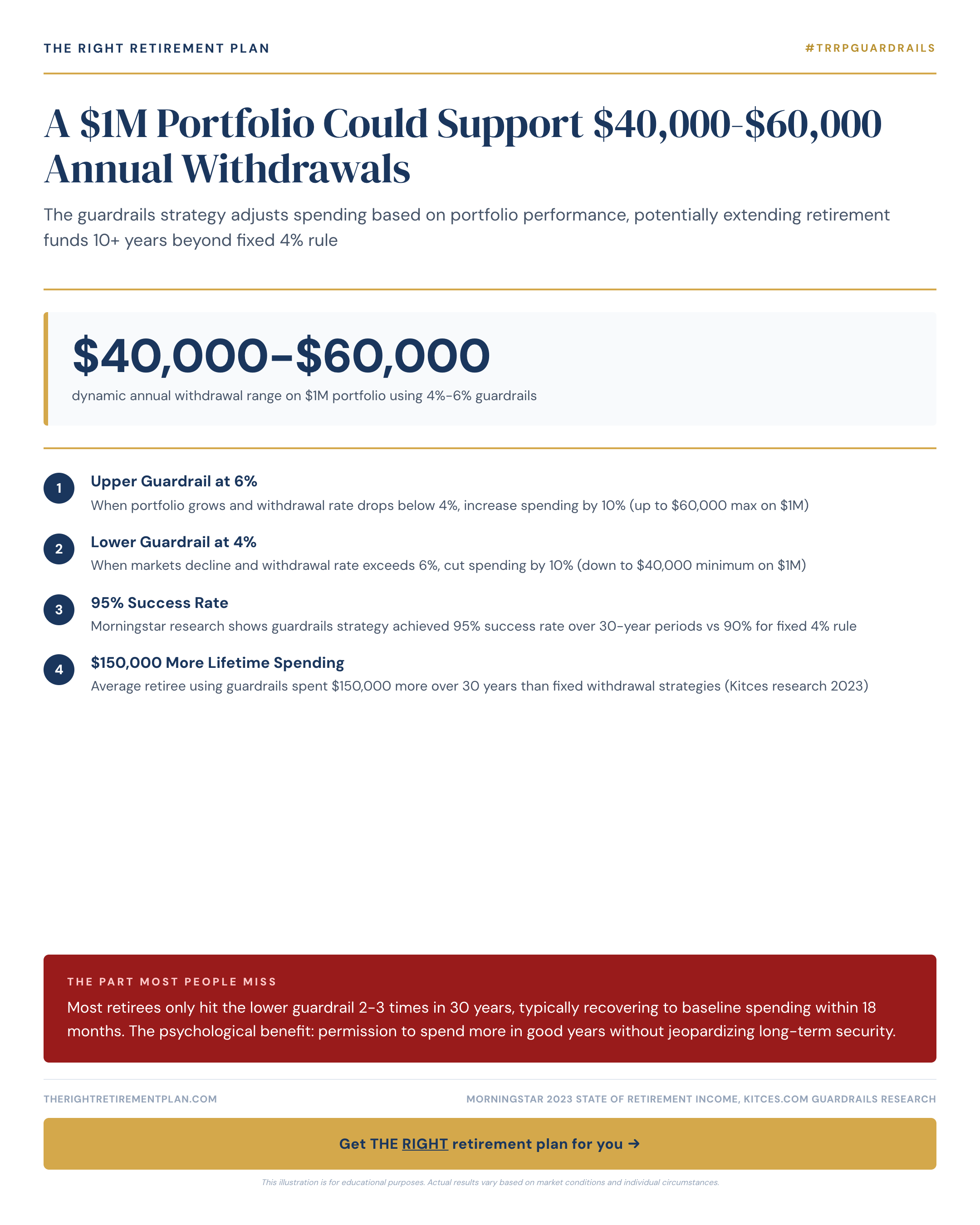
A $1M Portfolio Could Support $40,000-$60,000 Annual Withdrawals

A $1M Portfolio Could Support $40,000-$60,000 Annual Withdrawals

The guardrails strategy lets retirees withdraw $40,000-$60,000 annually from a $1 million portfolio by adjusting spending based on market performance, potentially extending retirement funds 10+ years beyond the traditional 4% rule.

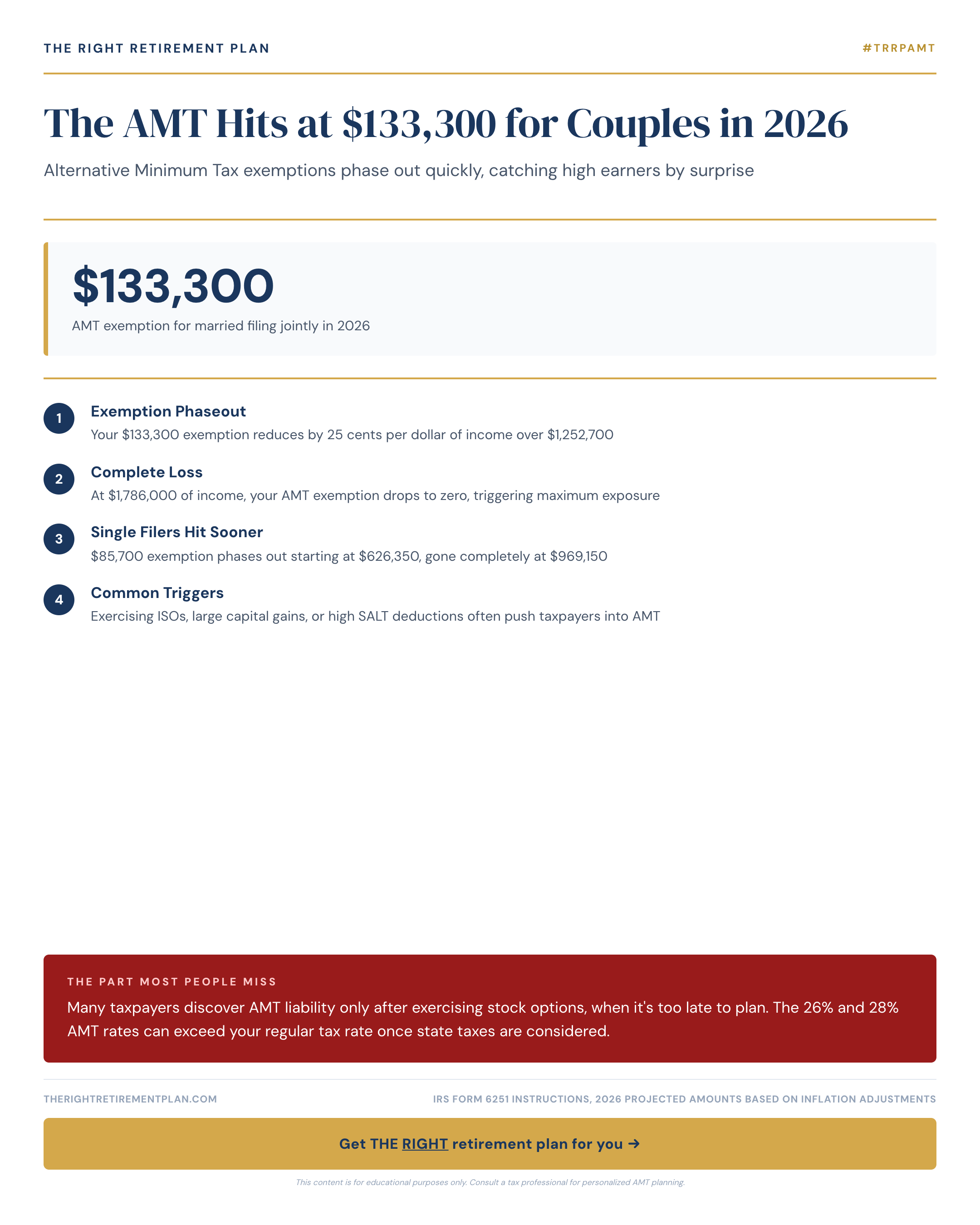
The AMT Hits at $133,300 for Couples in 2026

The AMT Hits at $133,300 for Couples in 2026

The Alternative Minimum Tax exemption phases out at $133,300 for married couples in 2026, potentially triggering unexpected tax bills for pre-retirees with stock options or other AMT preference items.

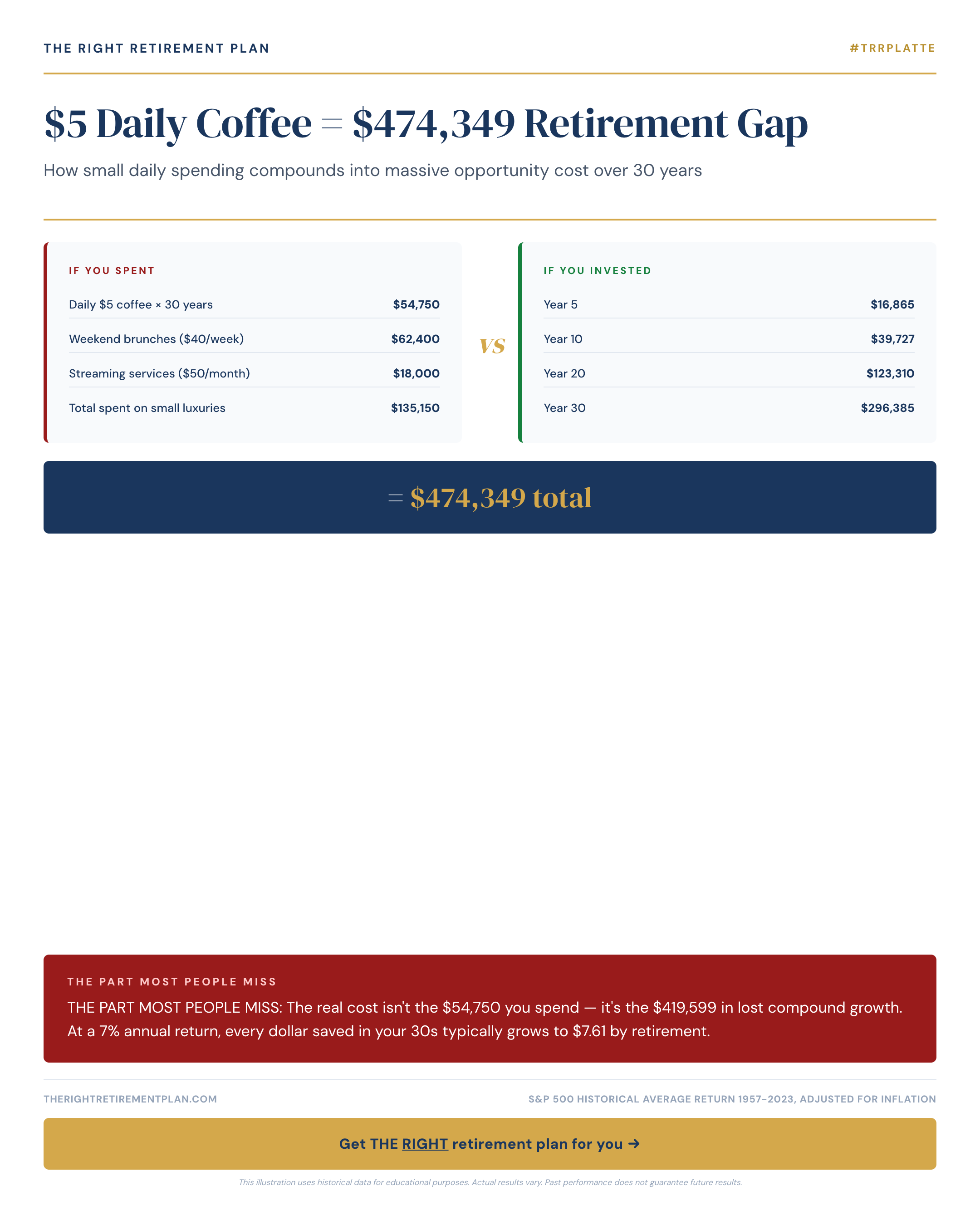
$5 Daily Coffee = $474,349 Retirement Gap

$5 Daily Coffee = $474,349 Retirement Gap

That daily $5 coffee habit costs $474,349 in retirement wealth over 30 years due to lost compound growth. Learn how small spending decisions create massive opportunity costs and what pre-retirees can do about it.

The $70,500 Annual Roth Conversion Most High Earners Miss

The $70,500 Annual Roth Conversion Most High Earners Miss

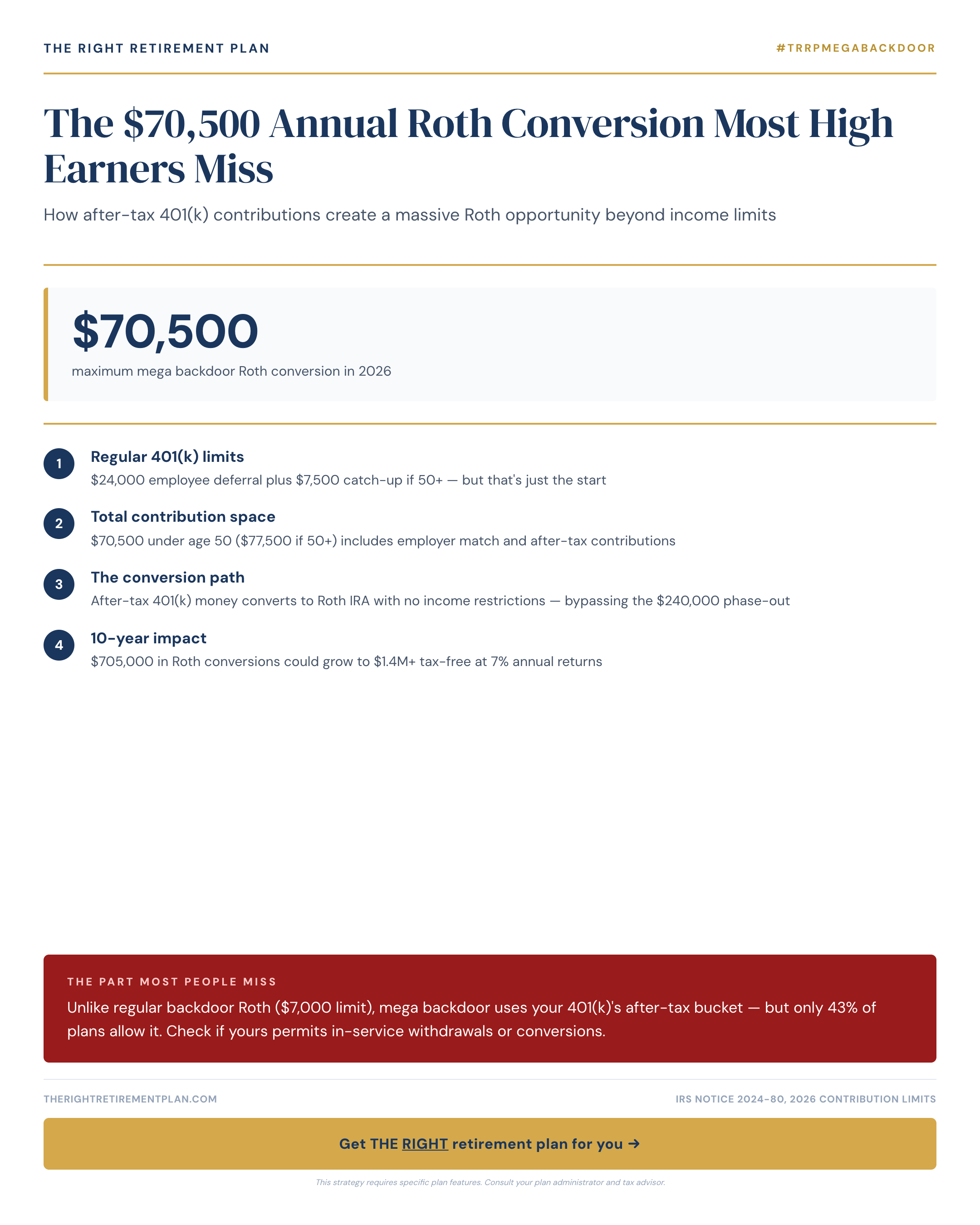
The mega backdoor Roth allows eligible high earners to convert up to $70,500 annually into tax-free retirement accounts, but only 43% of 401(k) plans offer the required features to make this powerful strategy work.

The $250,000 Question: Annual Vacations vs. Investment Growth

The $250,000 Question: Annual Vacations vs. Investment Growth

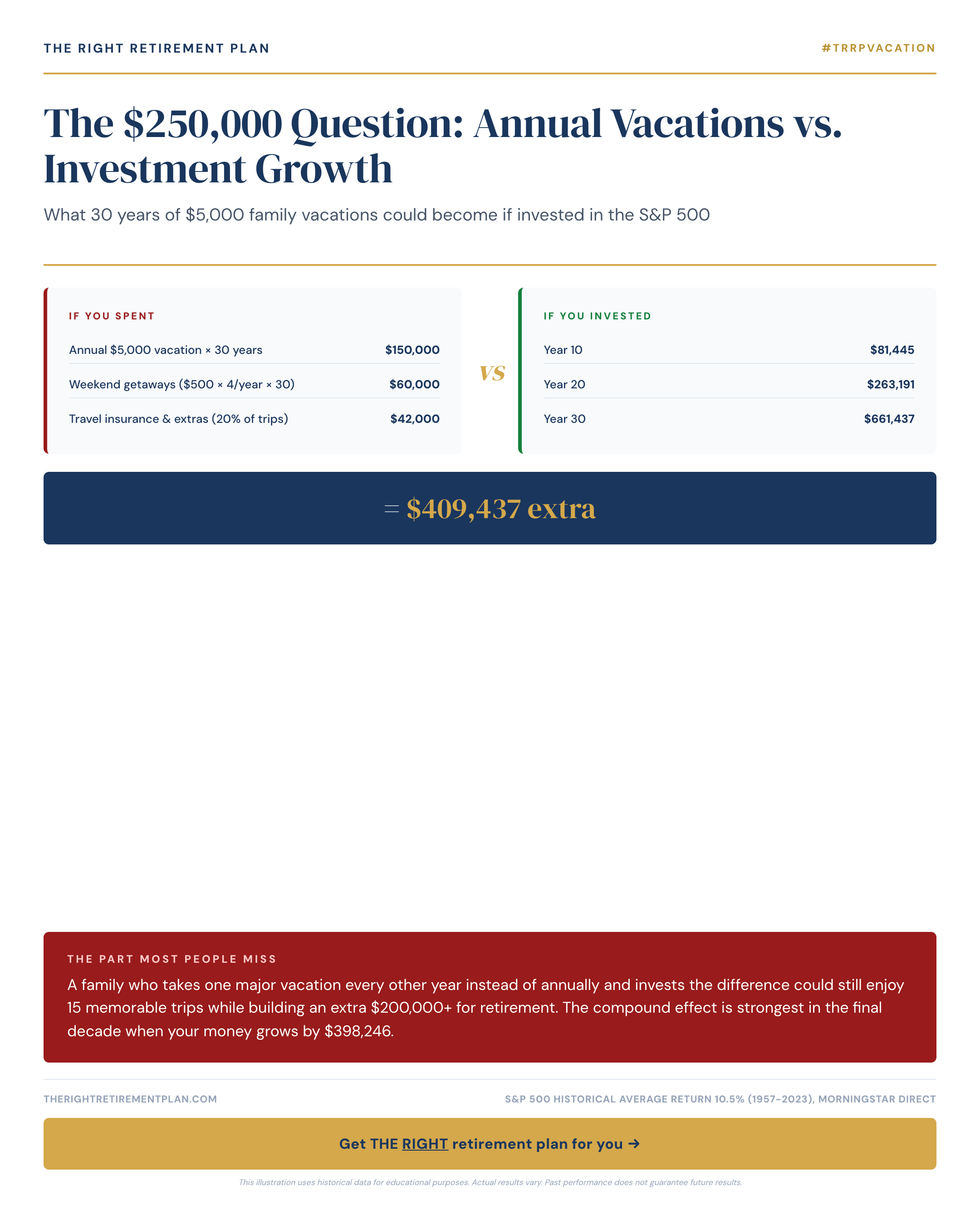
A family spending $5,000 annually on vacations could build an extra $250,000+ for retirement by taking trips every other year instead and investing the difference in the S&P 500.

$200 Weekend Brunches Could Become $1.2M by Retirement

$200 Weekend Brunches Could Become $1.2M by Retirement

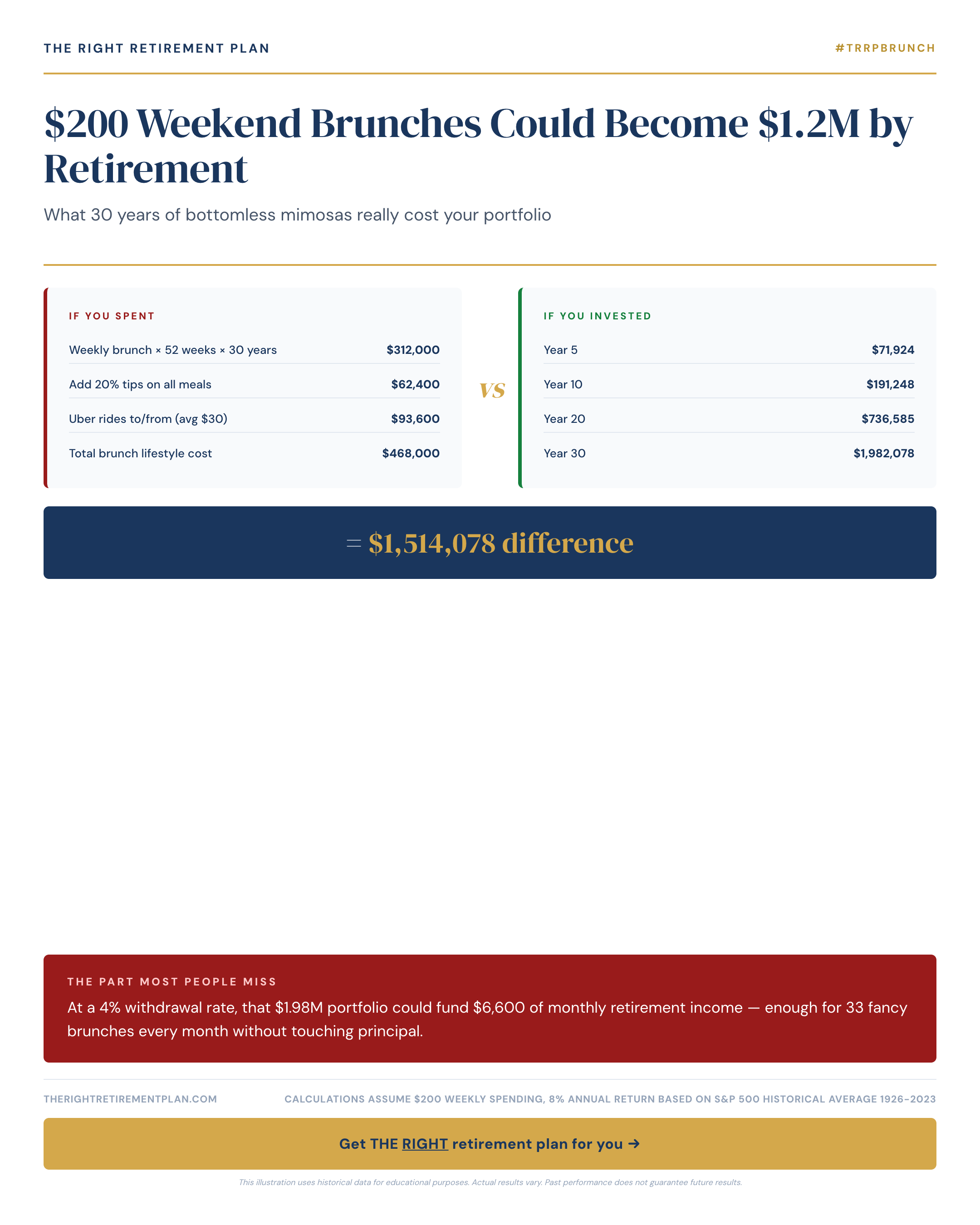
That $200 weekend brunch habit could cost you $1.2 million in retirement savings over 30 years. Here's the math behind small spending decisions and their massive long-term impact.

Earn $206,001 in 2024? Your 2026 Medicare Will Cost $7,056 More

Earn $206,001 in 2024? Your 2026 Medicare Will Cost $7,056 More

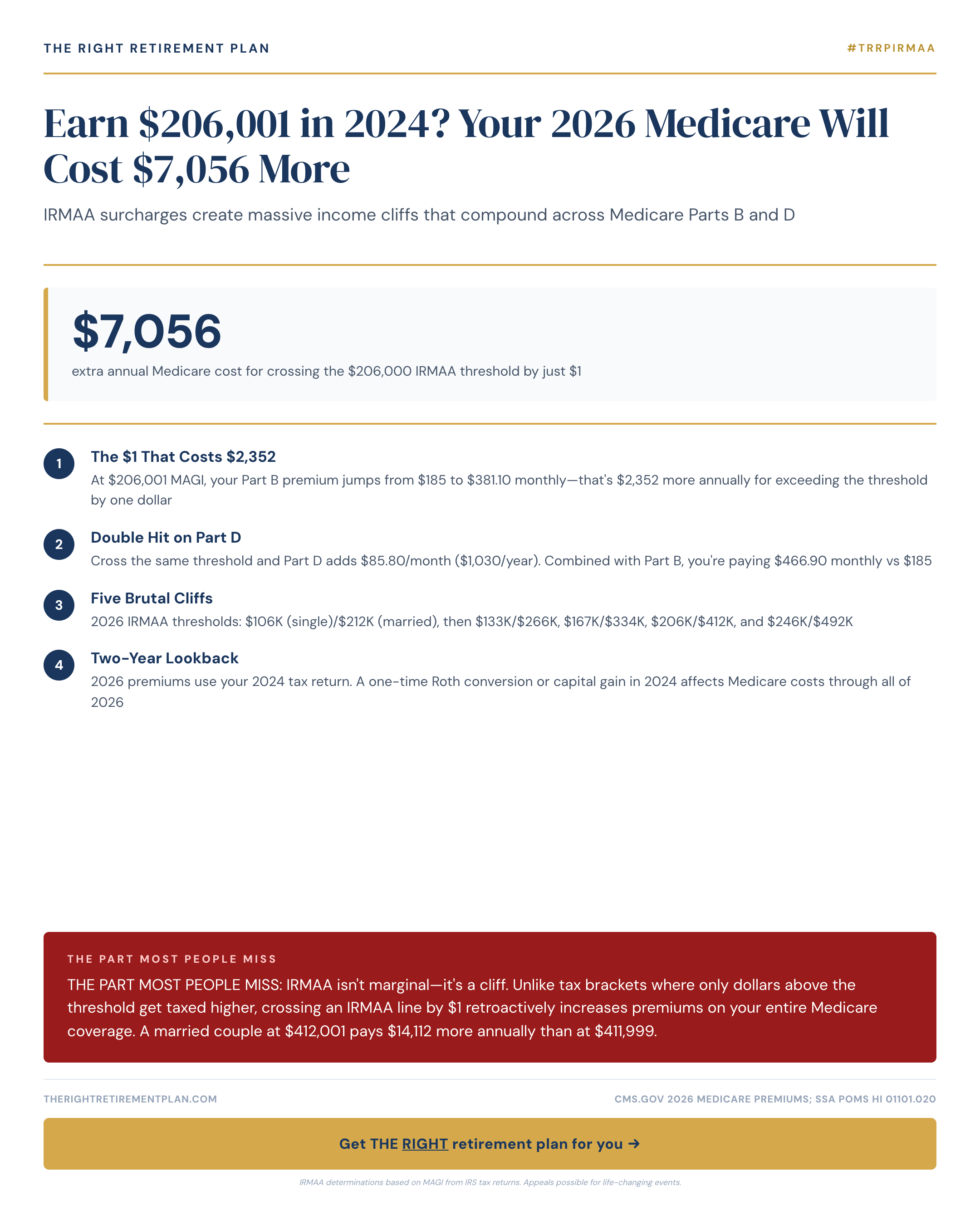
IRMAA surcharges create income cliffs that can cost high earners over $7,000 more in Medicare premiums, but understanding these thresholds helps Maryland retirees and others plan strategically to avoid costly mistakes.

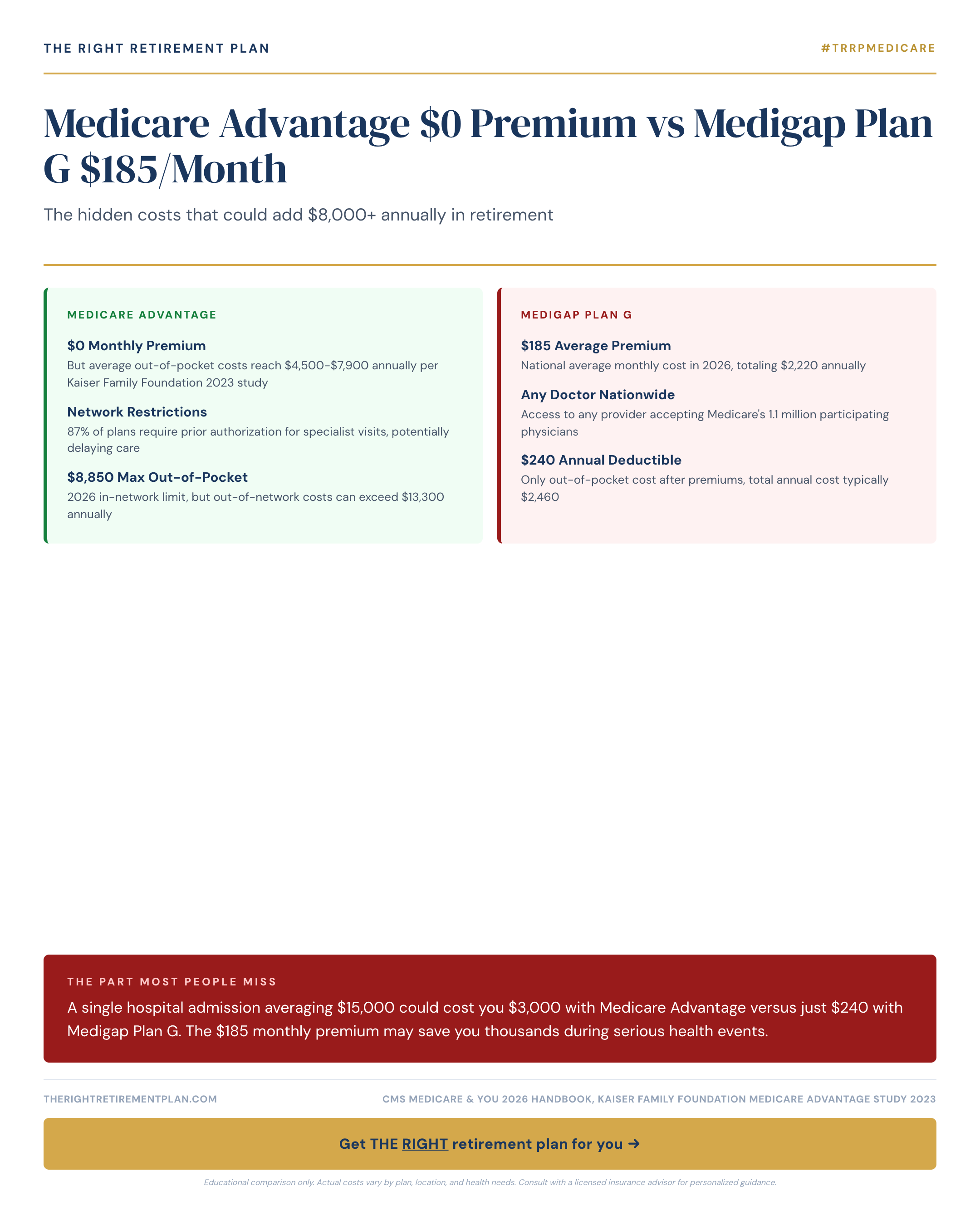
Medicare Advantage $0 Premium vs Medigap Plan G $185/Month

Medicare Advantage $0 Premium vs Medigap Plan G $185/Month

Compare Medicare Advantage $0 premiums to Medigap Plan G's $185/month cost. One hospital stay averaging $15,000 could cost $3,000+ with Medicare Advantage versus just $240 with Plan G.

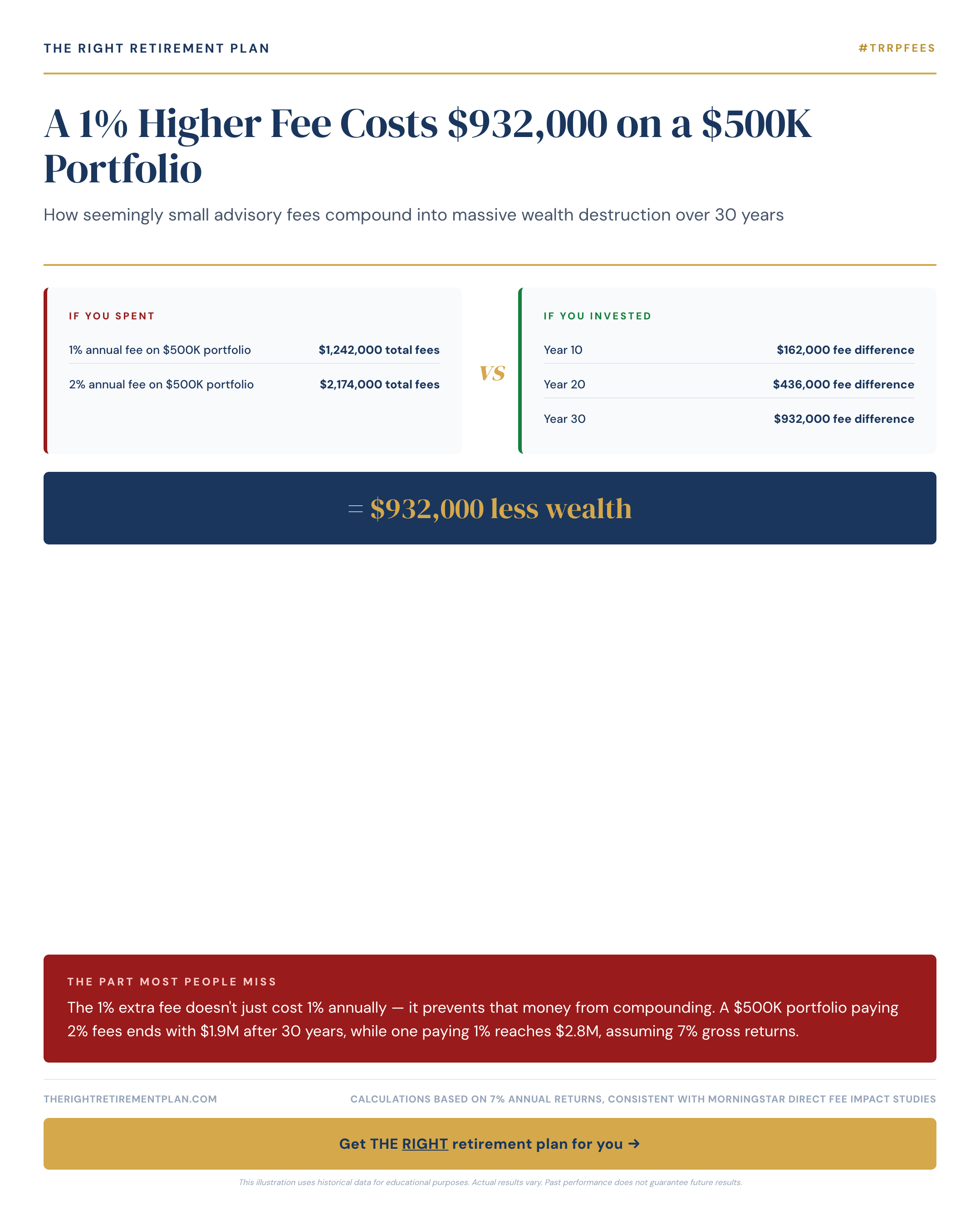
A 1% Higher Fee Costs $932,000 on a $500K Portfolio

A 1% Higher Fee Costs $932,000 on a $500K Portfolio

A single percentage point difference in advisory fees can destroy nearly $1 million in retirement wealth over 30 years, turning a potential $2.8 million portfolio into just $1.9 million.

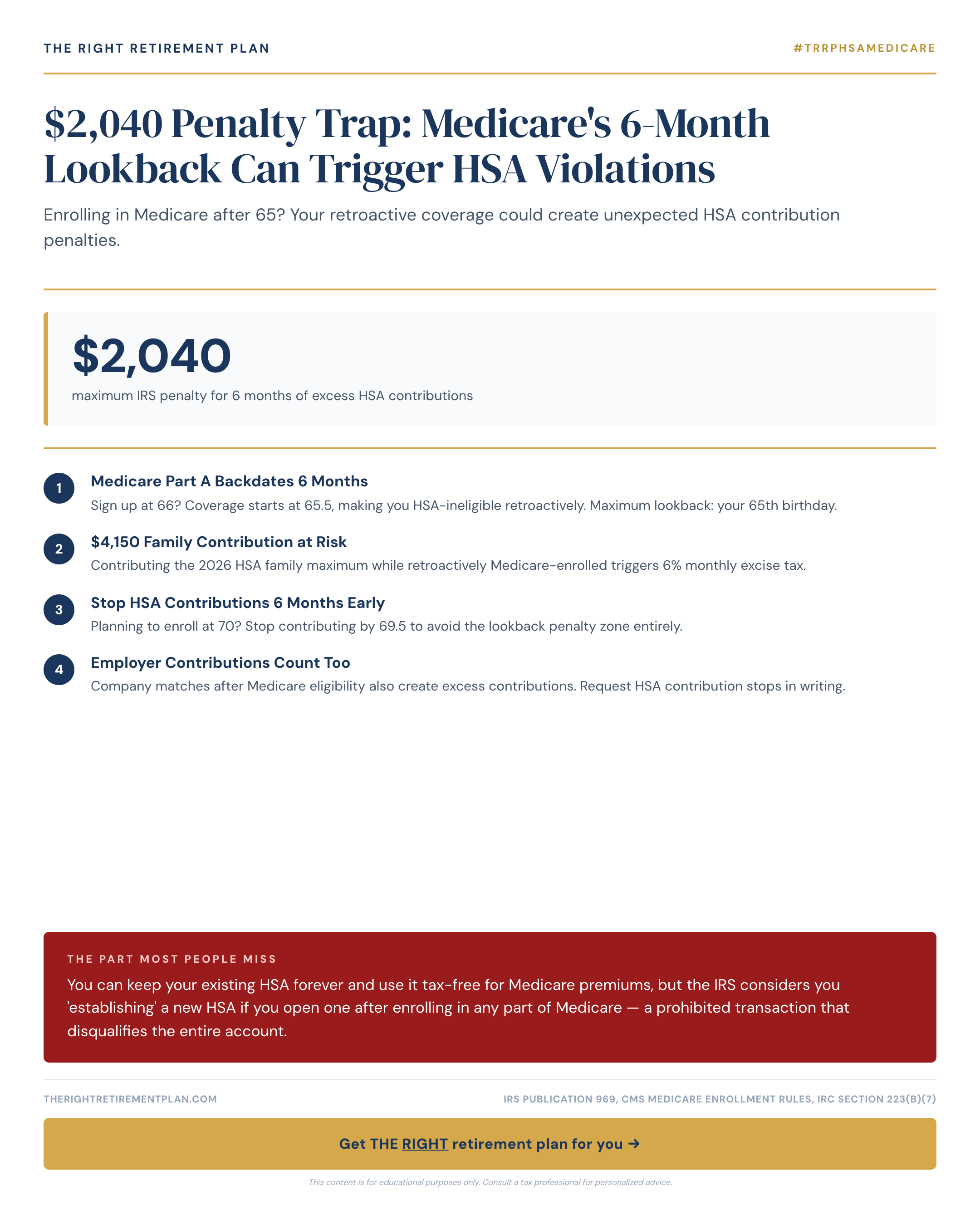
$2,040 Penalty Trap: Medicare's 6-Month Lookback Can Trigger HSA Violations

$2,040 Penalty Trap: Medicare's 6-Month Lookback Can Trigger HSA Violations

Medicare's 6-month retroactive coverage can invalidate HSA contributions made after age 65, triggering penalties up to $2,040+ annually. Learn how to protect your HSA from this common Medicare enrollment trap.

Couples Can Gift $36,000 Per Recipient Tax-Free in 2026

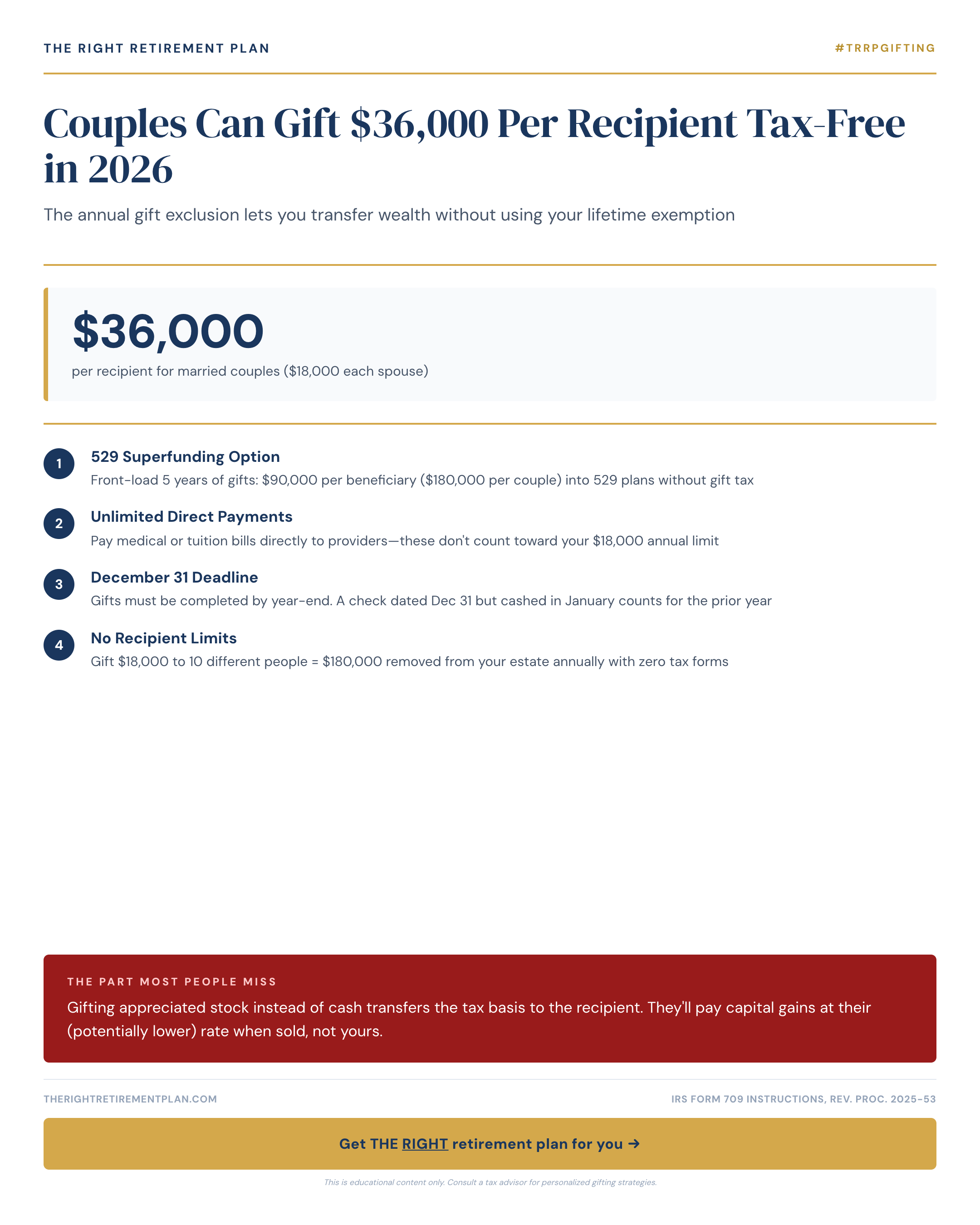
Couples Can Gift $36,000 Per Recipient Tax-Free in 2026

Married couples can gift up to $36,000 per recipient in 2026 without triggering gift taxes, doubling the individual limit and creating powerful wealth transfer opportunities for retirement planning.

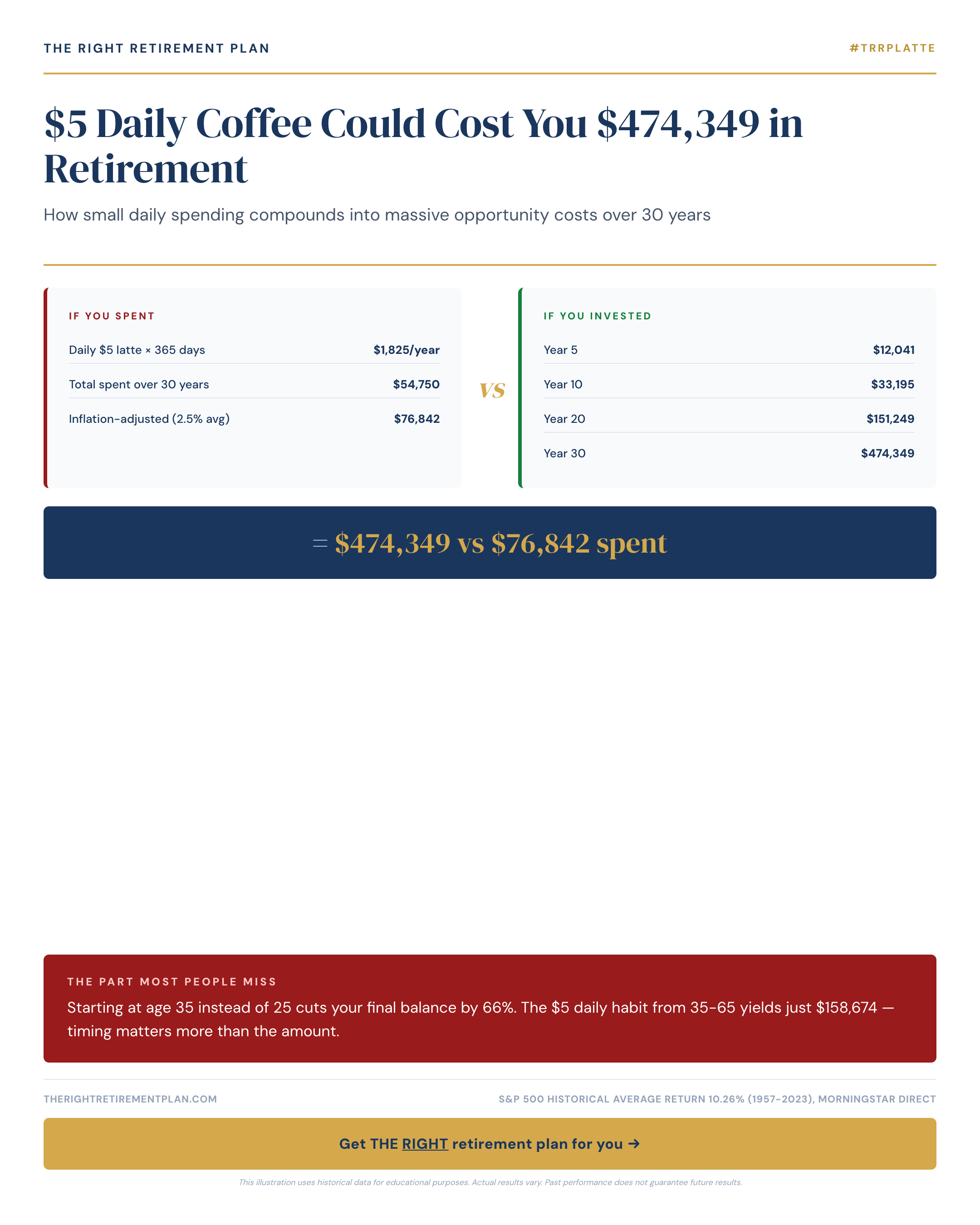
$5 Daily Coffee Could Cost You $474,349 in Retirement

$5 Daily Coffee Could Cost You $474,349 in Retirement

A daily $5 coffee habit could cost you nearly half a million dollars in retirement savings if you start investing late. Understanding compound interest timing can help you avoid this costly mistake.

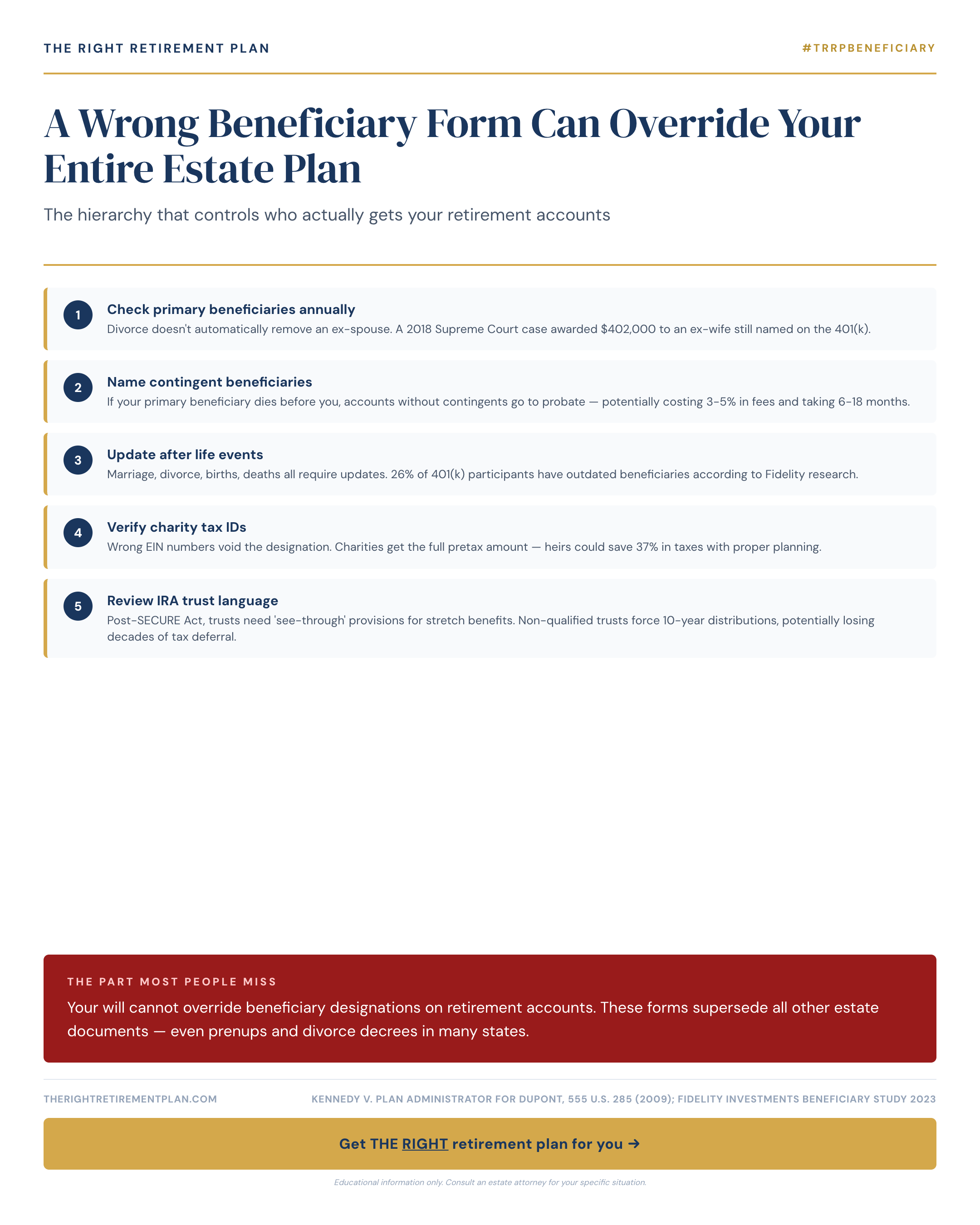
A Wrong Beneficiary Form Can Override Your Entire Estate Plan

A Wrong Beneficiary Form Can Override Your Entire Estate Plan

Your beneficiary forms on retirement accounts override your will and other estate documents, potentially derailing your entire estate plan if not properly maintained.

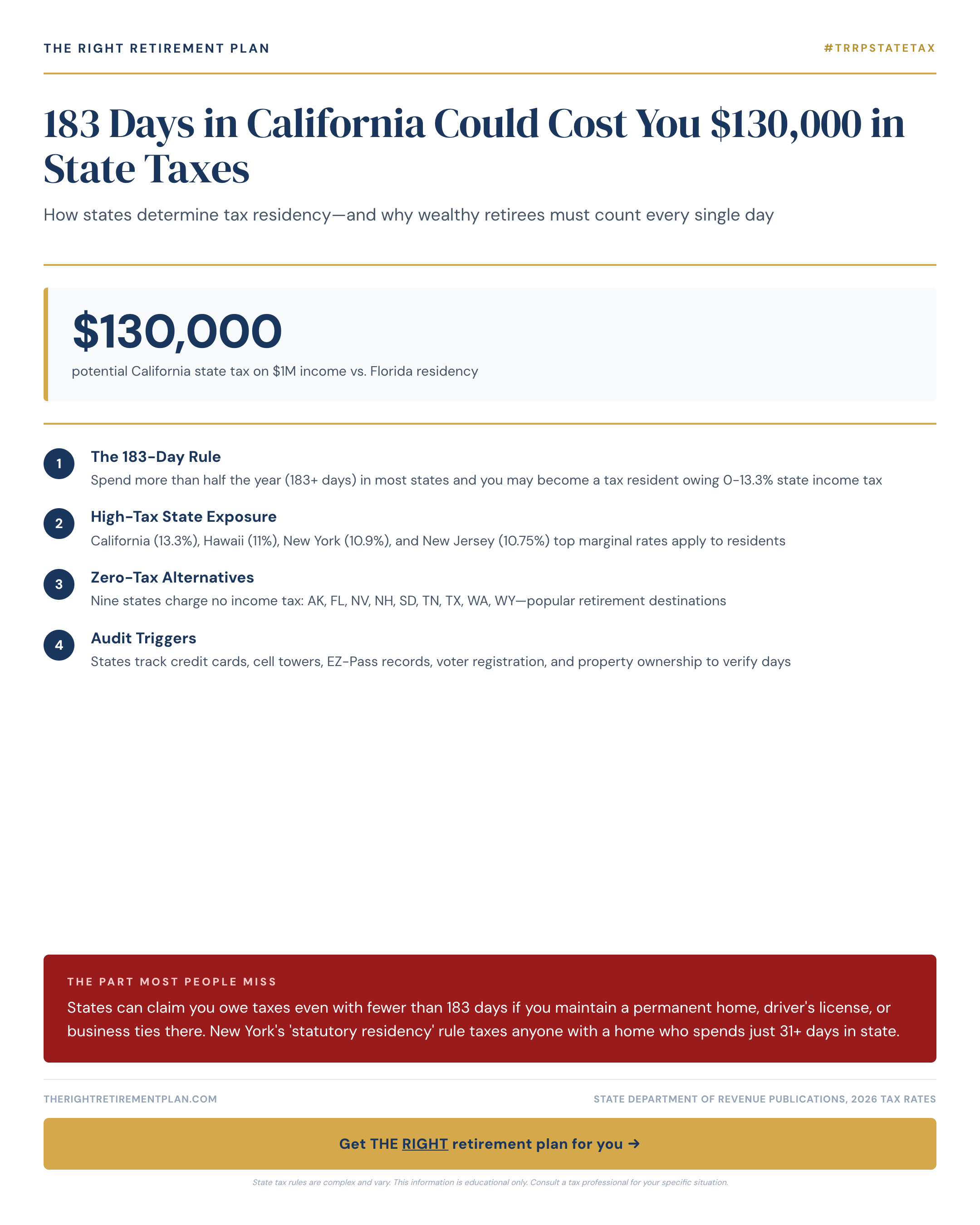
183 Days in California Could Cost You $130,000 in State Taxes

183 Days in California Could Cost You $130,000 in State Taxes

Understanding state tax residency rules is crucial for retirees planning interstate moves. California's 183-day rule and similar state regulations can result in unexpected tax bills exceeding $130,000 for high-income retirees who don't plan carefully.

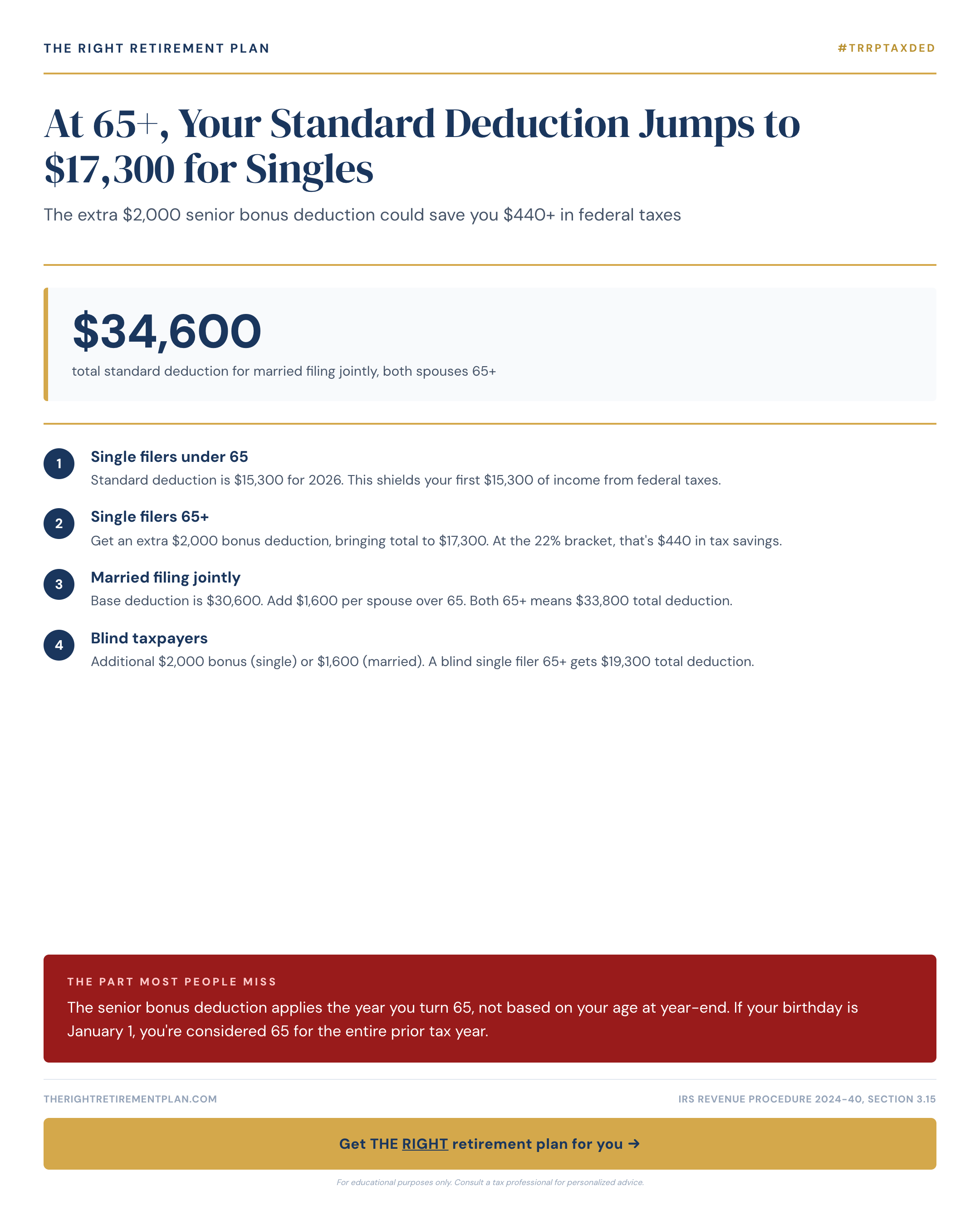
At 65+, Your Standard Deduction Jumps to $17,300 for Singles

At 65+, Your Standard Deduction Jumps to $17,300 for Singles

At 65, your standard deduction increases to $17,300 for singles in 2026, providing an extra $2,000 that could save $440+ in federal taxes. Understanding when this senior bonus kicks in can impact your retirement tax planning significantly.

$1.46 Million

$1.46 Million

The average American household faces a $1.46 million retirement savings shortfall, with median balances of just $185,000 for those nearing retirement. Learn how to calculate your personal income gap and take action.

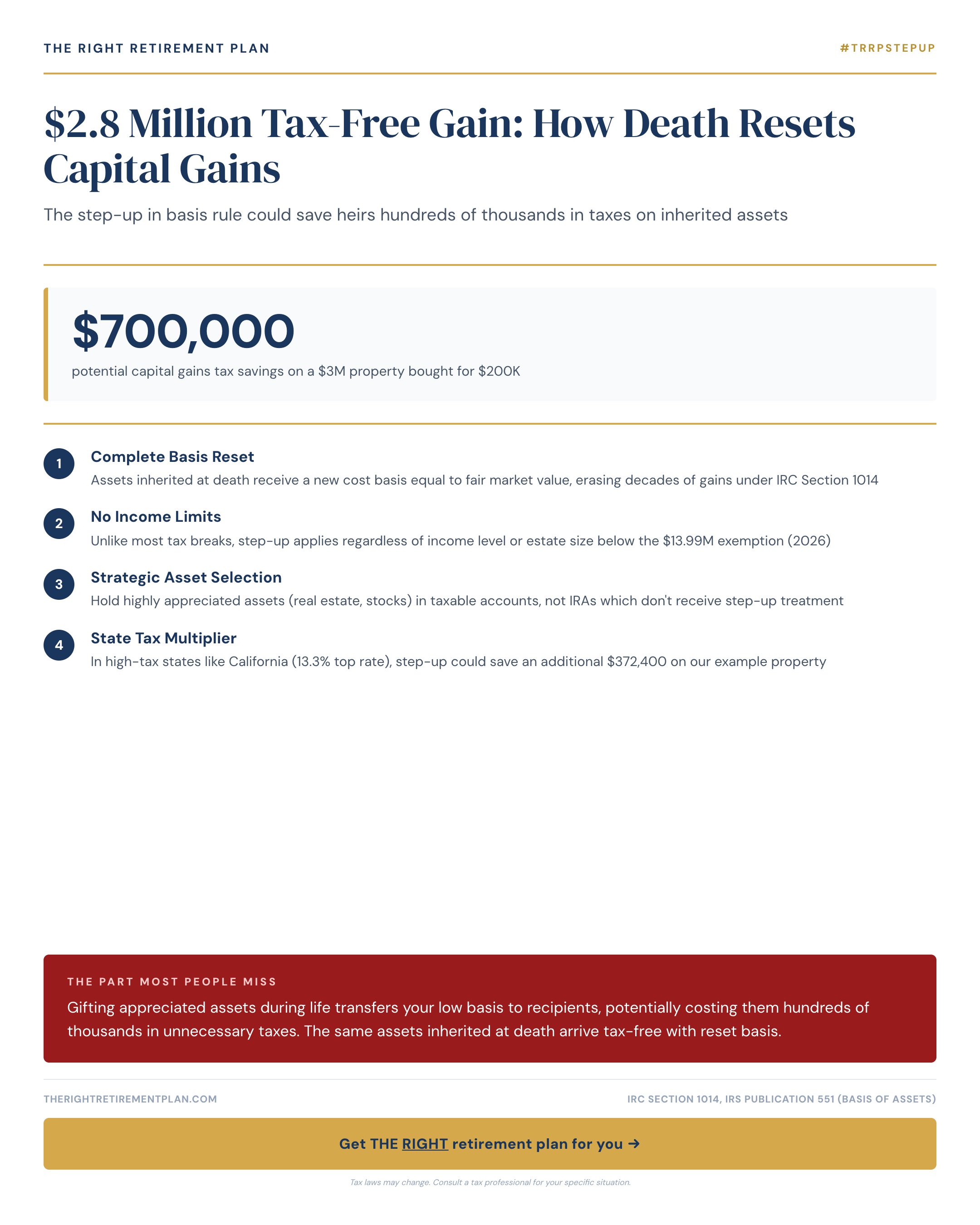
$2.8 Million Tax-Free Gain: How Death Resets Capital Gains

$2.8 Million Tax-Free Gain: How Death Resets Capital Gains

The step-up in basis rule can save heirs hundreds of thousands in taxes on inherited assets, making timing crucial for estate planning decisions.

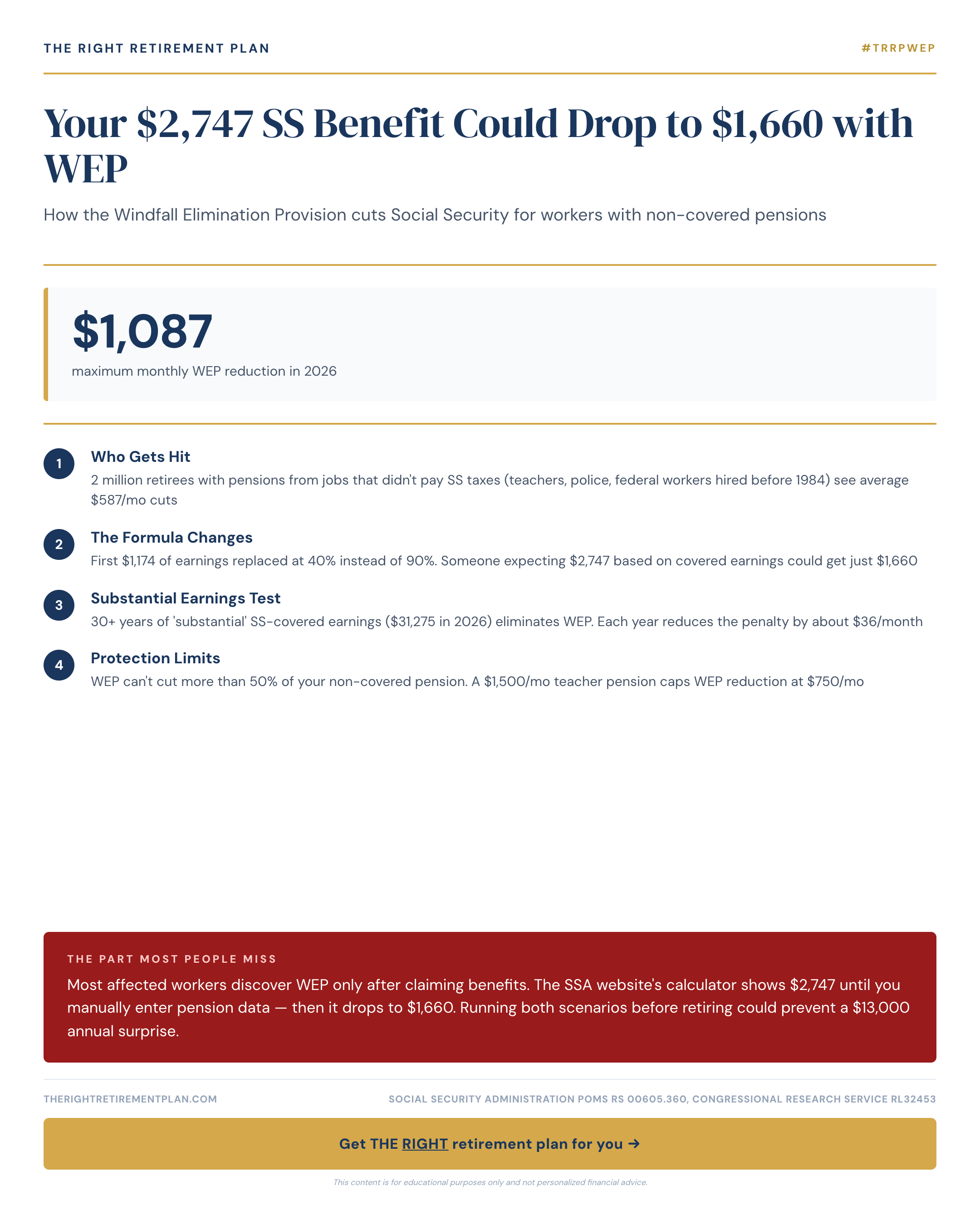
Your $2,747 SS Benefit Could Drop to $1,660 with WEP

Your $2,747 SS Benefit Could Drop to $1,660 with WEP

The Windfall Elimination Provision can slash Social Security benefits by over $1,000 monthly for workers with government or non-covered pensions, but understanding WEP rules helps you plan ahead and avoid costly surprises.

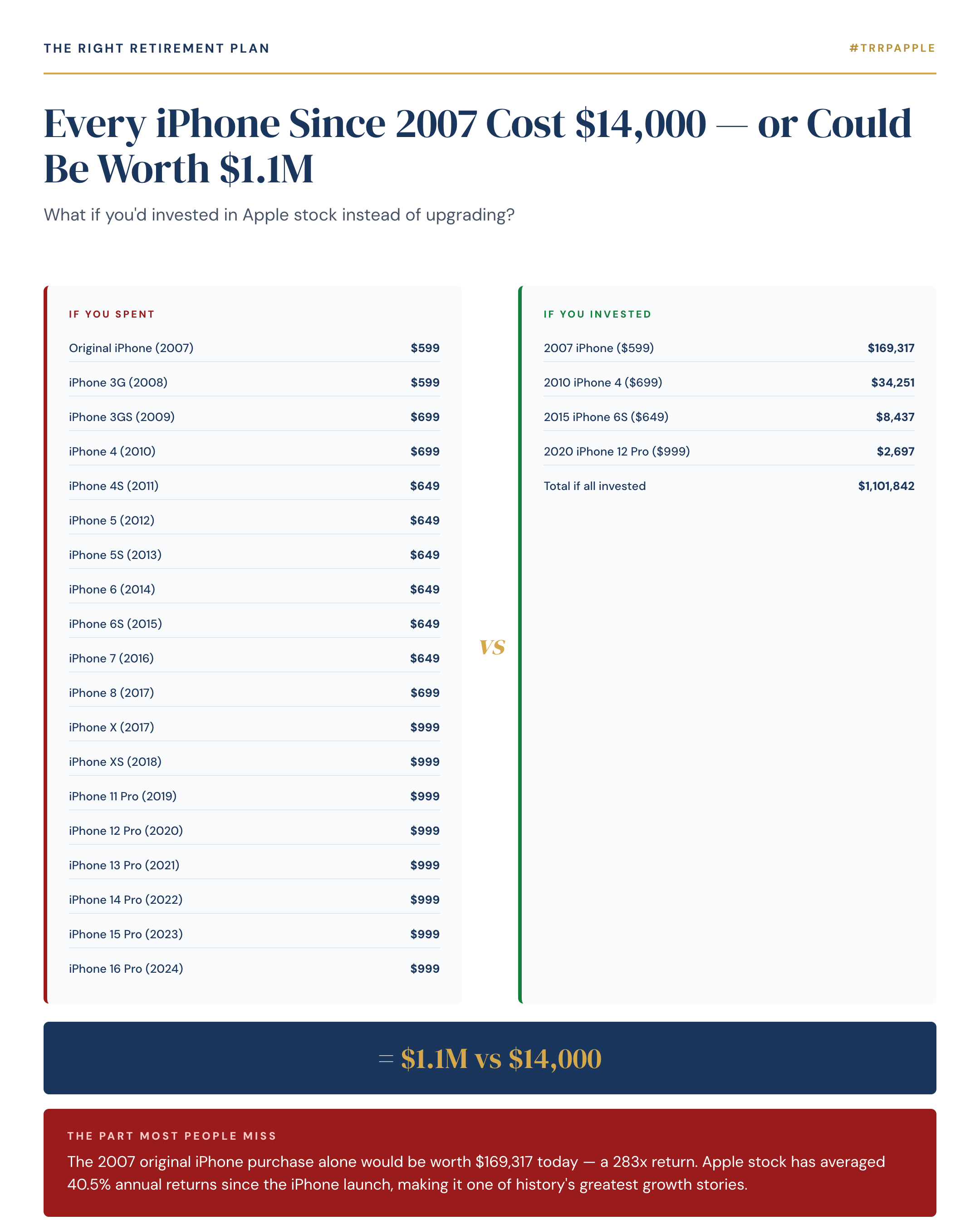
Every iPhone Since 2007 Cost $14,000 — or Could Be Worth $1.1M

Every iPhone Since 2007 Cost $14,000 — or Could Be Worth $1.1M

Since 2007, purchasing every new iPhone model would have cost about $14,000, but investing that money in Apple stock instead could have grown to over $1.1 million today.

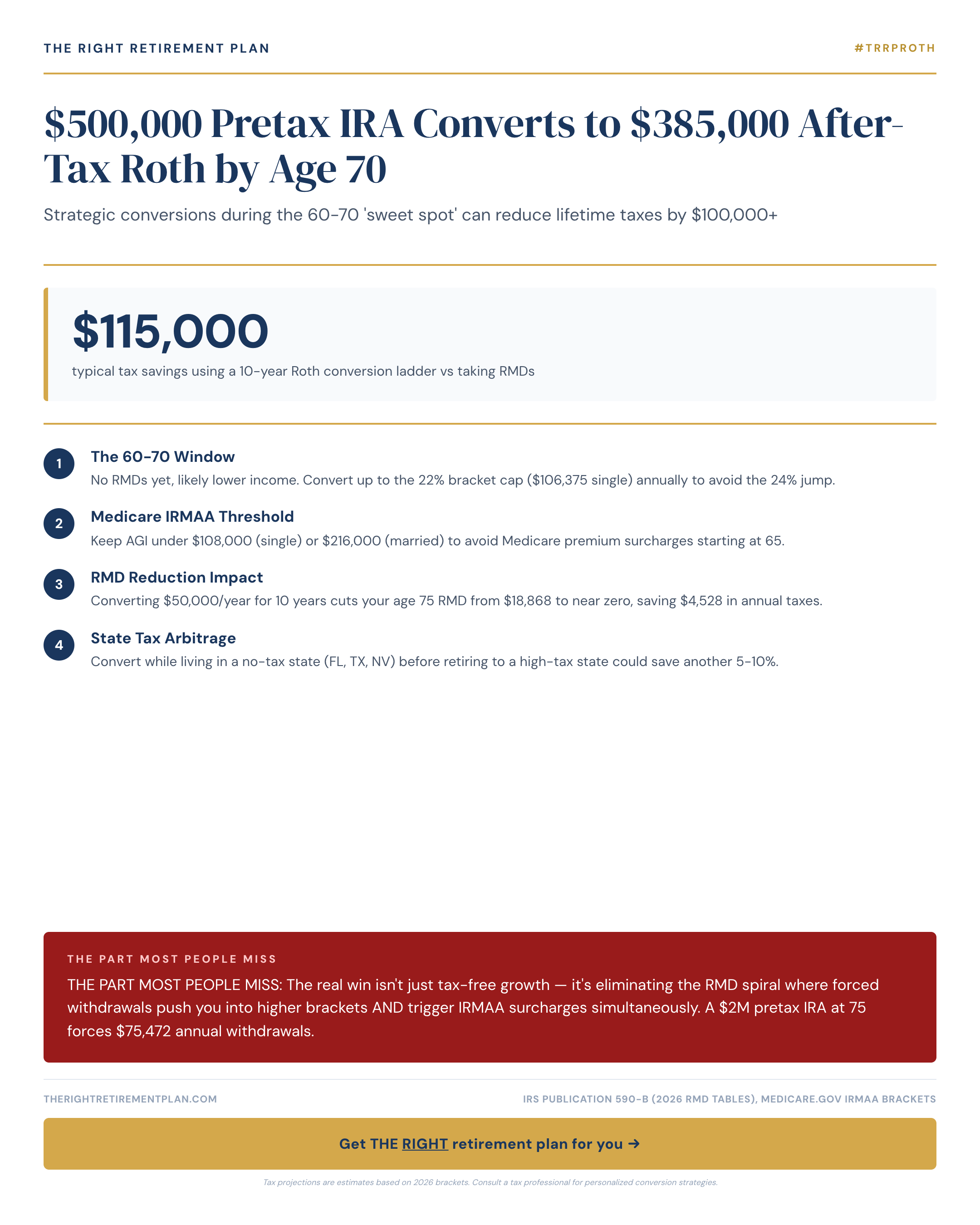
$500,000 Pretax IRA Converts to $385,000 After-Tax Roth by Age 70

$500,000 Pretax IRA Converts to $385,000 After-Tax Roth by Age 70

Converting $500K from pretax IRA to Roth during ages 60-70 costs about $115K in taxes but can save $100K+ in lifetime taxes by avoiding the RMD spiral that traps retirees in higher brackets.

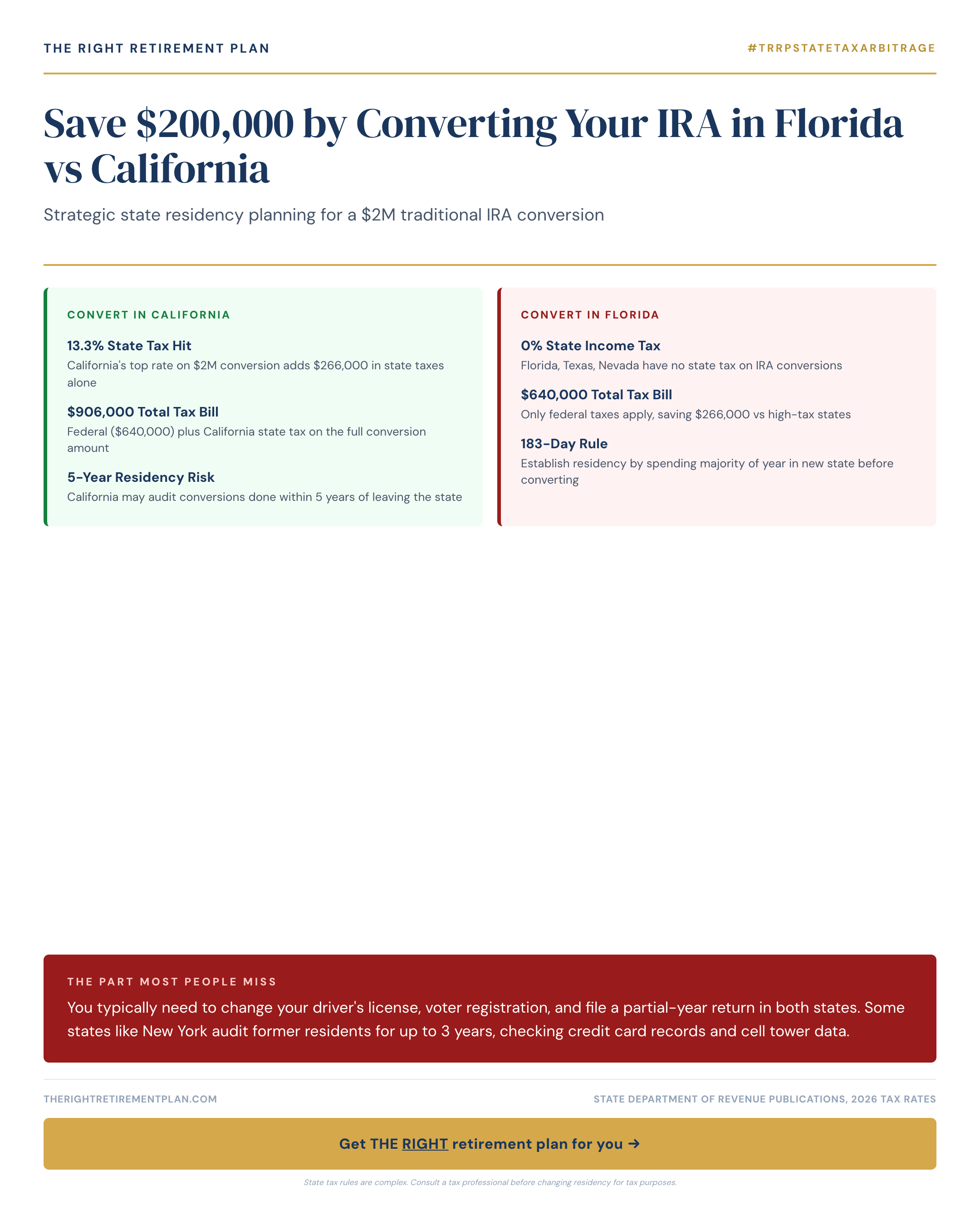
Save $200,000 by Converting Your IRA in Florida vs California

Save $200,000 by Converting Your IRA in Florida vs California

Moving from California to Florida before converting a $2M traditional IRA could save over $200,000 in state taxes. Here's what you need to know about strategic state residency planning for major Roth conversions.

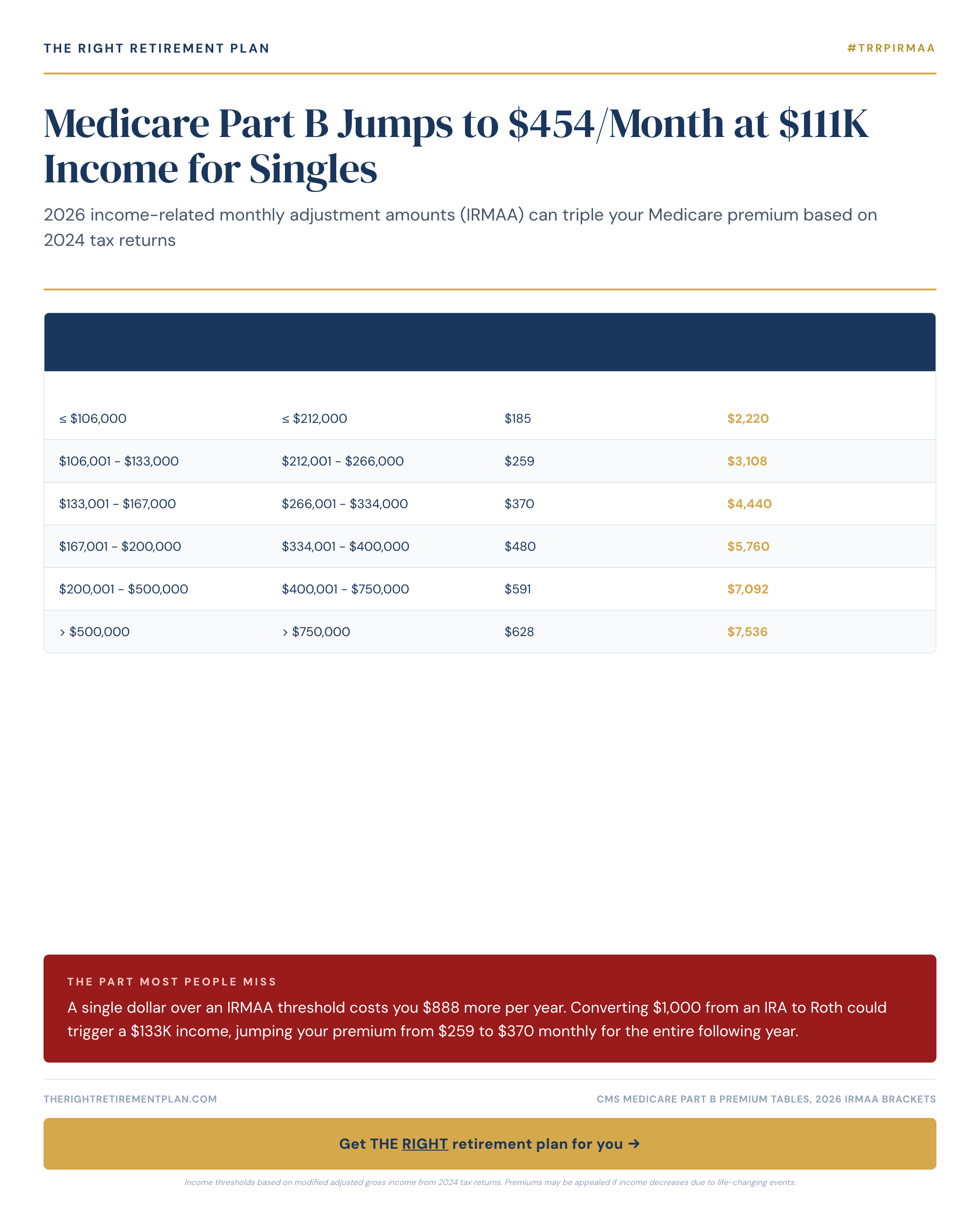
Medicare Part B Jumps to $454/Month at $111K Income for Singles

Medicare Part B Jumps to $454/Month at $111K Income for Singles

Medicare Part B premiums can jump to $454 monthly in 2026 for singles earning over $111K, based on 2024 tax returns. Understanding IRMAA thresholds helps Maryland retirees avoid costly premium surprises.

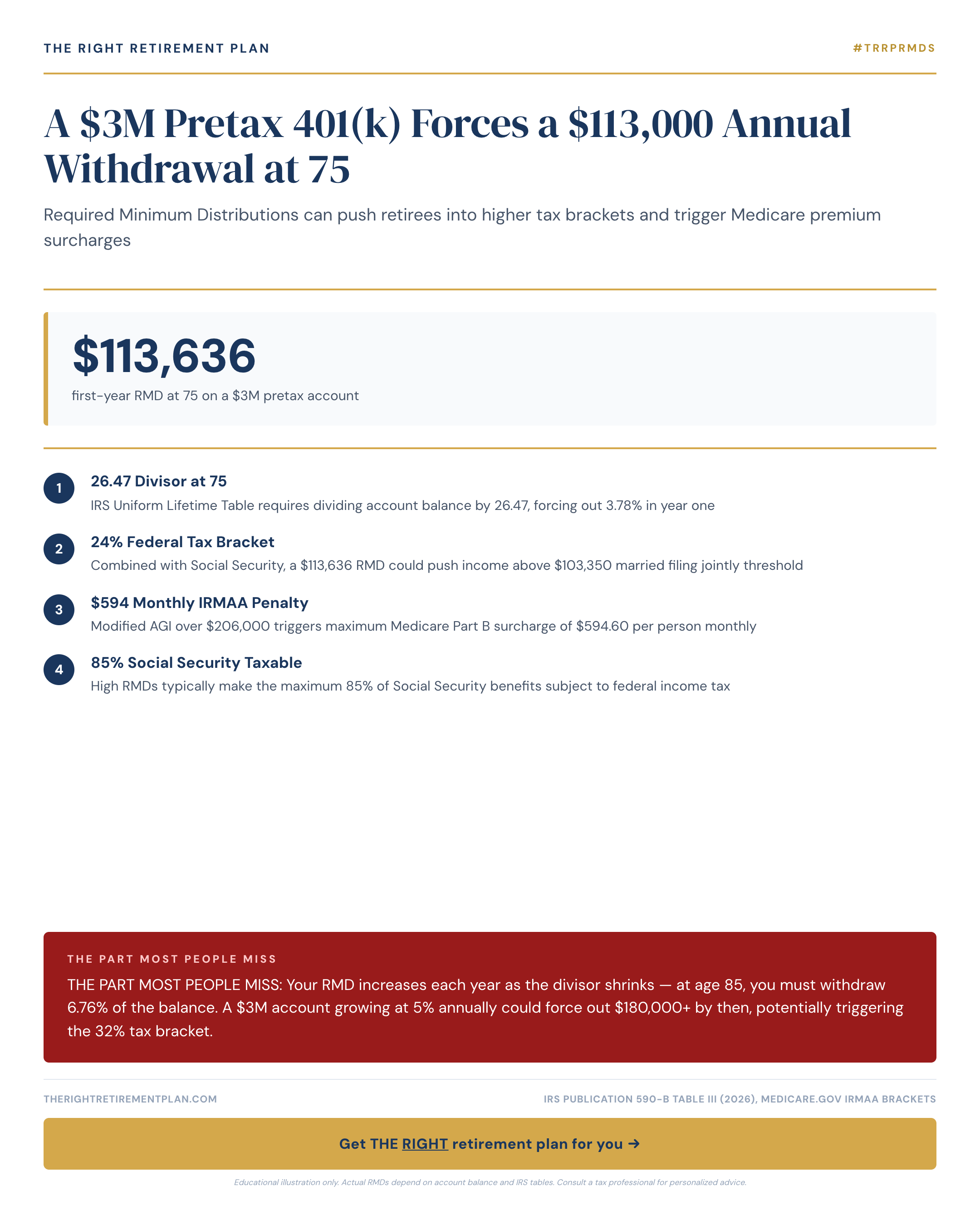
A $3M Pretax 401(k) Forces a $113,000 Annual Withdrawal at 75

A $3M Pretax 401(k) Forces a $113,000 Annual Withdrawal at 75

A $3M pretax 401(k) triggers approximately $131,000 in required withdrawals at age 75, potentially pushing retirees into higher tax brackets and Medicare surcharges. These distributions grow each year as IRS life expectancy divisors shrink, making strategic planning essential before RMDs begin.

The $182,000 Social Security Mistake

The $182,000 Social Security Mistake

The average married couple loses $182,000 in lifetime benefits by claiming Social Security at the wrong time. Learn the coordination strategies that can add six figures to your retirement income and protect your surviving spouse.

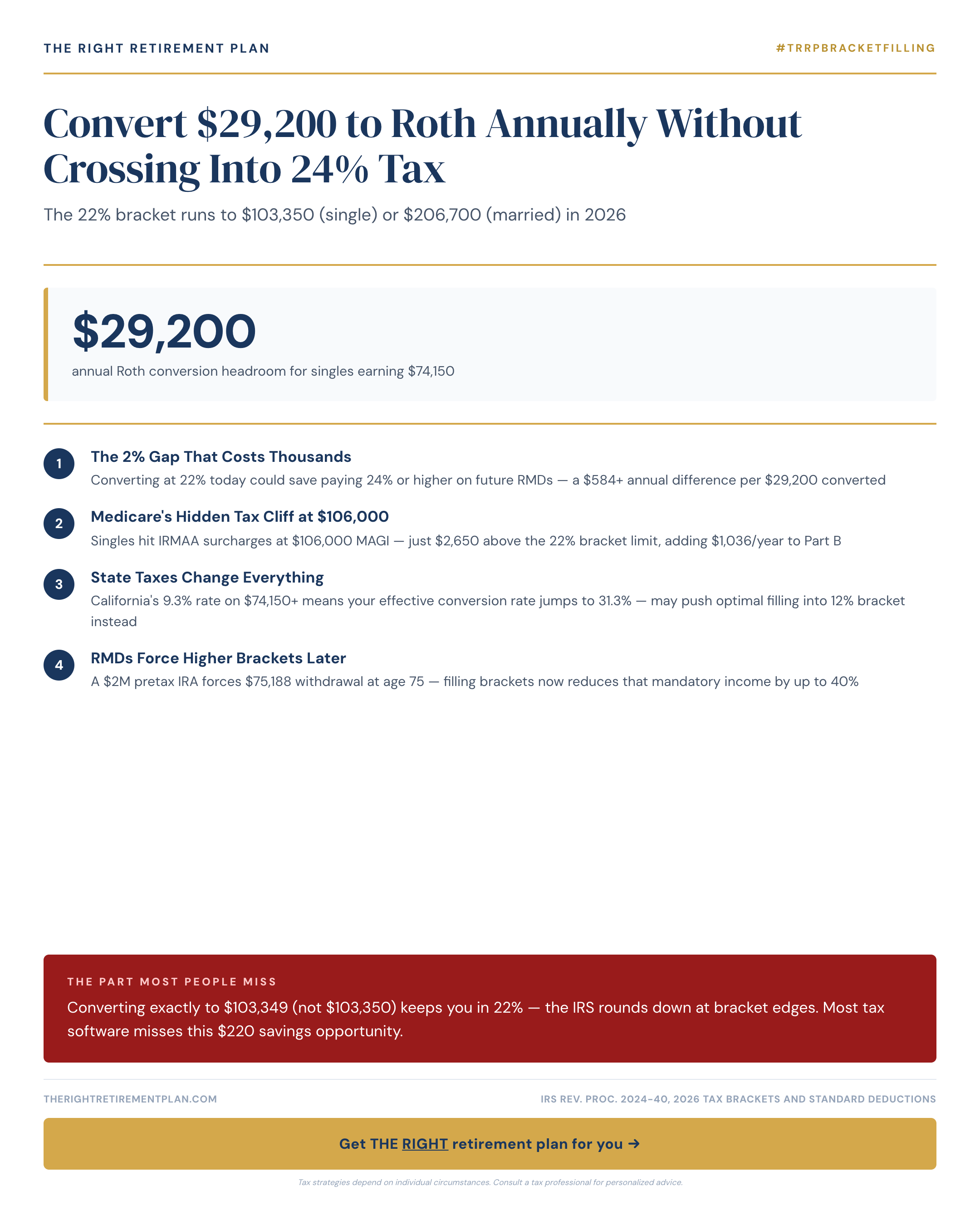
Convert $29,200 to Roth Annually Without Crossing Into 24% Tax

Convert $29,200 to Roth Annually Without Crossing Into 24% Tax

Strategic Roth conversions up to $29,200 annually can keep some retirees in the 22% tax bracket instead of paying 24%. Learn the 2026 thresholds, timing strategies, and IRMAA considerations that maximize your conversion opportunity.

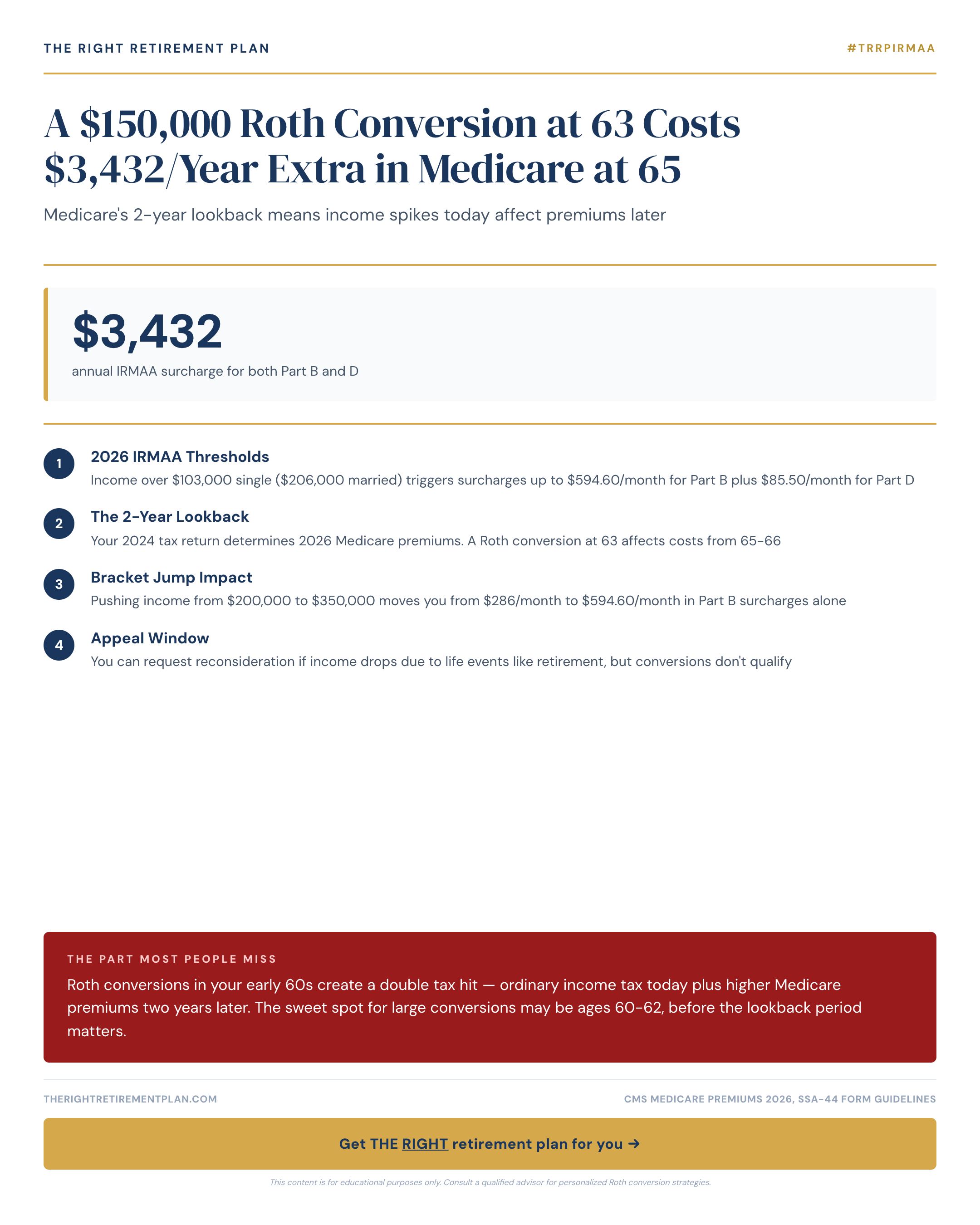
A $150,000 Roth Conversion at 63 Costs $3,432/Year Extra in Medicare at 65

A $150,000 Roth Conversion at 63 Costs $3,432/Year Extra in Medicare at 65

A $150,000 Roth conversion at age 63 can trigger Medicare's IRMAA lookback, adding $3,432 annually to premiums starting at 65. Strategic timing and bracket-aware conversions can save thousands in hidden costs.

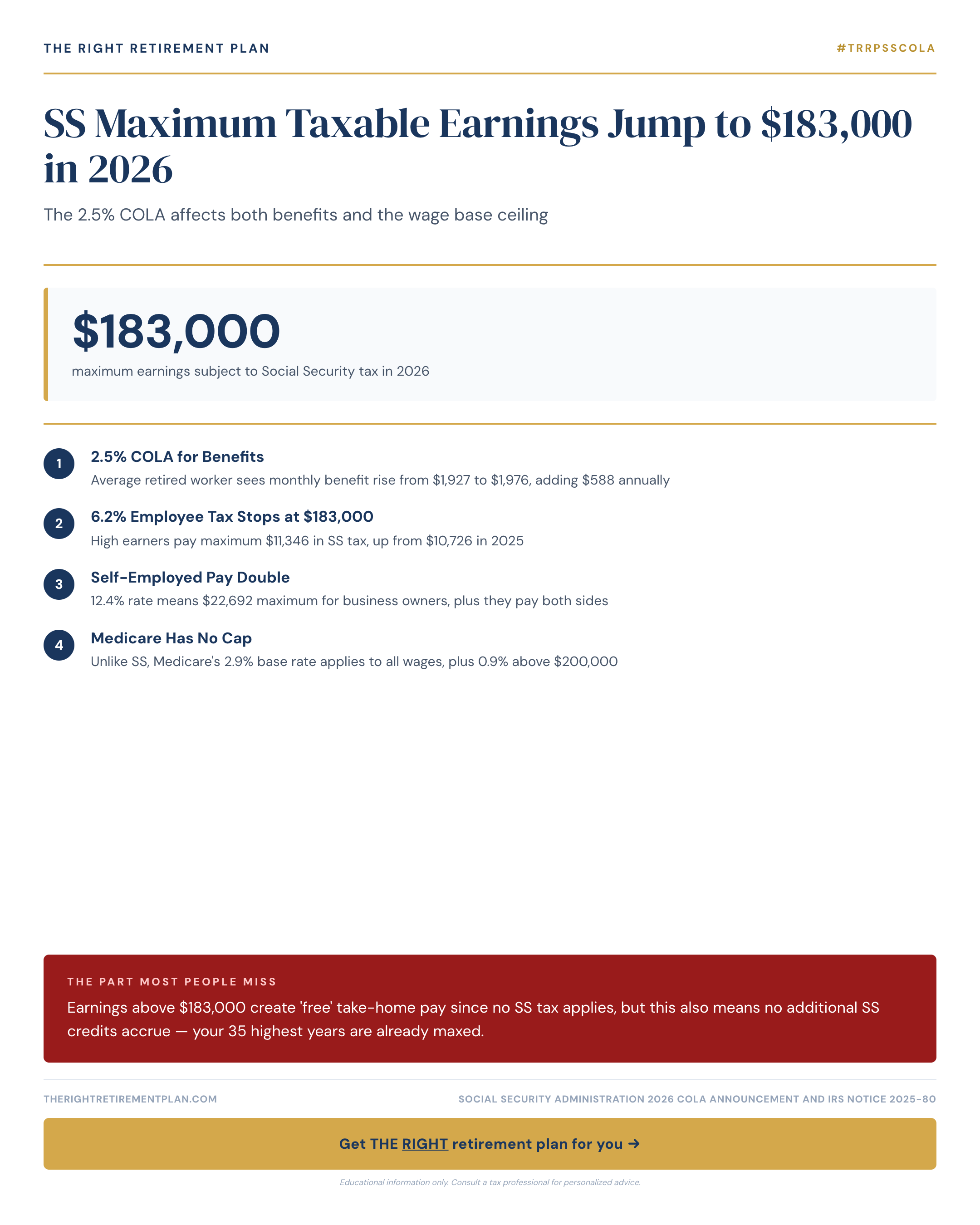
SS Maximum Taxable Earnings Jump to $183,000 in 2026

SS Maximum Taxable Earnings Jump to $183,000 in 2026

Social Security's maximum taxable earnings will jump to $183,000 in 2026, affecting high earners' take-home pay and retirement credits. Understanding this wage base ceiling is crucial for optimal retirement planning.

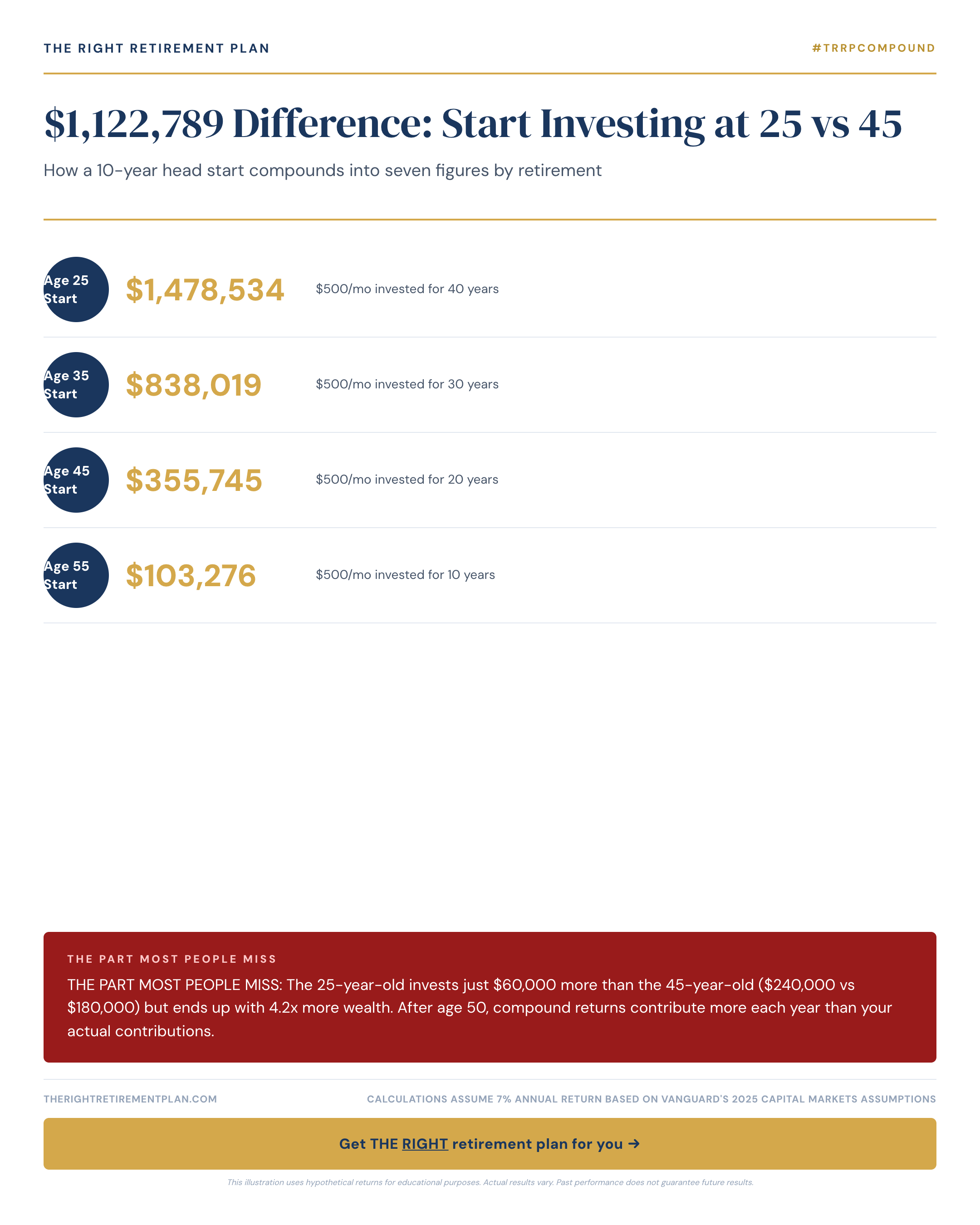
$1,122,789 Difference: Start Investing at 25 vs 45

$1,122,789 Difference: Start Investing at 25 vs 45

Starting retirement investing at 25 versus 45 creates a $1.1 million wealth gap by age 65, even though the early starter contributes just $60,000 more total. Compound growth makes the difference between financial security and struggle in retirement.

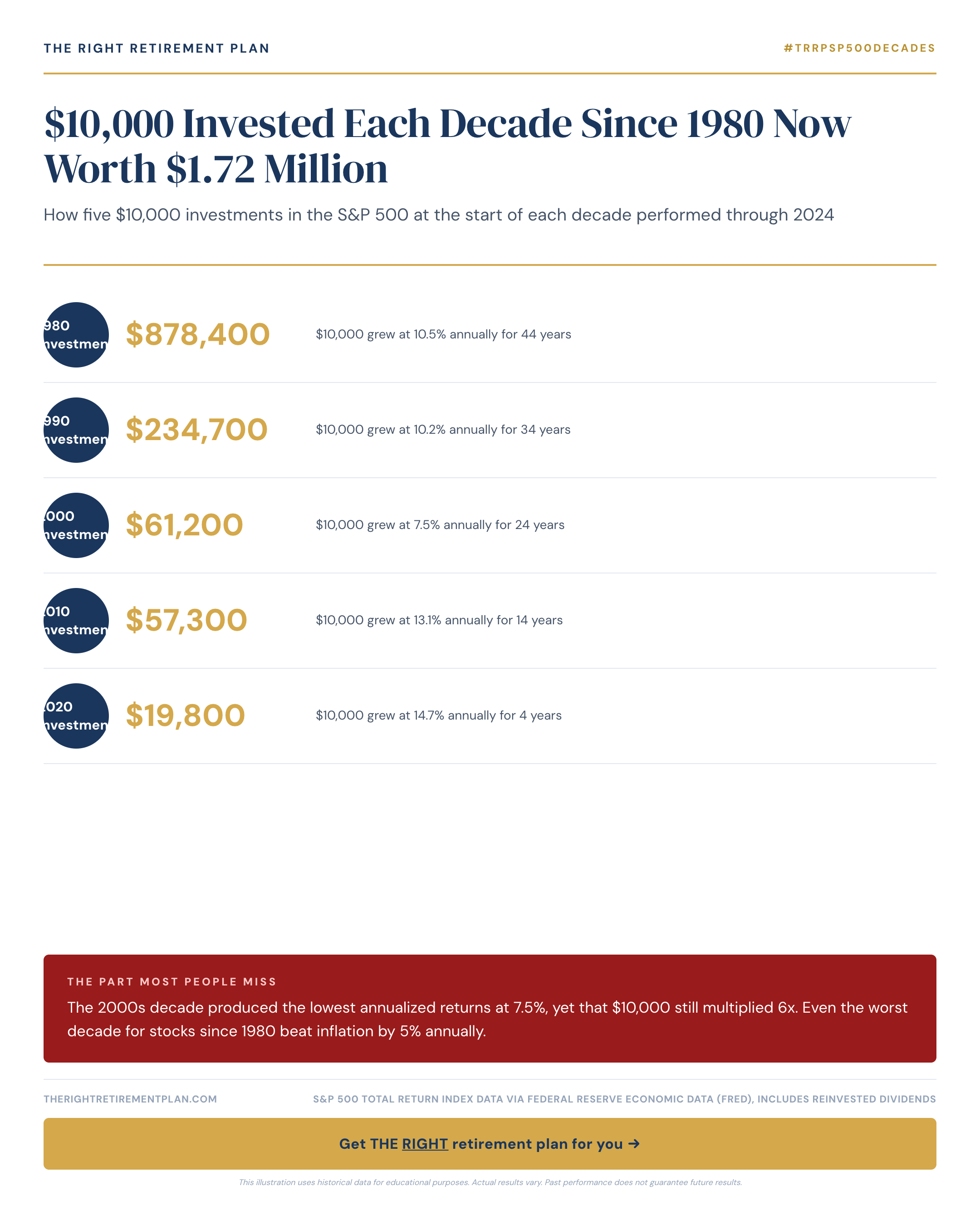
$10,000 Invested Each Decade Since 1980 Now Worth $1.72 Million

$10,000 Invested Each Decade Since 1980 Now Worth $1.72 Million

A $50,000 investment spread across five decades in the S&P 500 would be worth $1.72 million today, demonstrating how consistent long-term investing can build substantial retirement wealth even through market volatility.

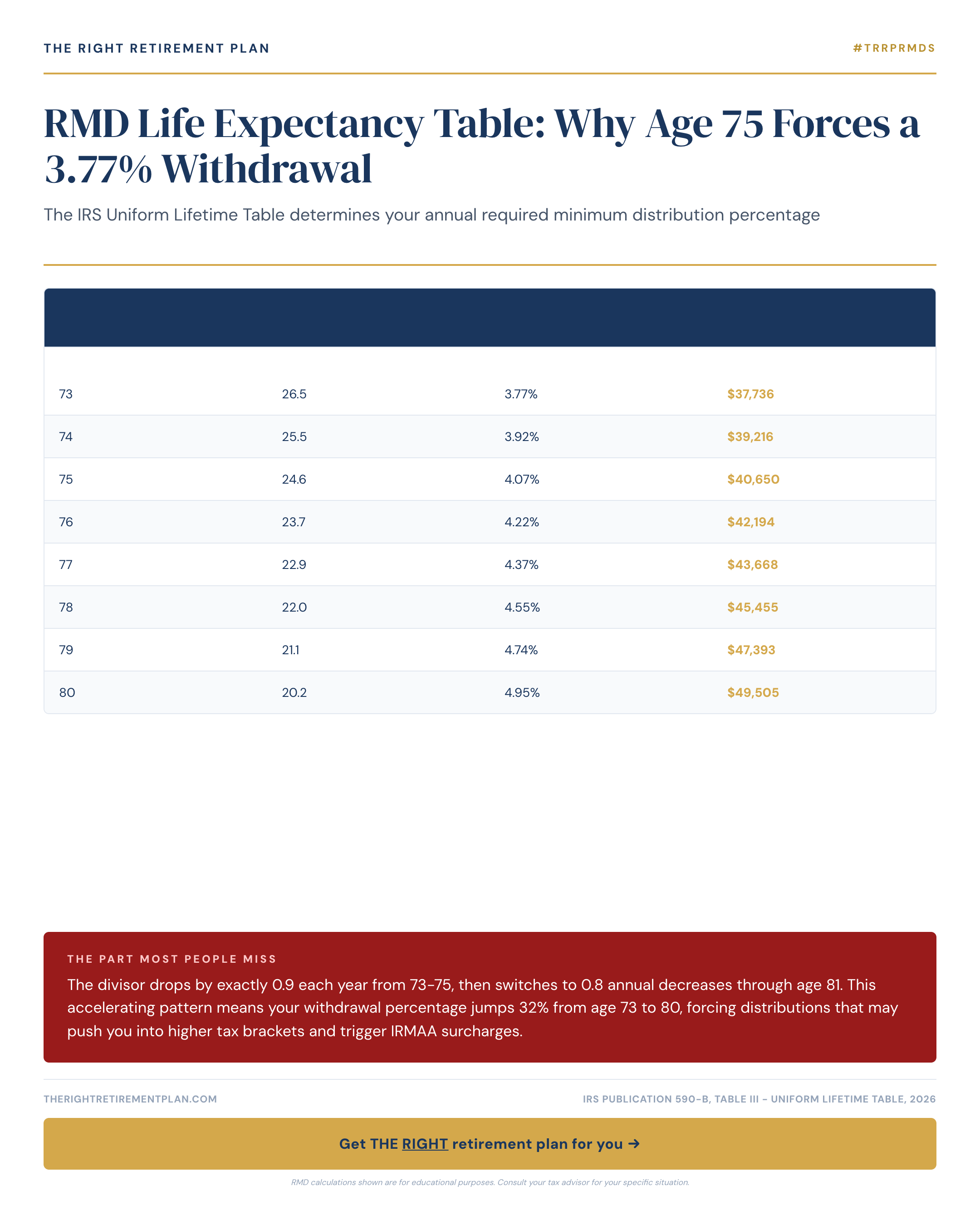
RMD Life Expectancy Table: Why Age 75 Forces a 3.77% Withdrawal

RMD Life Expectancy Table: Why Age 75 Forces a 3.77% Withdrawal

The IRS Uniform Lifetime Table forces increasingly larger required minimum distributions as you age, with withdrawal rates jumping from 2.74% at 73 to 3.77% at 75. Understanding these escalating percentages helps Maryland retirees plan for higher tax brackets and potential Medicare surcharges.

A trusted, educational resource for people approaching or in retirement

A trusted, educational resource for people approaching or in retirement

The Right Retirement Plan provides trusted retirement education where complex financial rules are explained clearly, helping pre-retirees avoid costly mistakes through expert guidance from vetted fiduciaries.

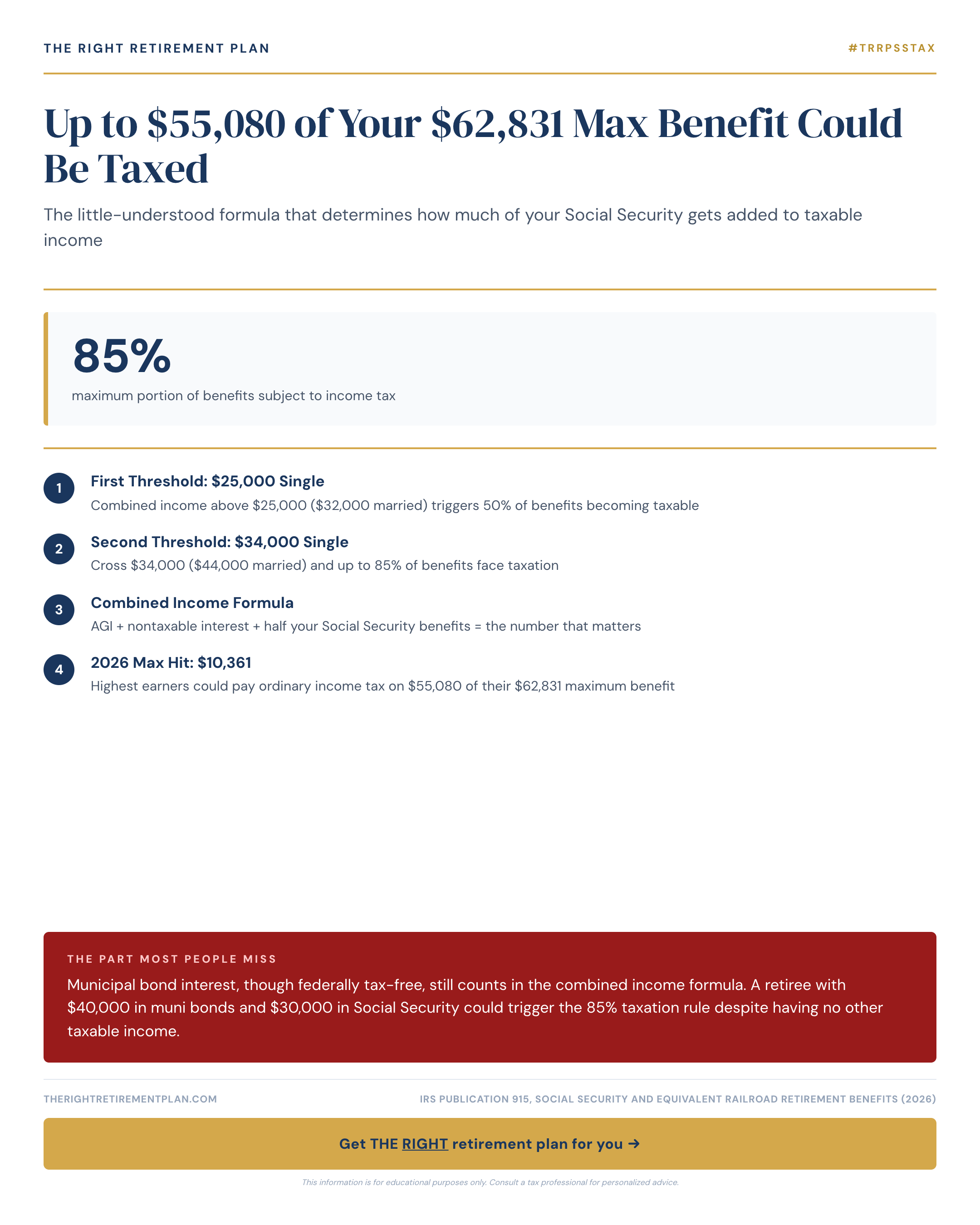
Up to $55,080 of Your $62,831 Max Benefit Could Be Taxed

Up to $55,080 of Your $62,831 Max Benefit Could Be Taxed

Up to 85% of your Social Security benefits could become taxable income, potentially costing you thousands annually. Understanding the combined income formula is crucial for effective retirement tax planning.

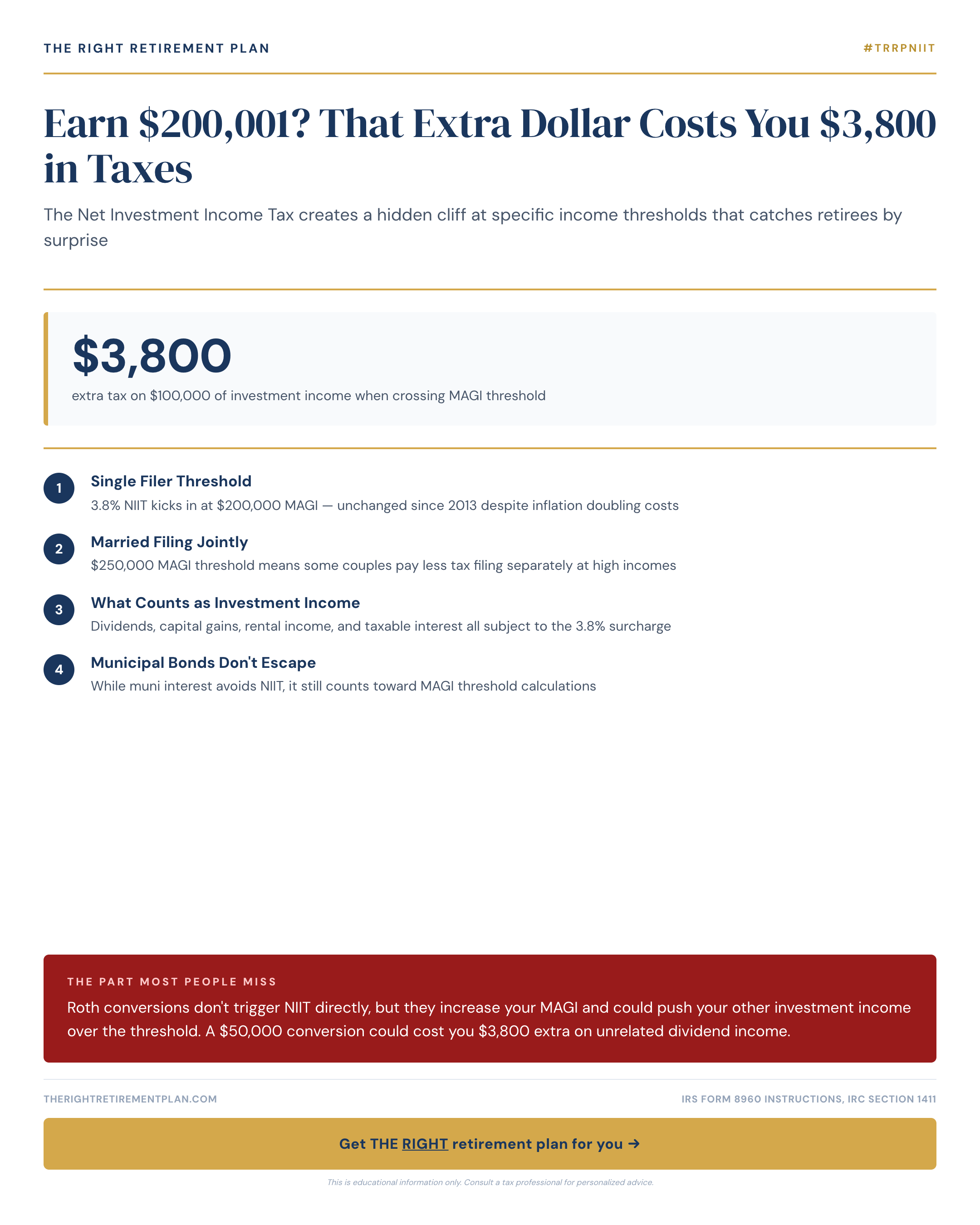
Earn $200,001? That Extra Dollar Costs You $3,800 in Taxes

Earn $200,001? That Extra Dollar Costs You $3,800 in Taxes

A single dollar over $200,000 in income can trigger the Net Investment Income Tax, costing retirees an extra 3.8% on their investment income—but there are strategies to avoid this costly threshold.

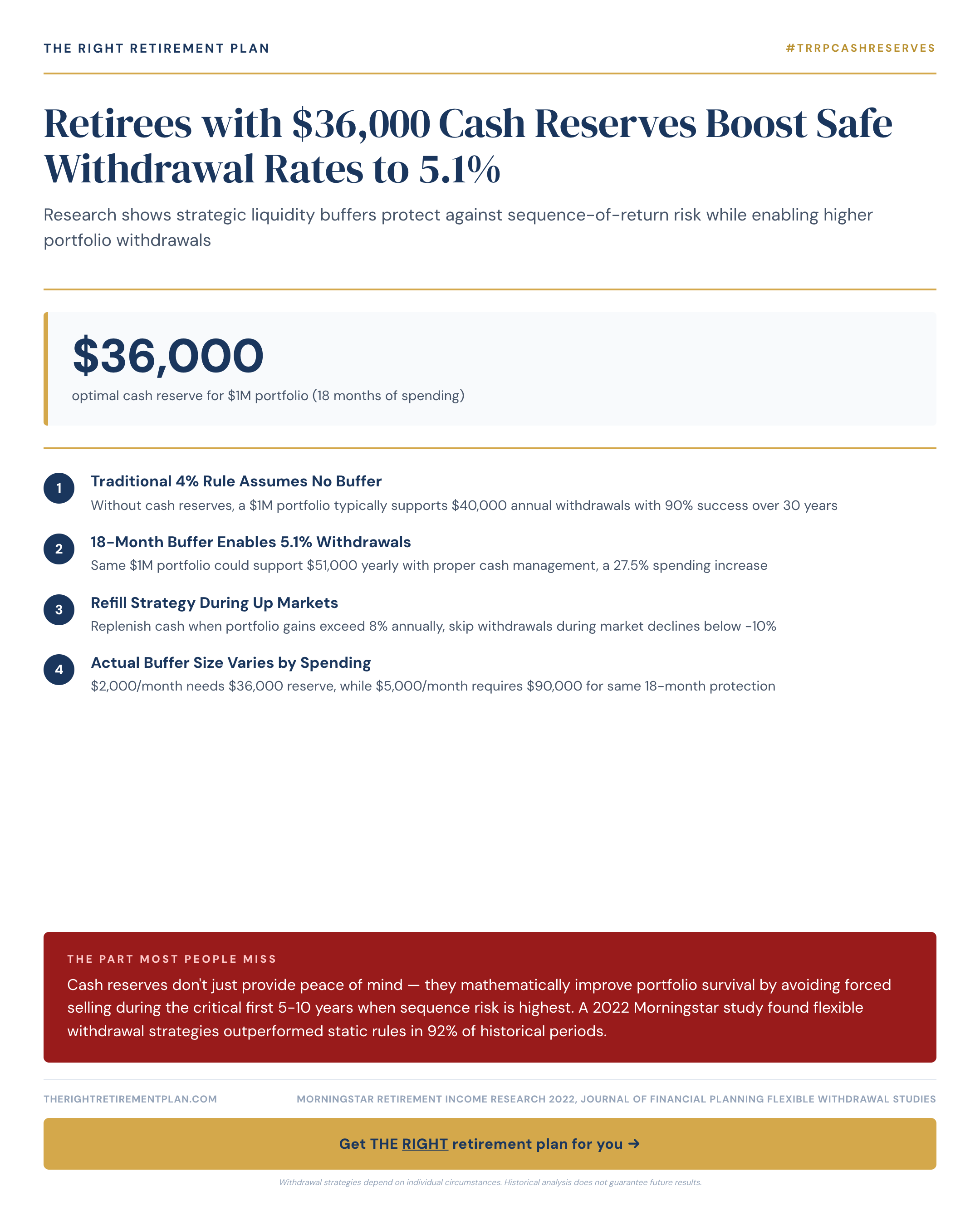
Retirees with $36,000 Cash Reserves Boost Safe Withdrawal Rates to 5.1%

Retirees with $36,000 Cash Reserves Boost Safe Withdrawal Rates to 5.1%

Strategic cash reserves of $36,000 can increase your safe withdrawal rate from 4% to 5.1%, adding nearly $8,000 annually to retirement income. This isn't just emergency planning—it's mathematically proven portfolio protection against sequence-of-return risk.

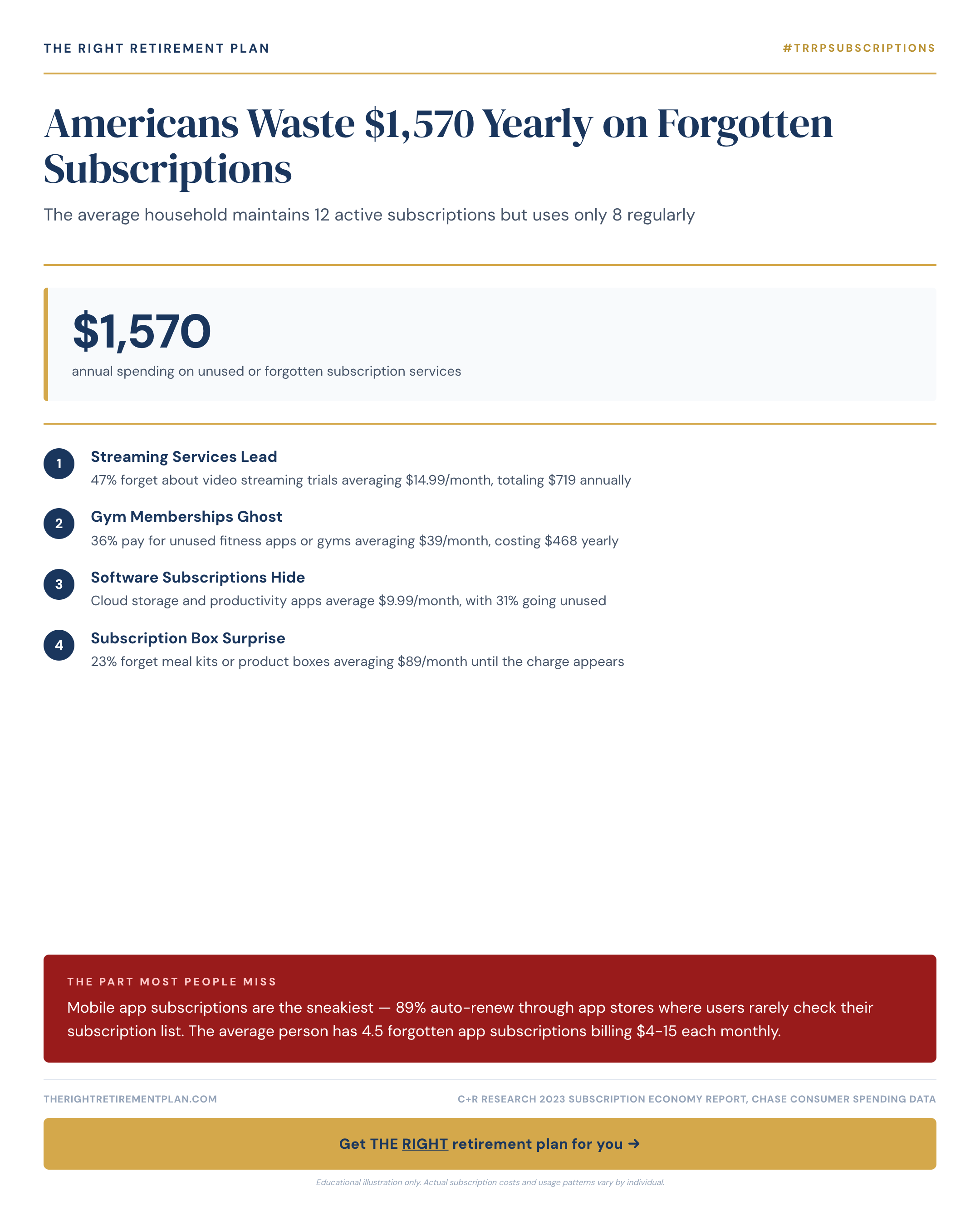
Americans Waste $1,570 Yearly on Forgotten Subscriptions

Americans Waste $1,570 Yearly on Forgotten Subscriptions

The average household wastes $1,570 annually on forgotten subscriptions, maintaining 12 active services but using only 8 regularly. These hidden costs can significantly impact your retirement savings if left unchecked.

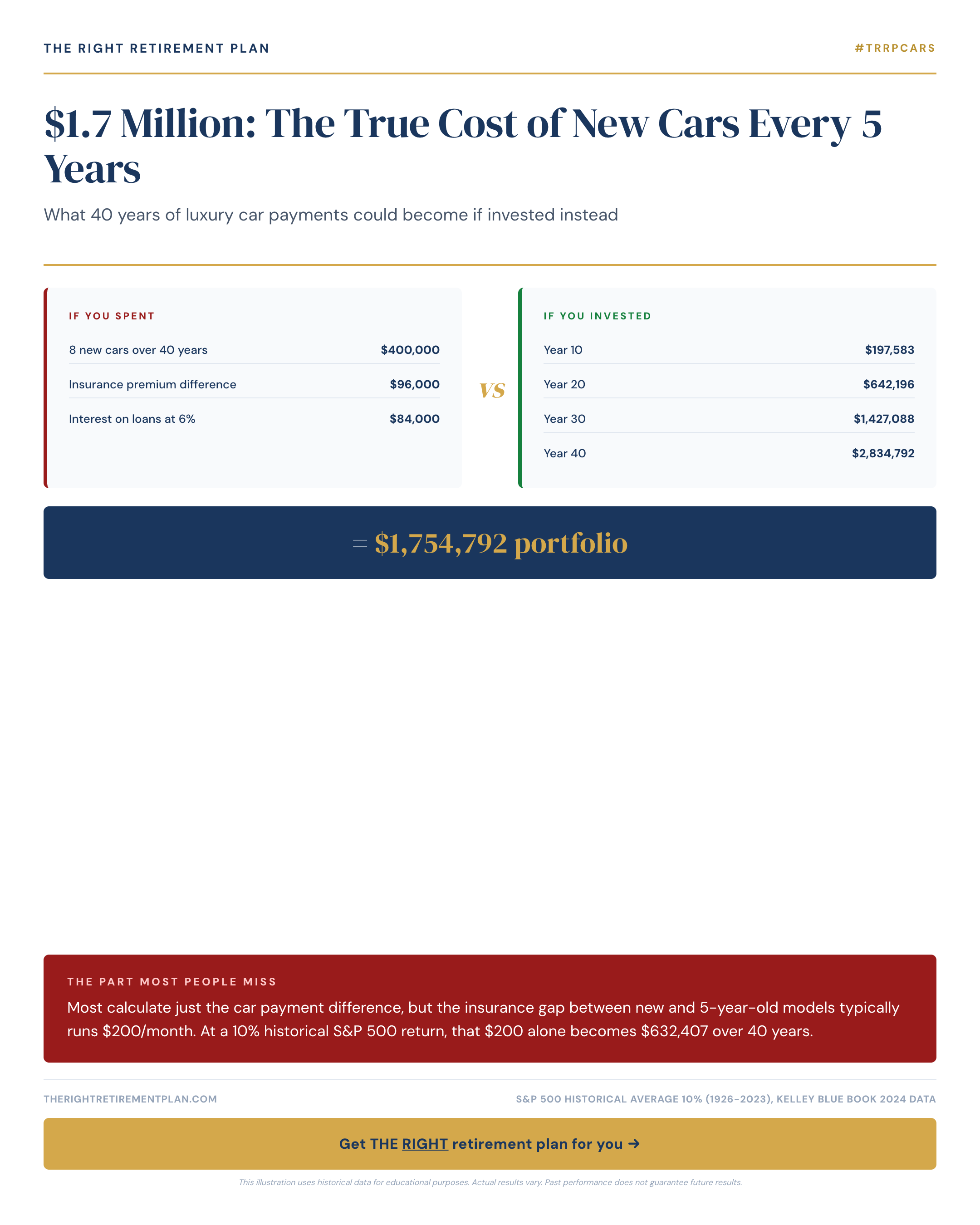
$1.7 Million: The True Cost of New Cars Every 5 Years

$1.7 Million: The True Cost of New Cars Every 5 Years

Buying a new car every 5 years instead of keeping one longer could cost you $1.7 million in retirement wealth. Here's the real math behind this expensive habit and how to break it.

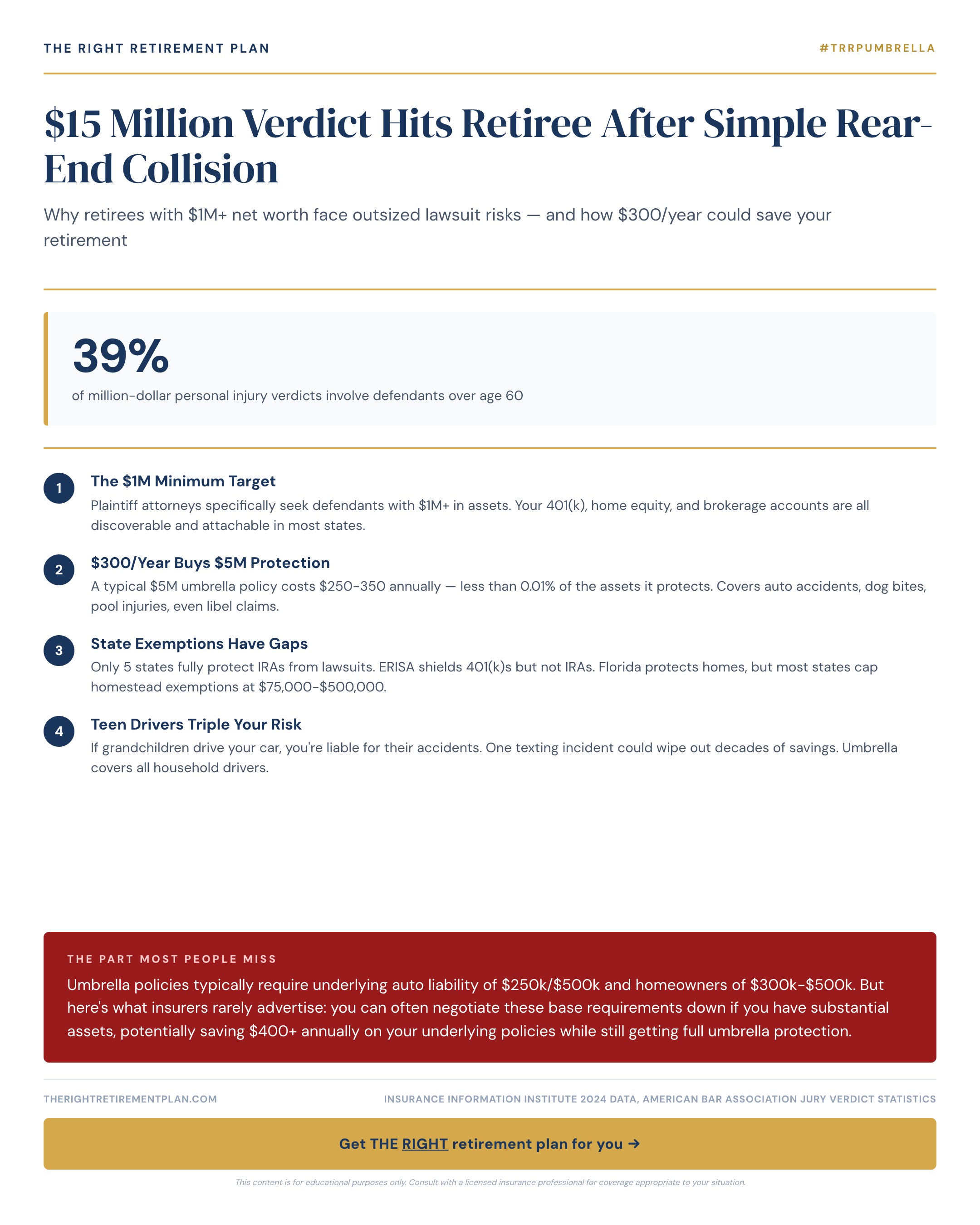
$15 Million Verdict Hits Retiree After Simple Rear-End Collision

$15 Million Verdict Hits Retiree After Simple Rear-End Collision

A $15 million verdict against a retiree in a simple rear-end collision shows why high-net-worth individuals need umbrella insurance protection beyond standard auto coverage.

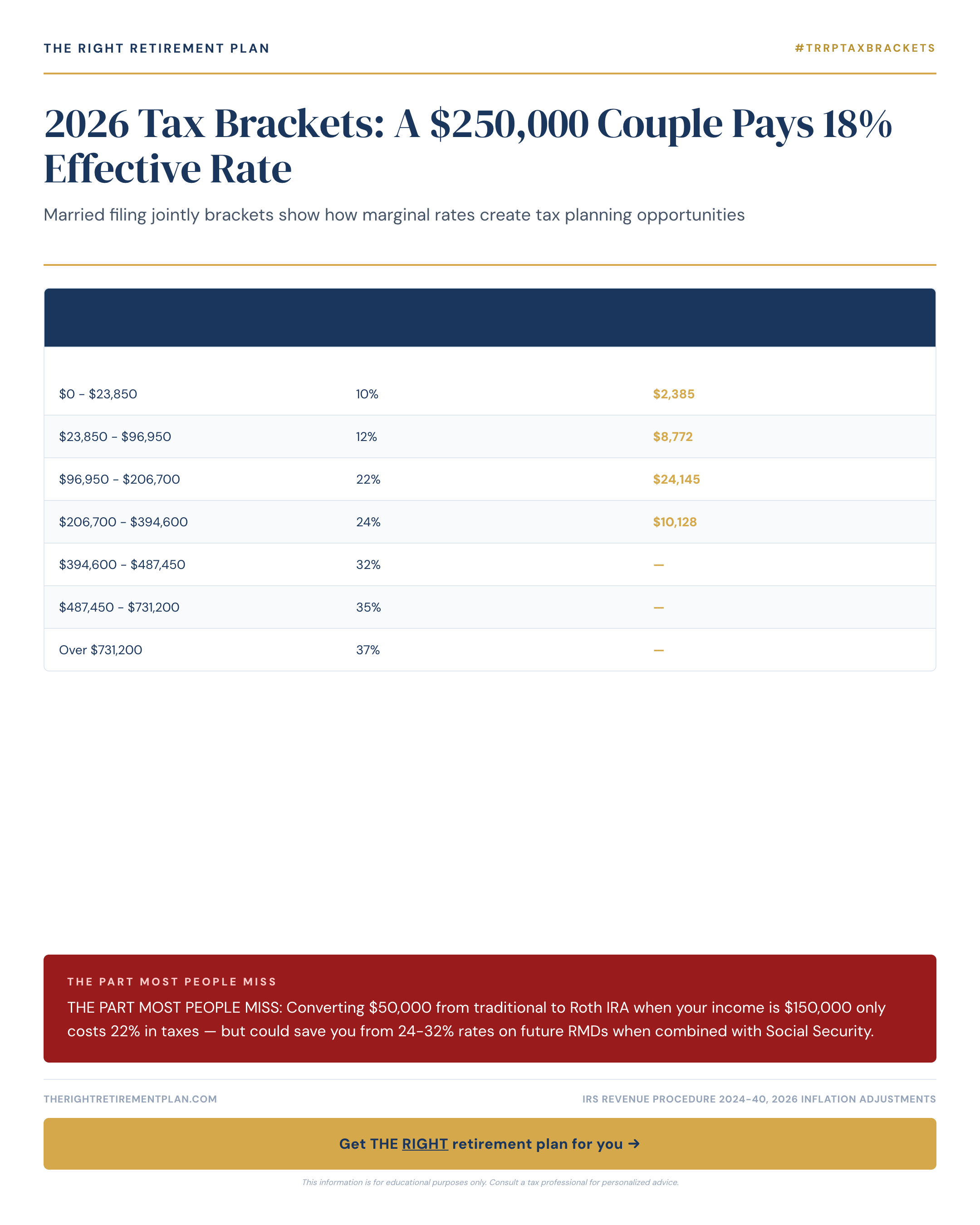
2026 Tax Brackets: A $250,000 Couple Pays 18% Effective Rate

2026 Tax Brackets: A $250,000 Couple Pays 18% Effective Rate

Understanding 2026 tax brackets helps married couples plan smarter retirement moves. A $250,000 household typically pays just 18% effective tax rate, creating opportunities for strategic Roth conversions and tax-efficient withdrawals.

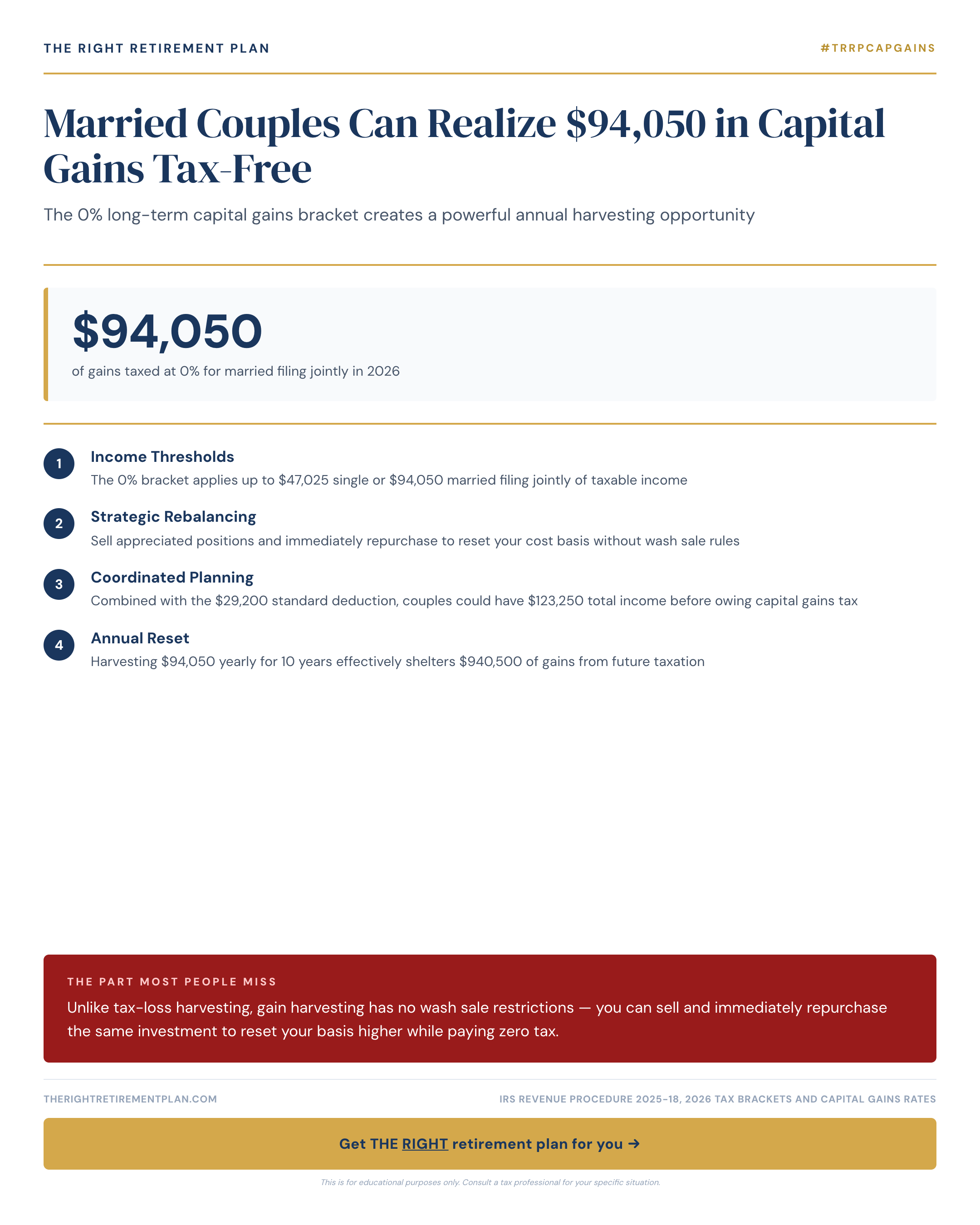
Married Couples Can Realize $94,050 in Capital Gains Tax-Free

Married Couples Can Realize $94,050 in Capital Gains Tax-Free

Married couples can harvest up to $94,050 in capital gains completely tax-free in 2026 using the 0% long-term capital gains bracket, creating a powerful annual opportunity to reset investment basis while paying zero tax.

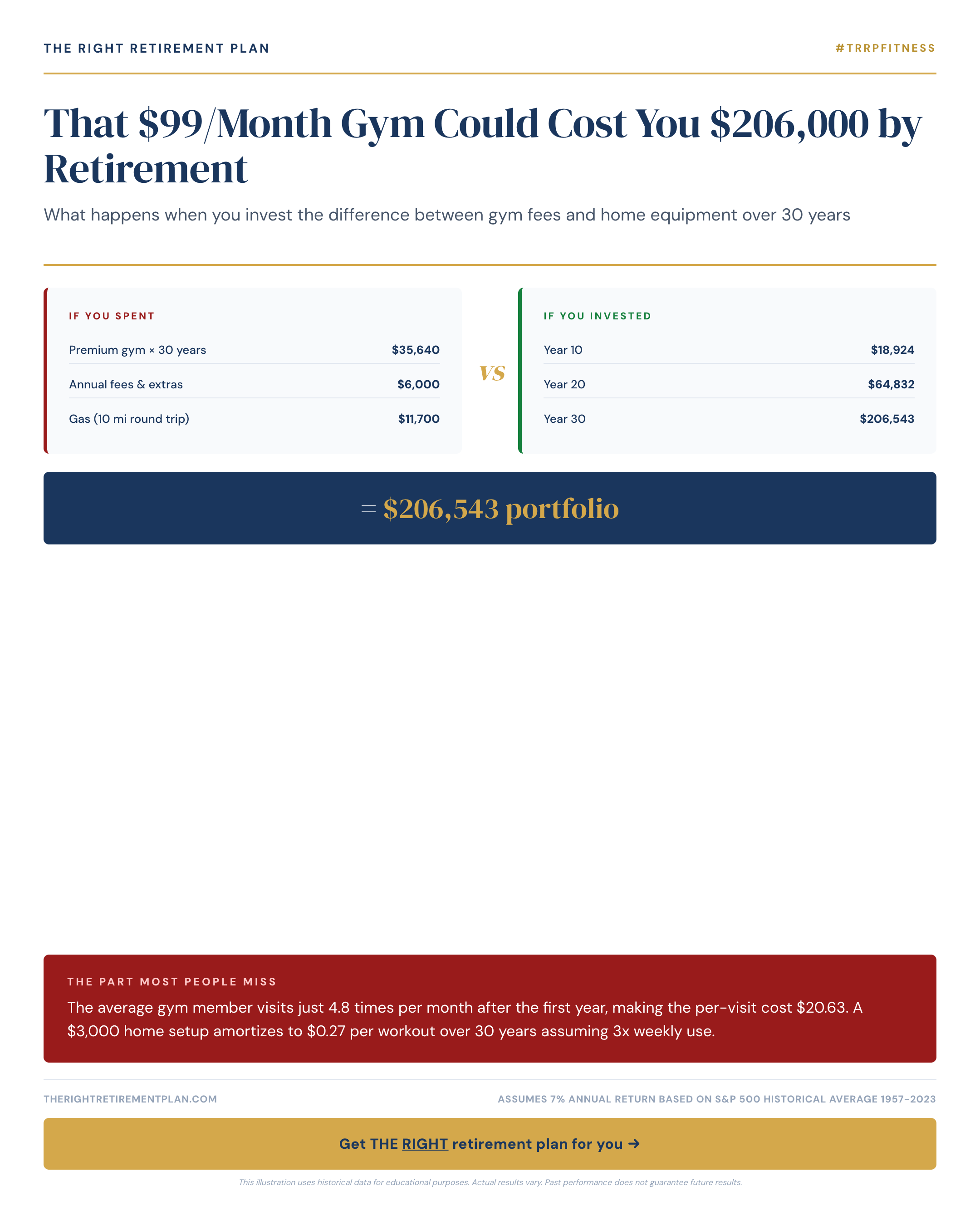
That $99/Month Gym Could Cost You $206,000 by Retirement

That $99/Month Gym Could Cost You $206,000 by Retirement

A $99 monthly gym membership could cost you over $206,000 in retirement savings. Here's why investing the difference between gym fees and home equipment makes financial sense for pre-retirees.
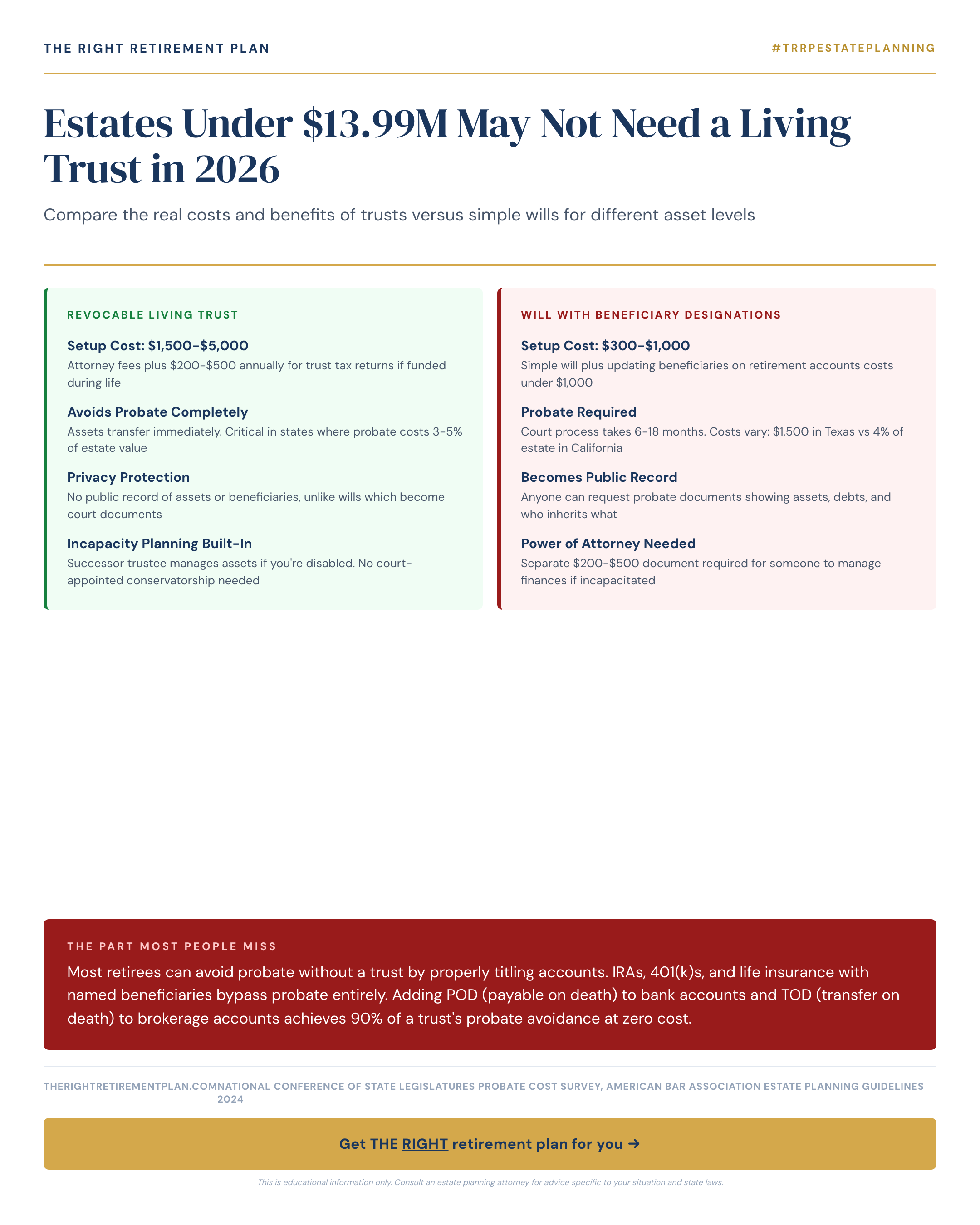
Estates Under $13.99M May Not Need a Living Trust in 2026

Estates Under $13.99M May Not Need a Living Trust in 2026

For estates under the 2026 federal exemption of $13.99 million, proper beneficiary designations and account titling can achieve most living trust benefits at zero cost. Learn when you actually need a trust versus simple probate avoidance strategies.

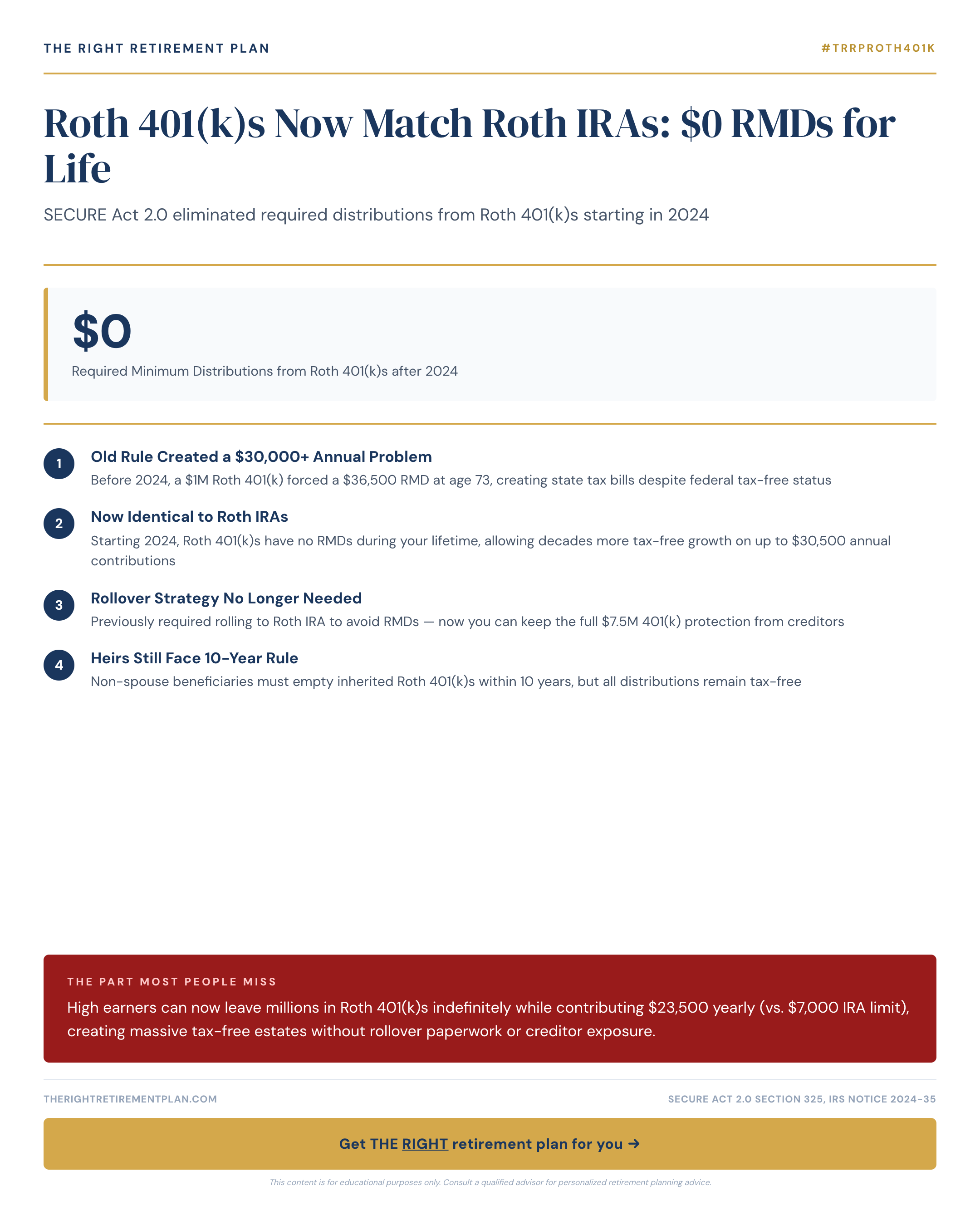
Roth 401(k)s Now Match Roth IRAs: $0 RMDs for Life

Roth 401(k)s Now Match Roth IRAs: $0 RMDs for Life

SECURE Act 2.0 eliminated required distributions from Roth 401(k)s starting in 2024, creating a powerful new wealth-building opportunity for high earners who can now leave tax-free money untouched for life.

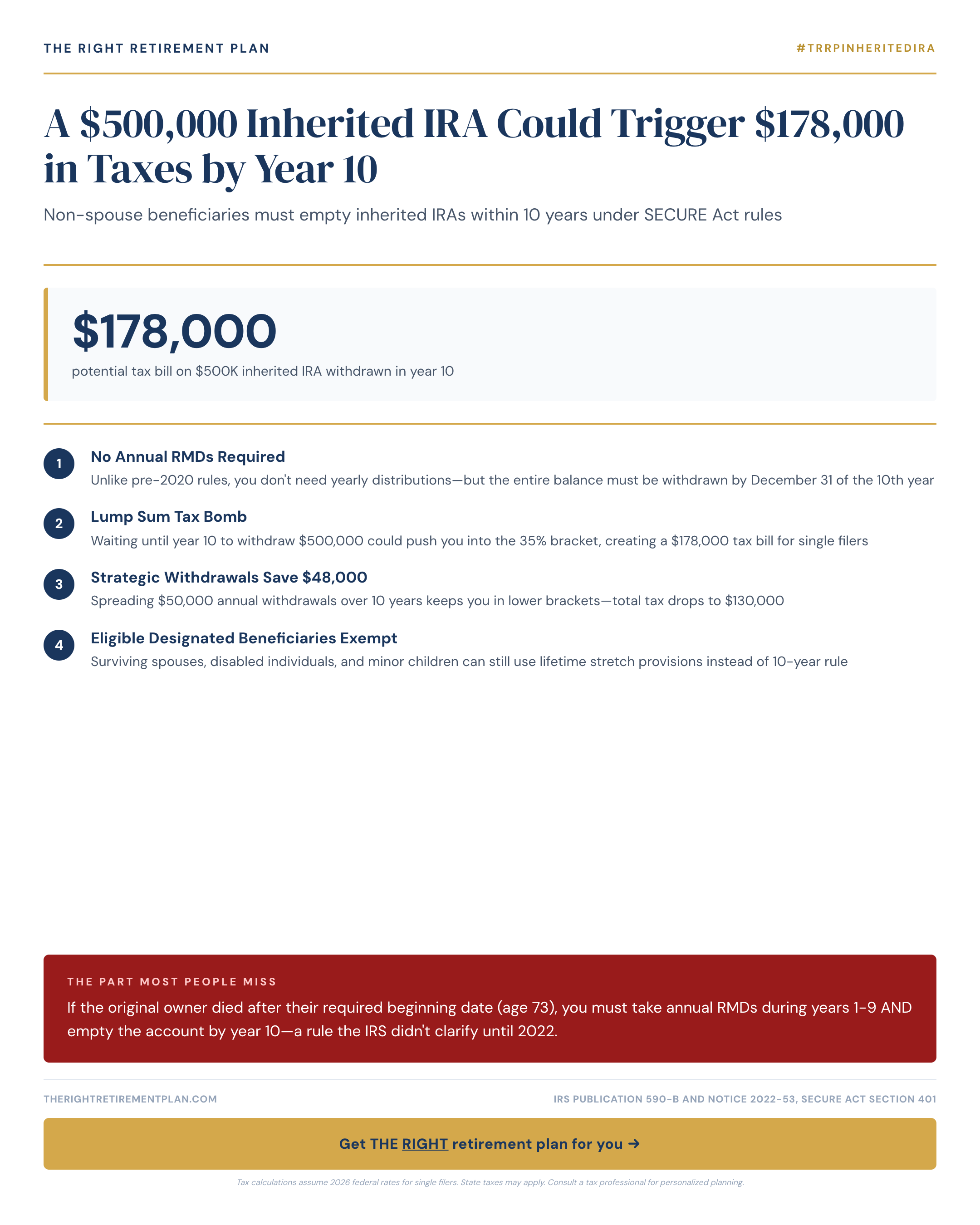
A $500,000 Inherited IRA Could Trigger $178,000 in Taxes by Year 10

A $500,000 Inherited IRA Could Trigger $178,000 in Taxes by Year 10

A $500,000 inherited IRA could trigger $178,000 in taxes by year 10 due to SECURE Act rules requiring non-spouse beneficiaries to empty accounts within a decade. Understanding these requirements can save Maryland retirees and their families significant money.

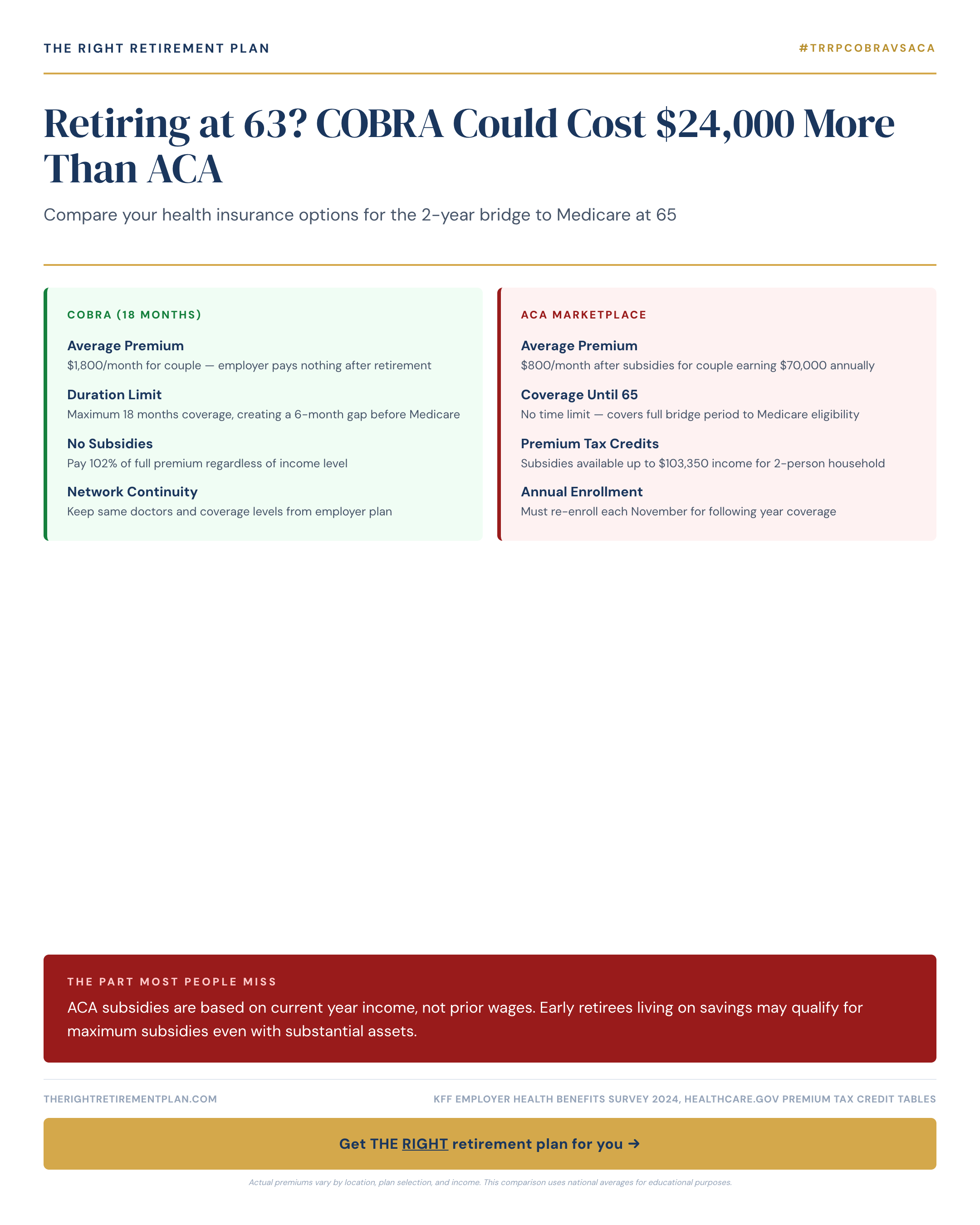
Retiring at 63? COBRA Could Cost $24,000 More Than ACA

Retiring at 63? COBRA Could Cost $24,000 More Than ACA

Retiring at 63 means a two-year gap before Medicare kicks in. COBRA could cost $24,000 more than ACA marketplace plans, but understanding income-based subsidies is key to maximizing your savings during this critical bridge period.

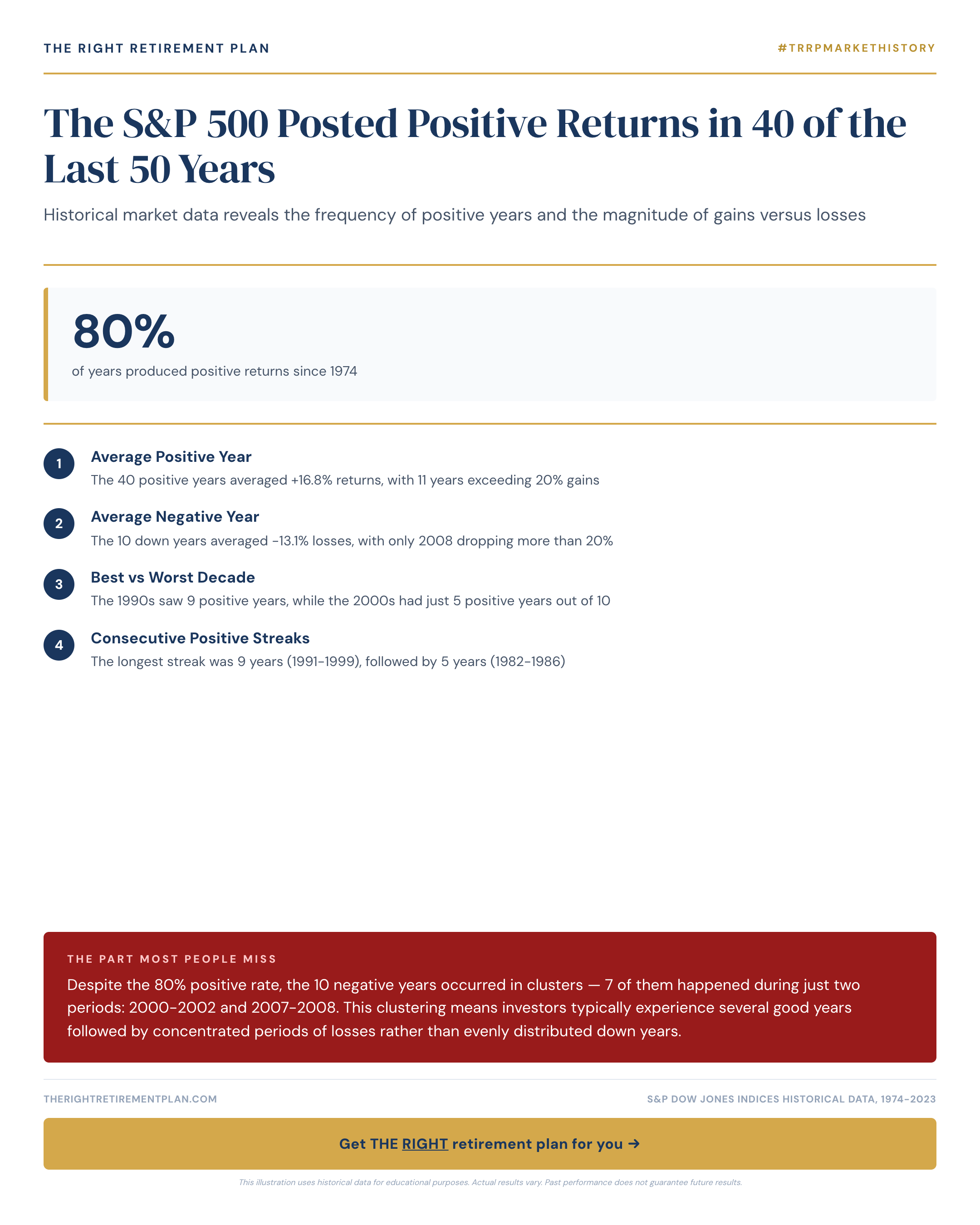
The S&P 500 Posted Positive Returns in 40 of the Last 50 Years

The S&P 500 Posted Positive Returns in 40 of the Last 50 Years

The S&P 500 delivered positive returns in 40 of the last 50 years, but understanding the timing of those 10 negative years reveals crucial insights for retirement planning and market expectations.

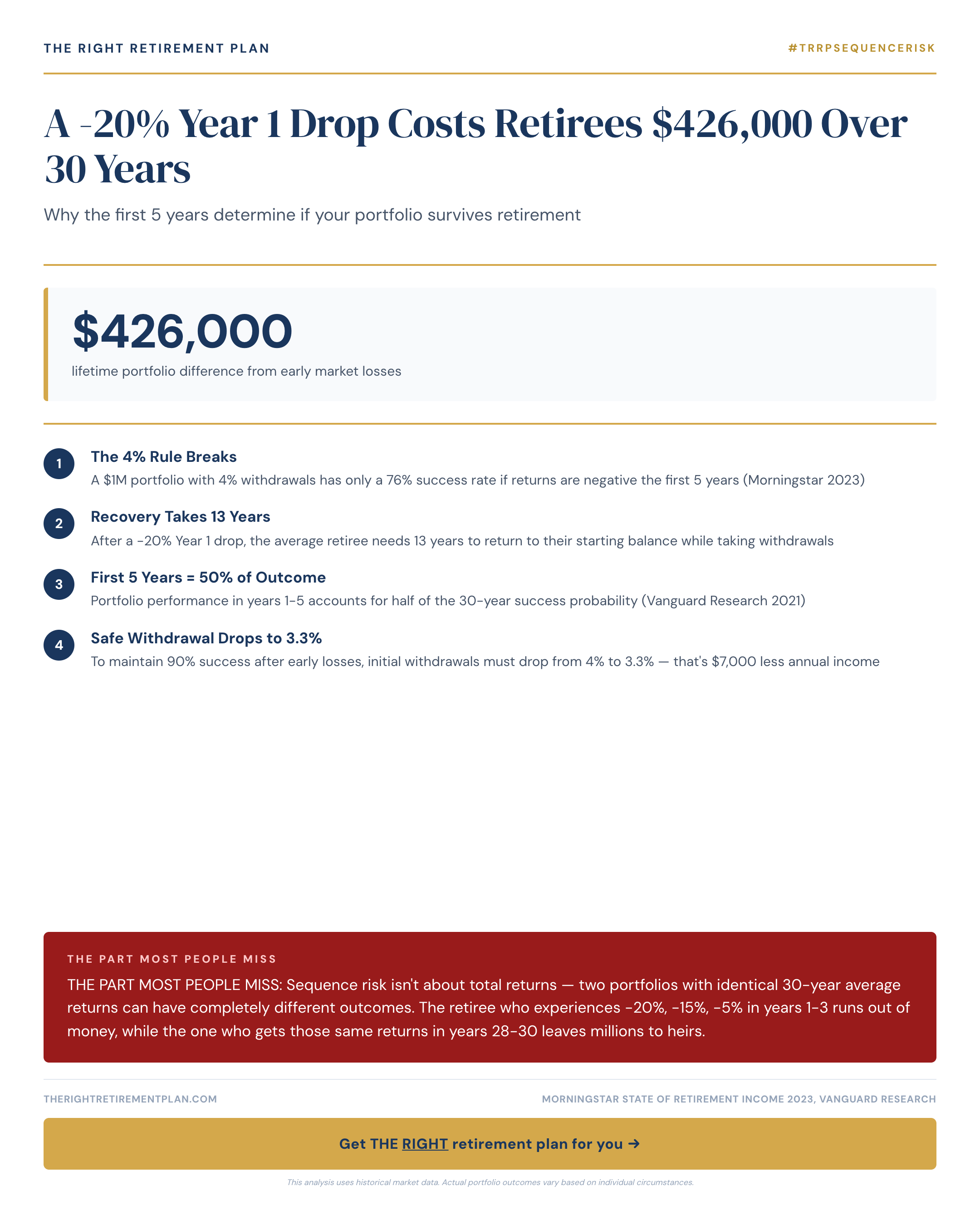
A -20% Year 1 Drop Costs Retirees $426,000 Over 30 Years

A -20% Year 1 Drop Costs Retirees $426,000 Over 30 Years

A 20% market drop in your first year of retirement could cost you $426,000 over 30 years compared to the same drop in year 25. Learn how sequence of returns risk threatens your early retirement years and strategies to protect against it.

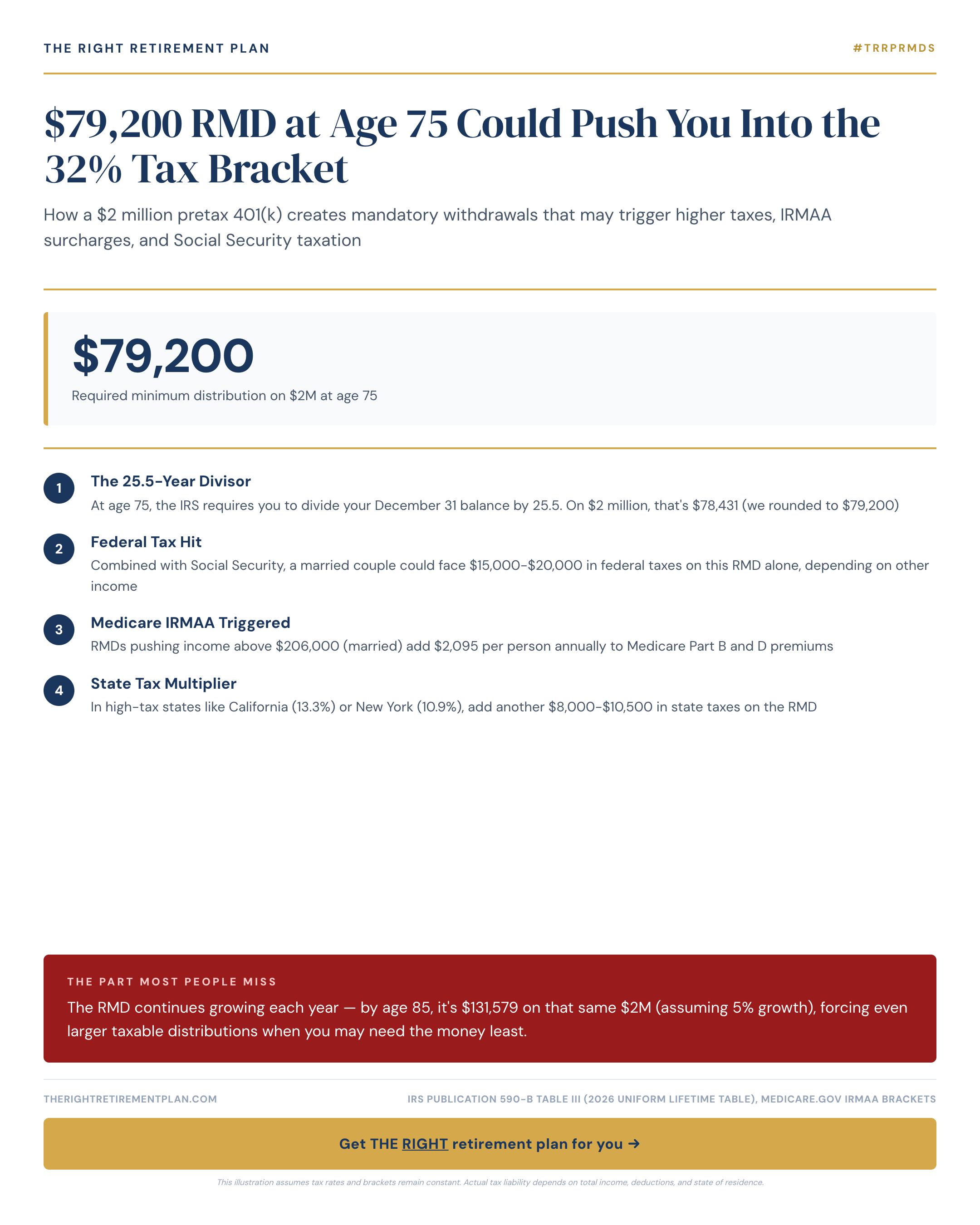
$79,200 RMD at Age 75 Could Push You Into the 32% Tax Bracket

$79,200 RMD at Age 75 Could Push You Into the 32% Tax Bracket

A $2 million pretax 401(k) generates $79,200 in required minimum distributions at age 75, potentially pushing retirees into higher tax brackets while triggering Medicare IRMAA surcharges and making more Social Security benefits taxable.

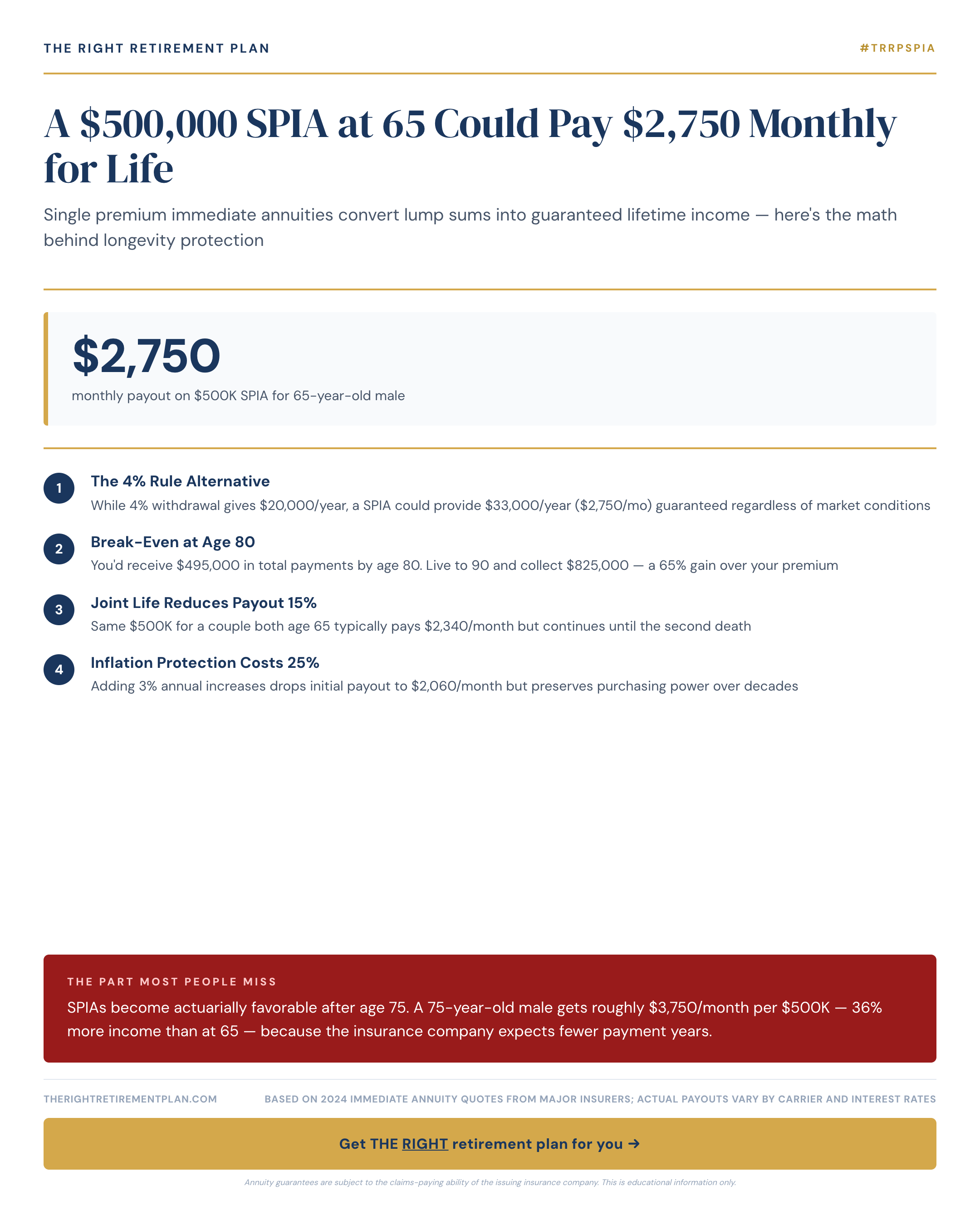
A $500,000 SPIA at 65 Could Pay $2,750 Monthly for Life

A $500,000 SPIA at 65 Could Pay $2,750 Monthly for Life

A $500,000 single premium immediate annuity at age 65 provides roughly $2,750 monthly for life, but waiting until 75 could increase that payout to $3,750 monthly due to shorter life expectancy assumptions.

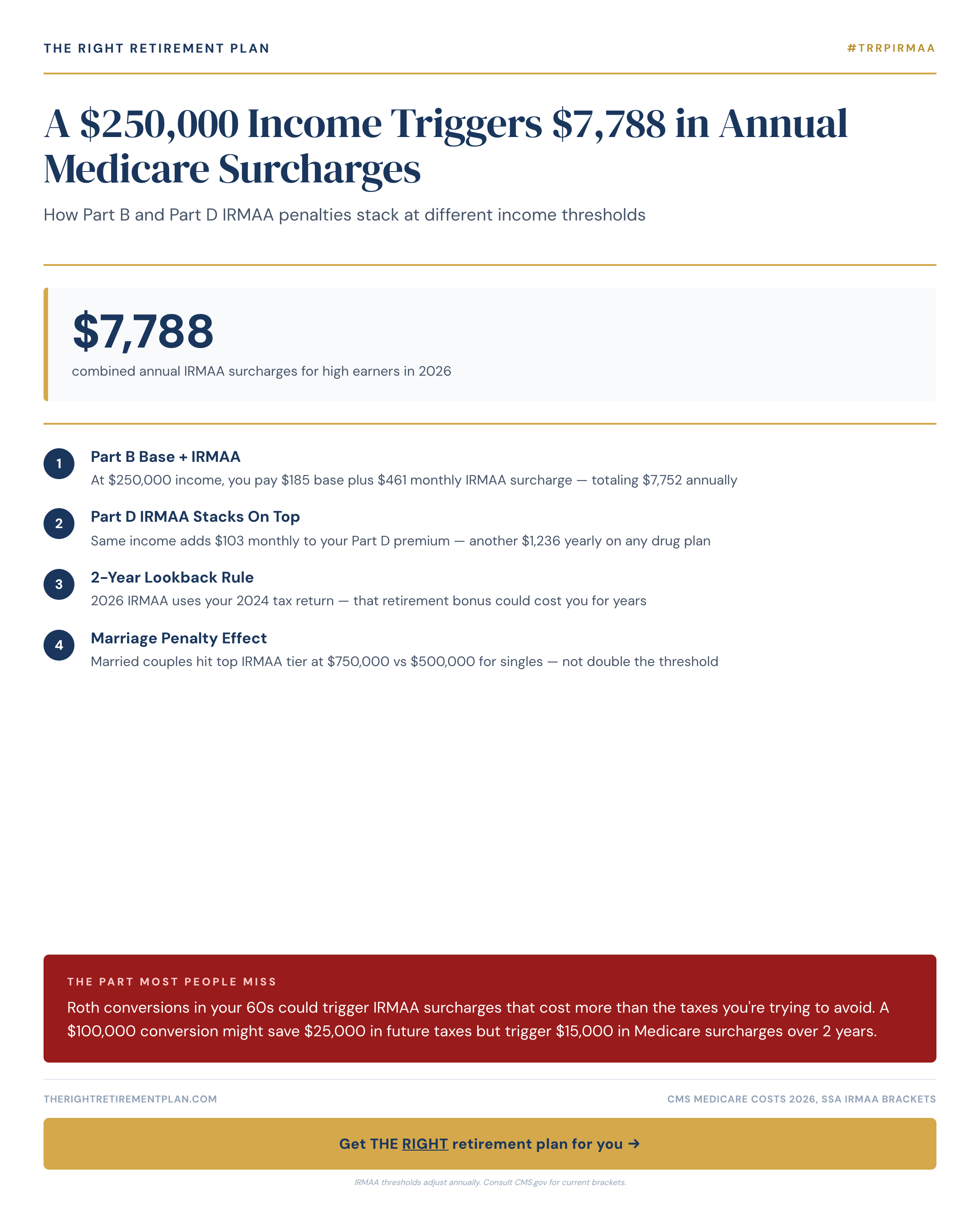
A $250,000 Income Triggers $7,788 in Annual Medicare Surcharges

A $250,000 Income Triggers $7,788 in Annual Medicare Surcharges

High-income retirees earning $250,000 face $7,788 in annual Medicare IRMAA surcharges, making strategic income planning crucial for managing healthcare costs in retirement.

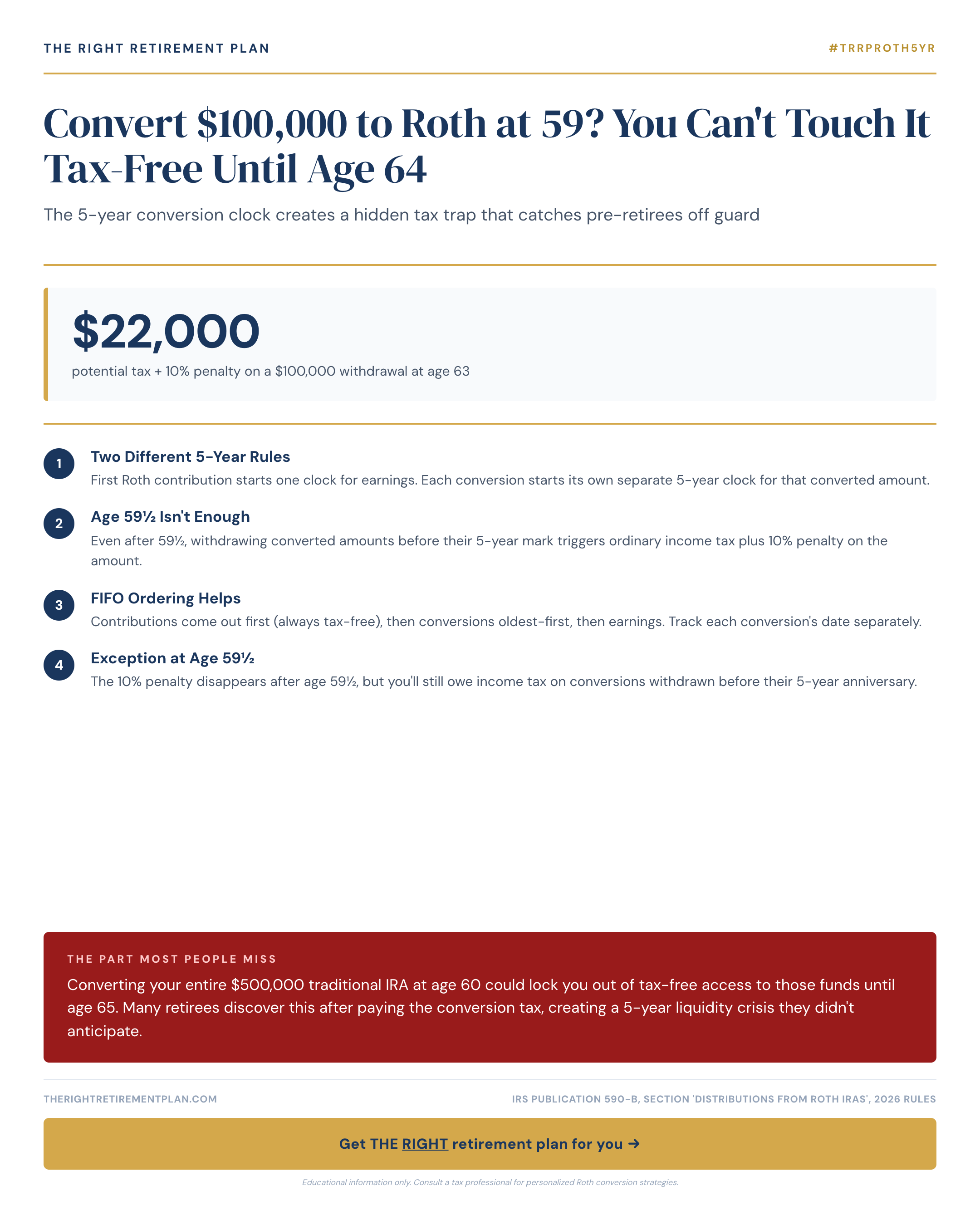
Convert $100,000 to Roth at 59? You Can't Touch It Tax-Free Until Age 64

Convert $100,000 to Roth at 59? You Can't Touch It Tax-Free Until Age 64

Converting $100,000 to a Roth IRA at age 59 means you can't access those funds penalty-free until age 64 due to the 5-year conversion rule. This hidden timing trap affects thousands of pre-retirees who misunderstand Roth conversion withdrawal rules.

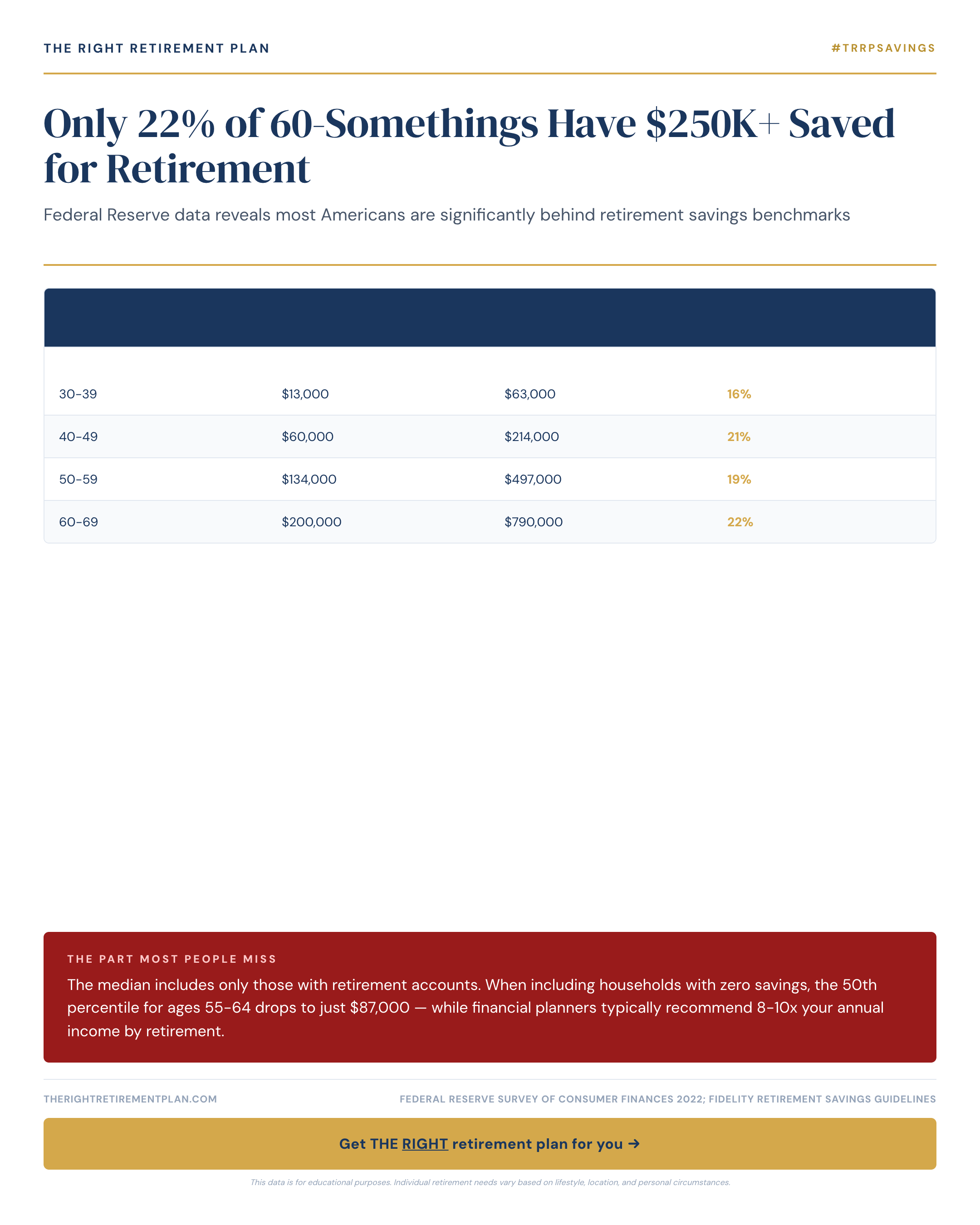
Only 22% of 60-Somethings Have $250K+ Saved for Retirement

Only 22% of 60-Somethings Have $250K+ Saved for Retirement

Federal Reserve data reveals only 22% of Americans in their 60s have saved $250,000 or more for retirement—far below recommended benchmarks. Learn what this means for your retirement security and practical strategies to close the gap.

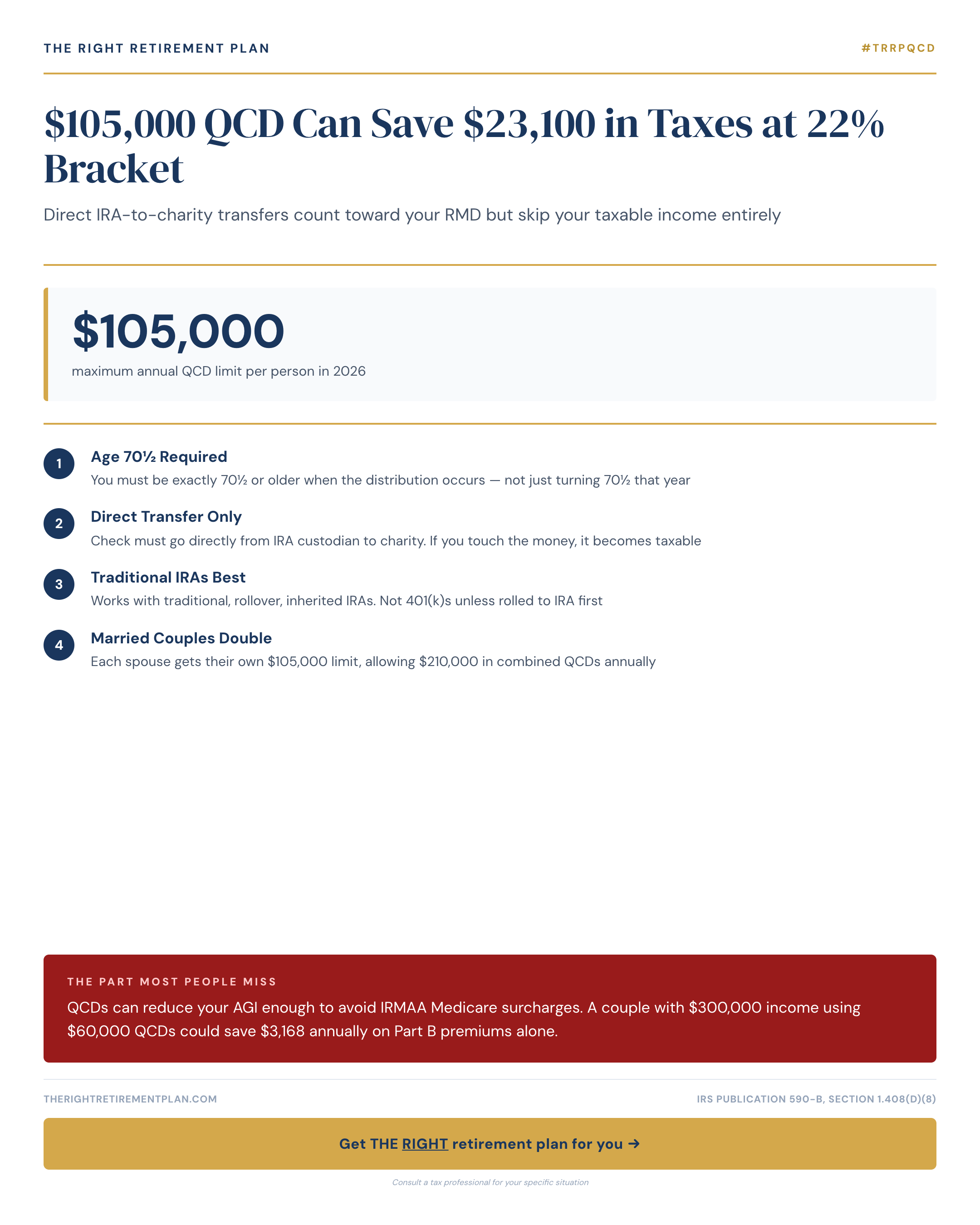
$105,000 QCD Can Save $23,100 in Taxes at 22% Bracket

$105,000 QCD Can Save $23,100 in Taxes at 22% Bracket

Qualified Charitable Distributions can save substantial taxes while fulfilling your Required Minimum Distribution, with couples potentially saving thousands on Medicare premiums by reducing their adjusted gross income.

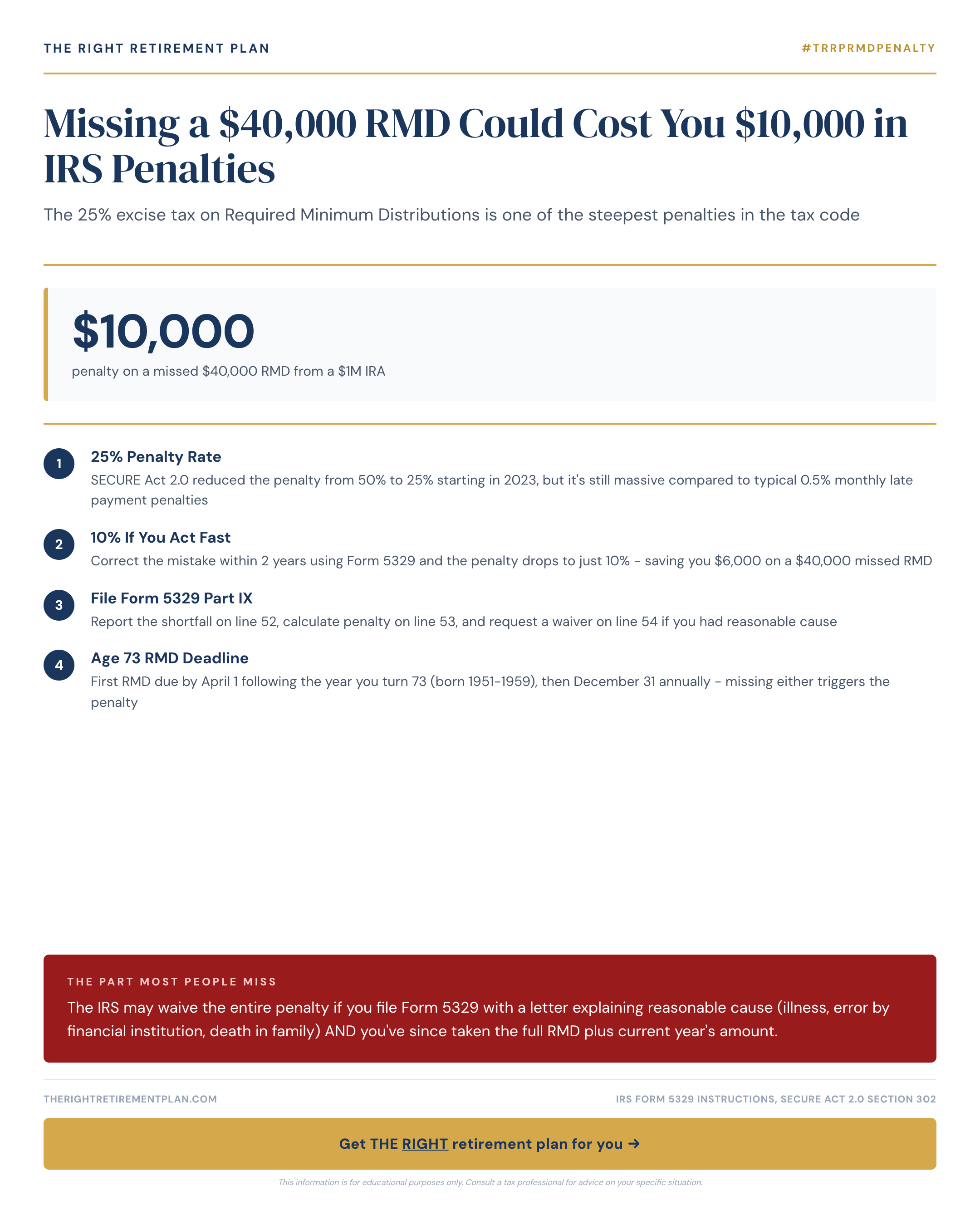
Missing a $40,000 RMD Could Cost You $10,000 in IRS Penalties

Missing a $40,000 RMD Could Cost You $10,000 in IRS Penalties

Missing your required minimum distribution triggers a 25% IRS penalty—potentially $10,000 on a $40,000 missed RMD. Learn how to avoid this costly mistake and get penalties waived if you act quickly.

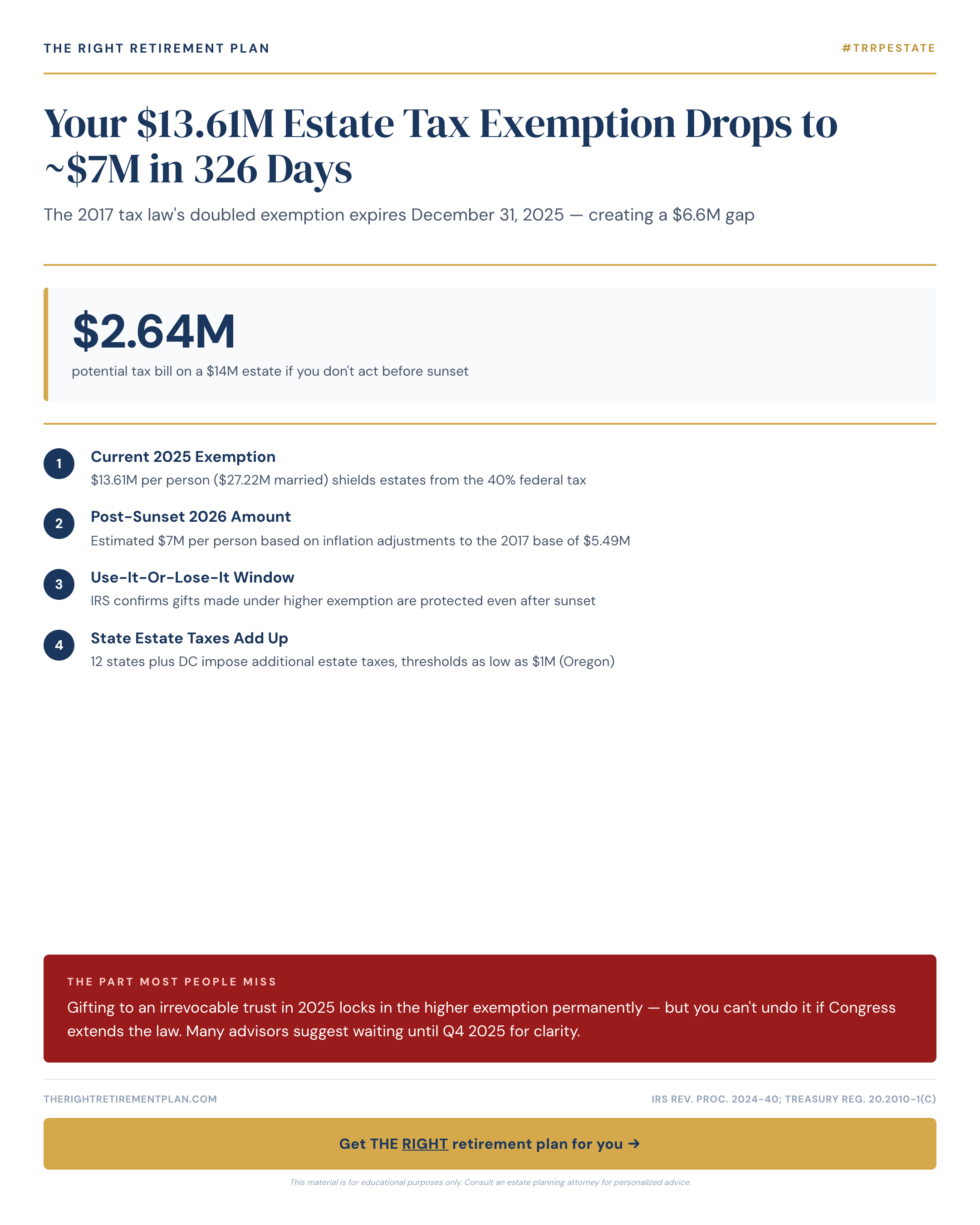
Your $13.61M Estate Tax Exemption Drops to ~$7M in 326 Days

Your $13.61M Estate Tax Exemption Drops to ~$7M in 326 Days

The federal estate tax exemption drops from $13.61 million to ~$7 million on January 1, 2026, potentially costing wealthy families millions. Here's what Maryland retirees and others with significant assets need to know before the deadline.

$150 Monthly Cable Since 2005 Could Be Worth $76,841 Today

$150 Monthly Cable Since 2005 Could Be Worth $76,841 Today

A $150 monthly cable bill since 2005 could have grown to over $76,000 in a diversified investment portfolio, demonstrating how small recurring expenses can derail retirement savings when left unchecked.

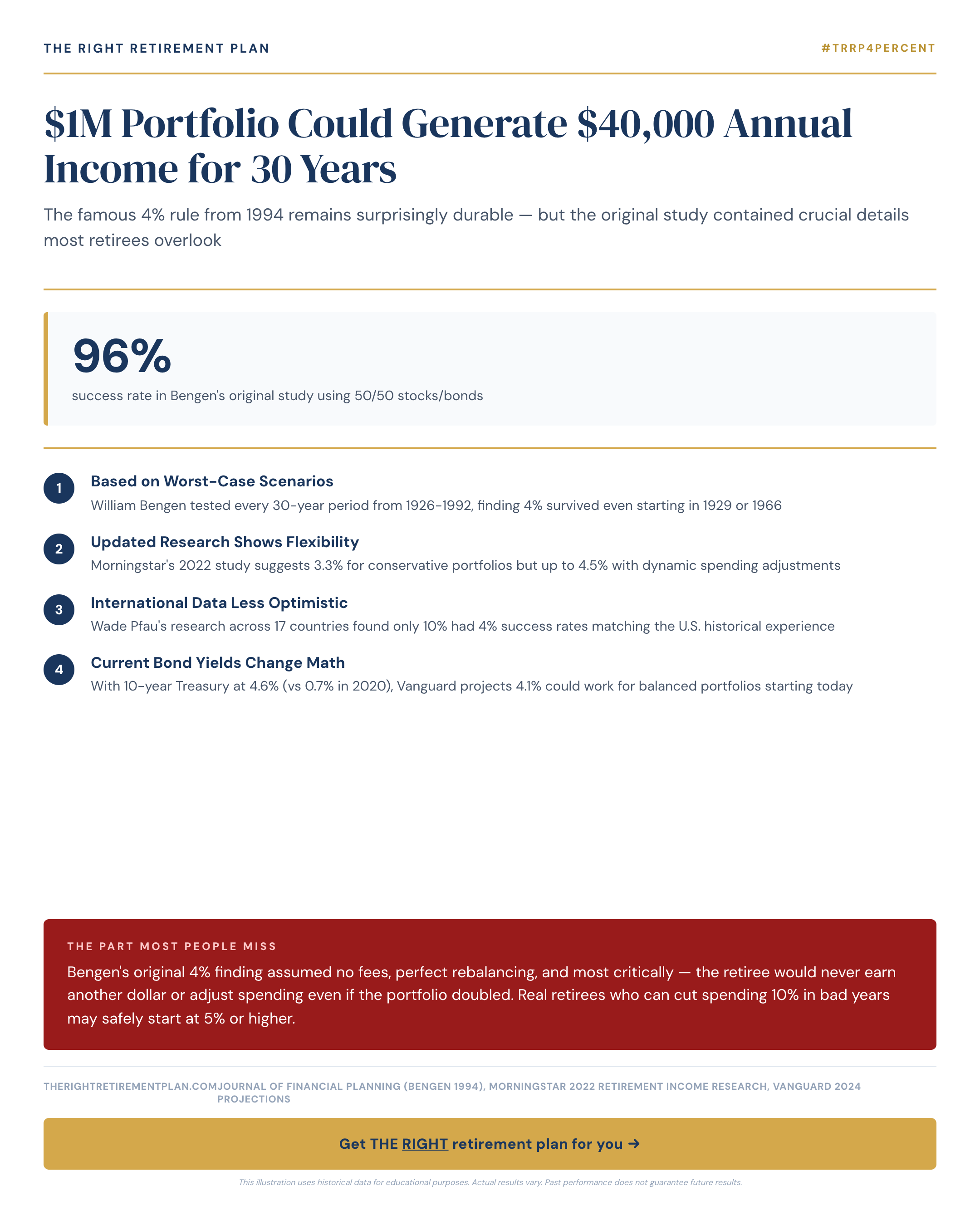
$1M Portfolio Could Generate $40,000 Annual Income for 30 Years

$1M Portfolio Could Generate $40,000 Annual Income for 30 Years

The famous 4% retirement withdrawal rule could help your $1M portfolio generate $40,000 annually for 30 years, but the original 1994 study contained crucial details that most pre-retirees miss.

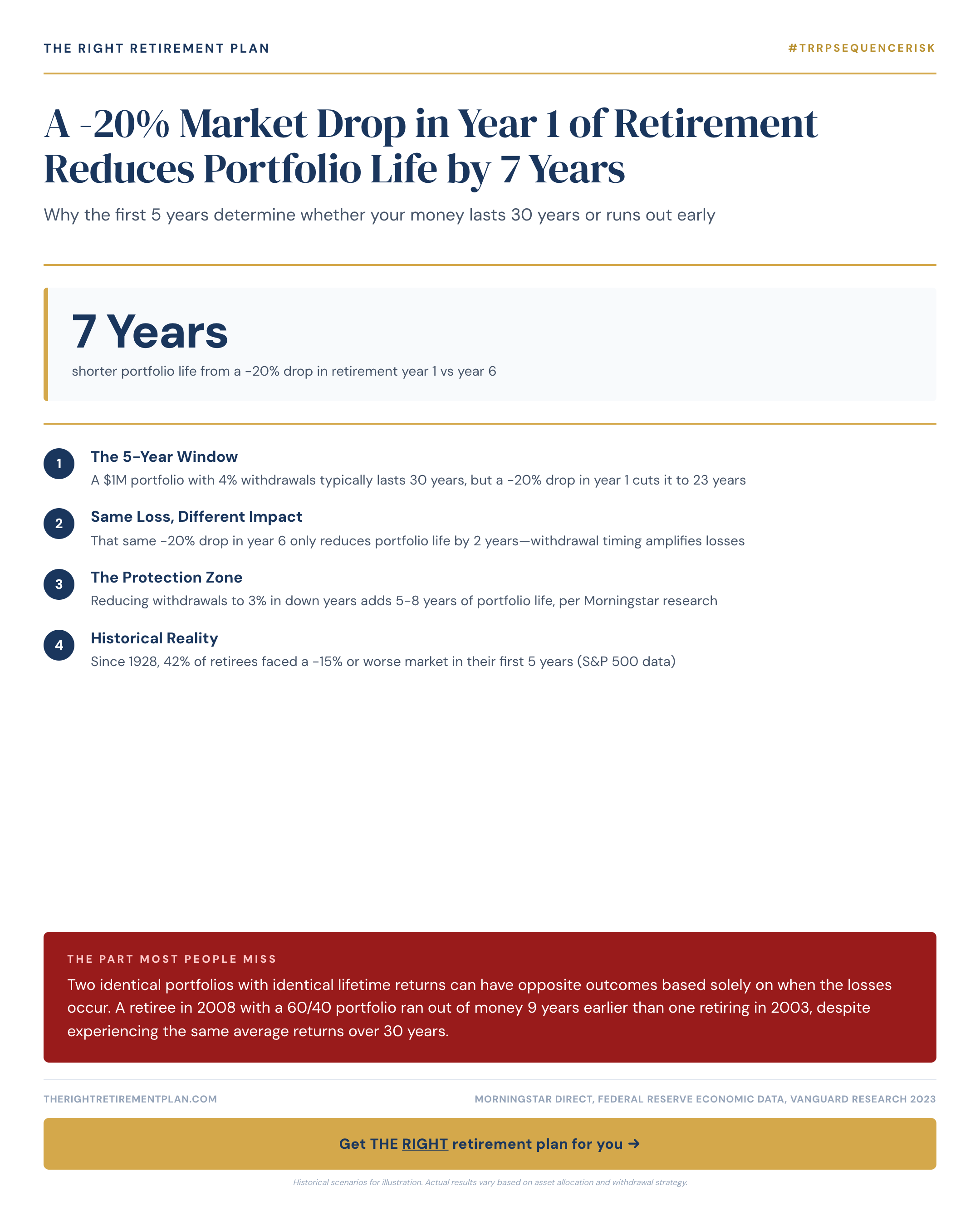
A -20% Market Drop in Year 1 of Retirement Reduces Portfolio Life by 7 Years

A -20% Market Drop in Year 1 of Retirement Reduces Portfolio Life by 7 Years

A 20% market drop in your first year of retirement can reduce your portfolio's lifespan by up to 7 years, making timing and sequence of returns crucial for long-term financial security.

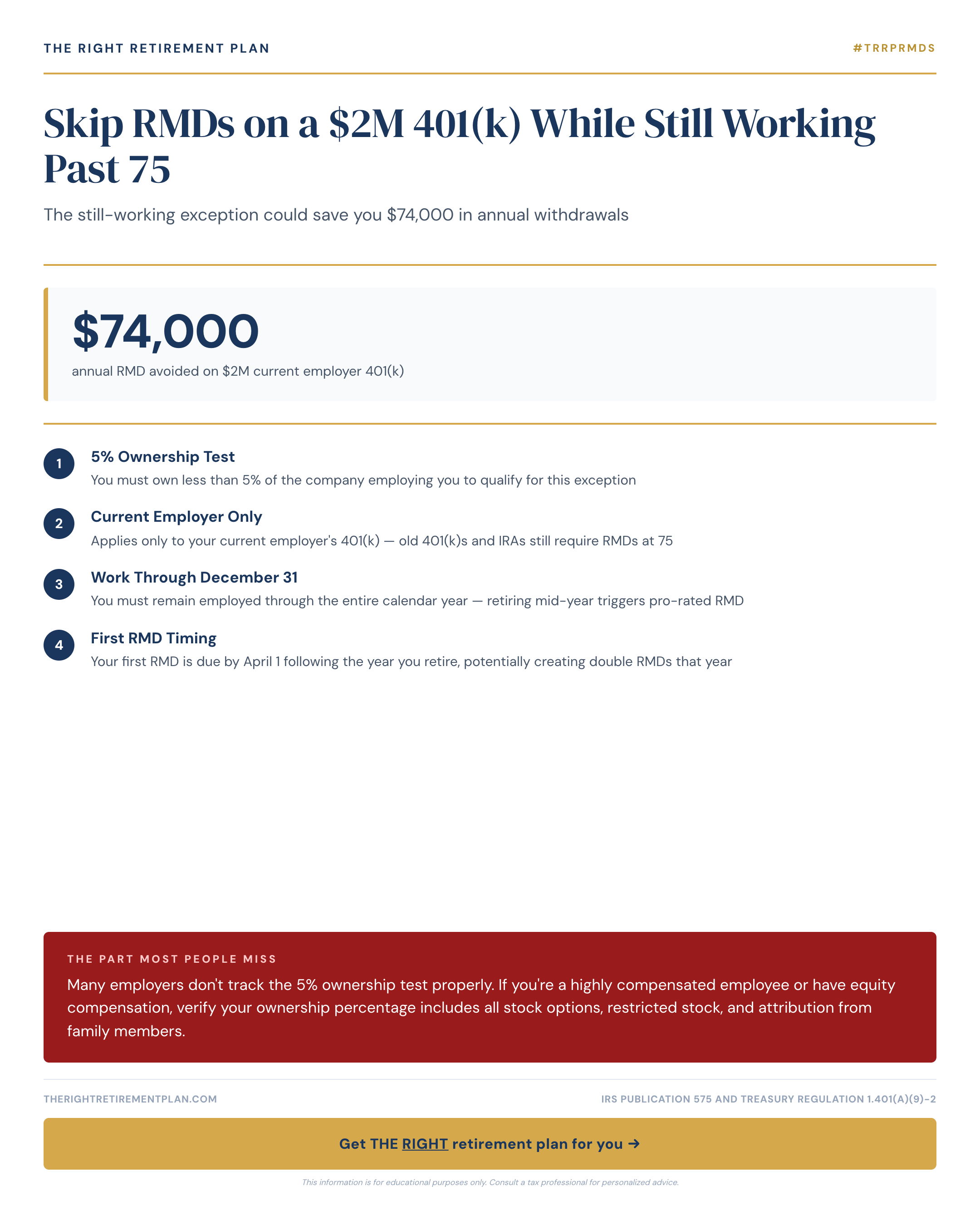
Skip RMDs on a $2M 401(k) While Still Working Past 75

Skip RMDs on a $2M 401(k) While Still Working Past 75

The still-working exception lets you delay required minimum distributions on your current employer's 401(k) past age 73, but strict ownership rules and rollover timing can create unexpected tax traps worth tens of thousands.

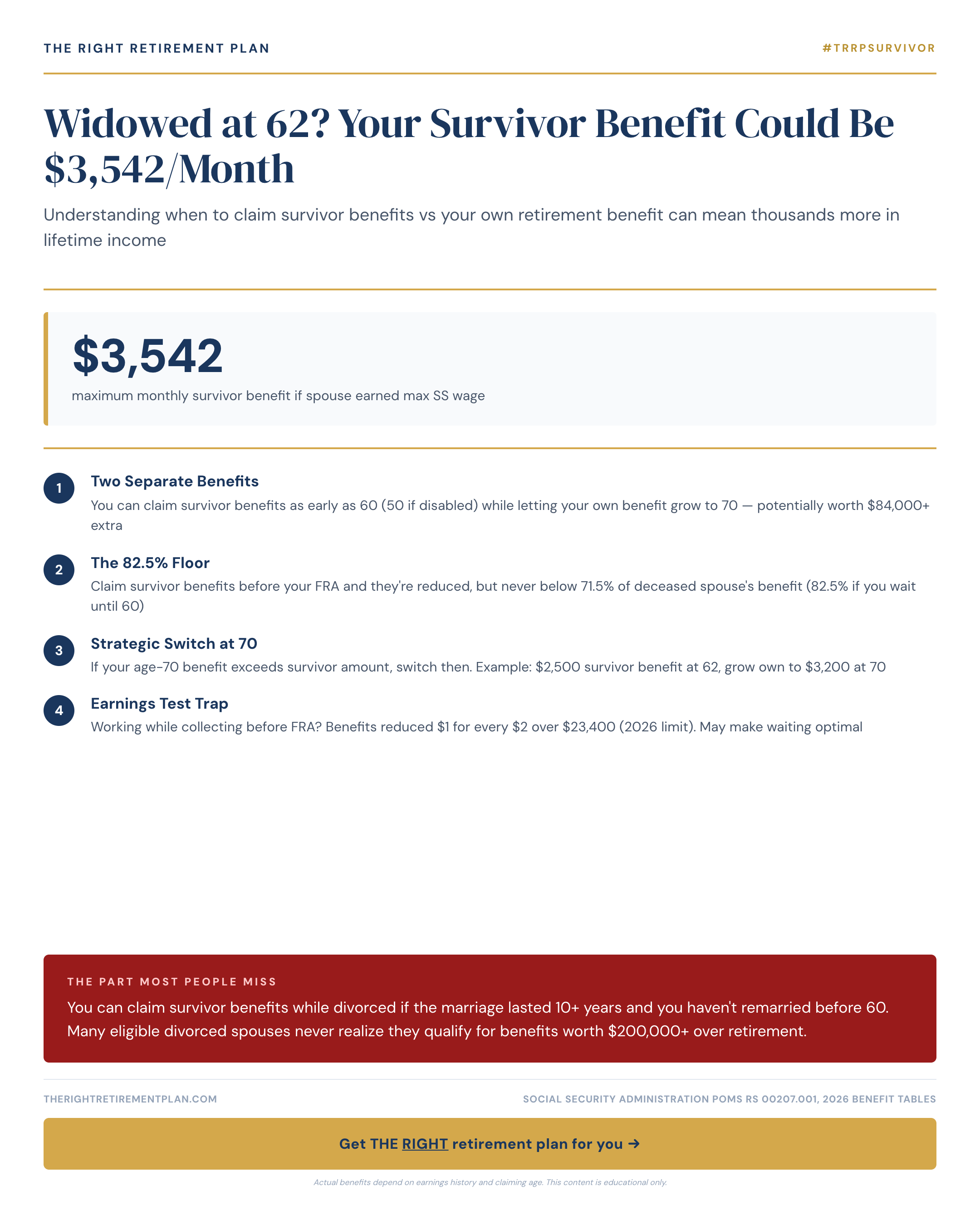
Widowed at 62? Your Survivor Benefit Could Be $3,542/Month

Widowed at 62? Your Survivor Benefit Could Be $3,542/Month

Understanding when to claim survivor benefits versus your own retirement benefit can mean the difference between receiving $3,542 per month or significantly less, making strategic timing crucial for maximizing lifetime income.

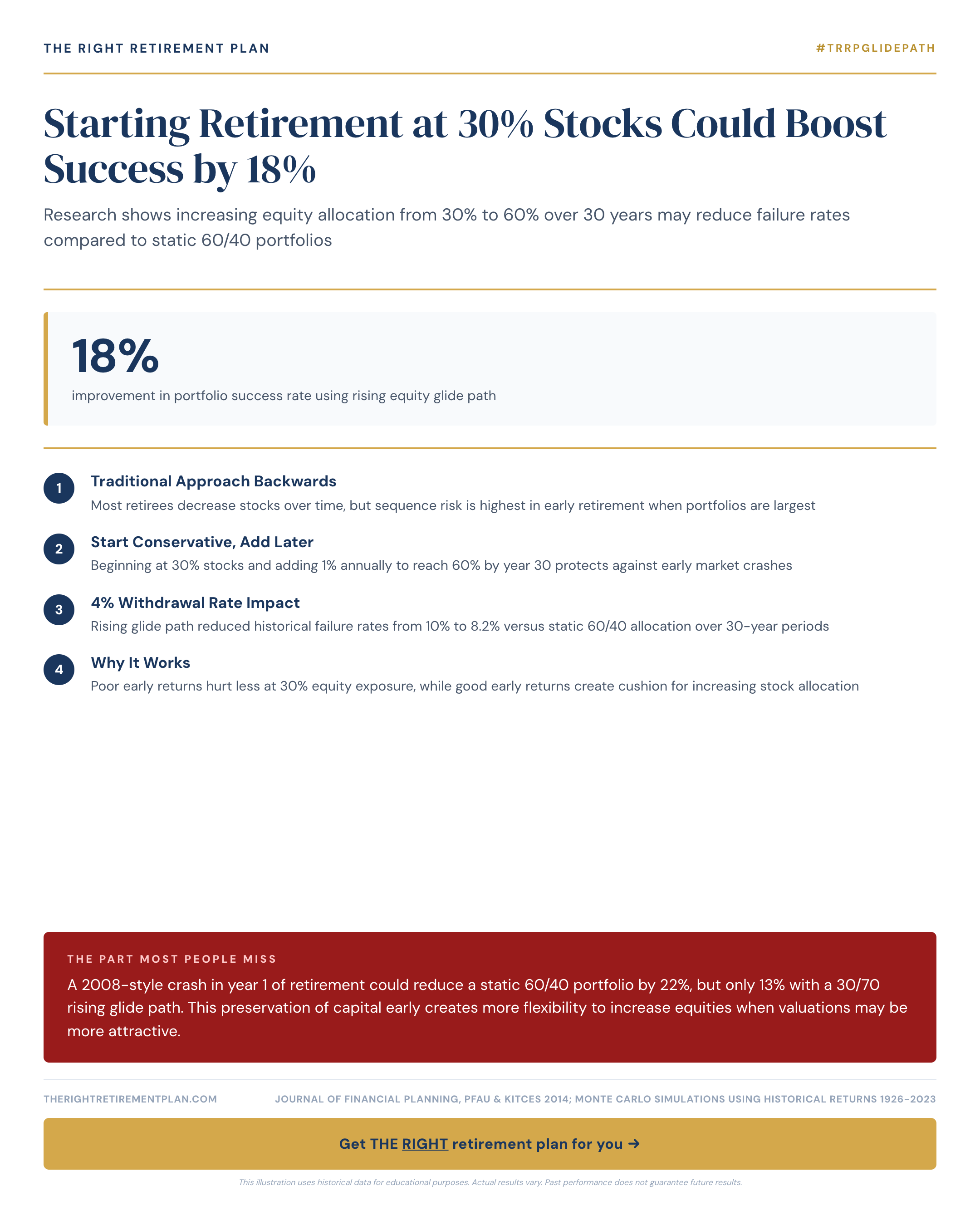
Starting Retirement at 30% Stocks Could Boost Success by 18%

Starting Retirement at 30% Stocks Could Boost Success by 18%

New research reveals that starting retirement with just 30% stocks and gradually increasing to 60% over 30 years could boost portfolio success rates by 18% compared to traditional fixed allocations.

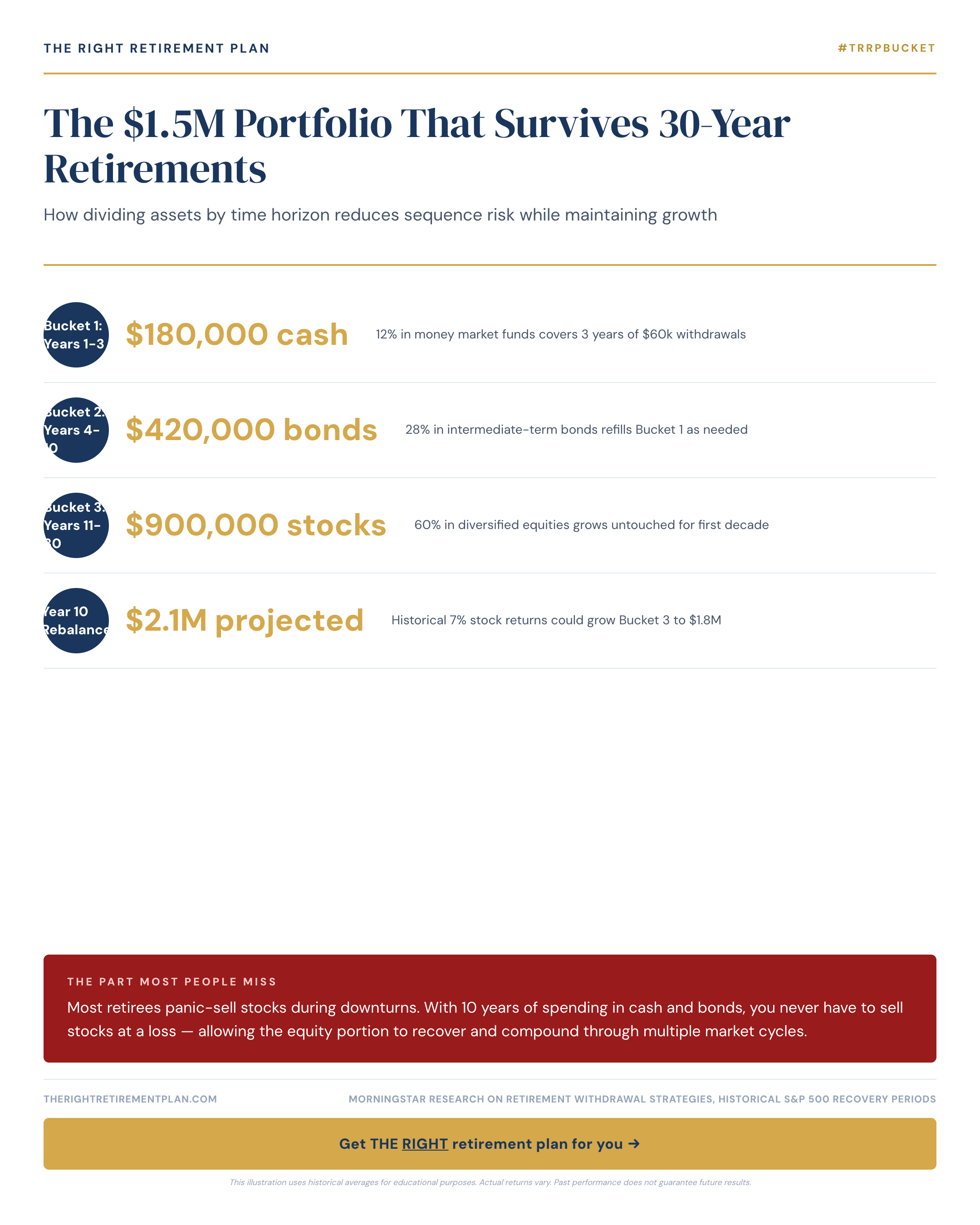
The $1.5M Portfolio That Survives 30-Year Retirements

The $1.5M Portfolio That Survives 30-Year Retirements

Learn how a time-horizon portfolio strategy helps a $1.5M retirement portfolio survive 30 years by reducing sequence risk while maintaining growth potential through strategic asset allocation.

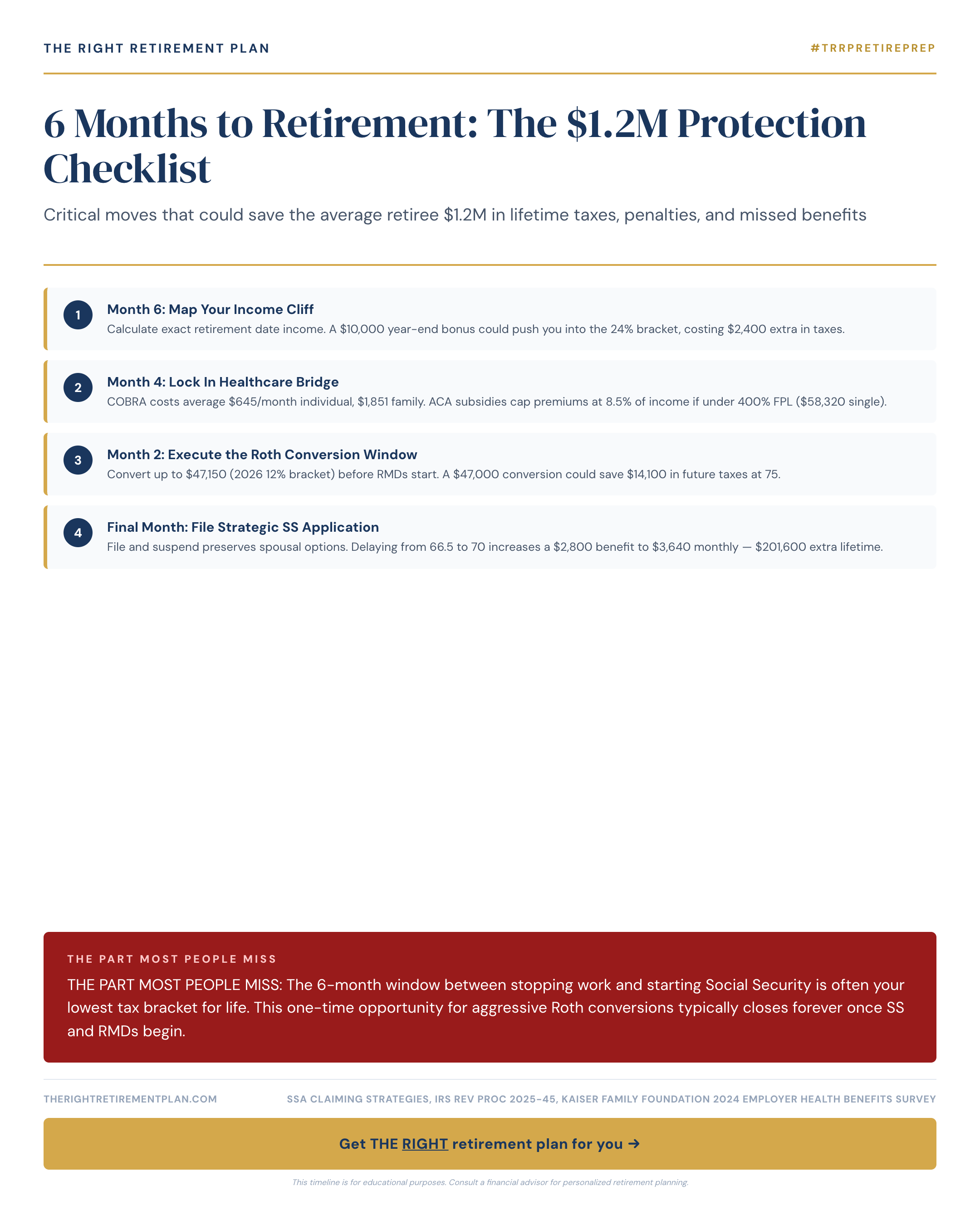
6 Months to Retirement: The $1.2M Protection Checklist

6 Months to Retirement: The $1.2M Protection Checklist

Six months before retirement offers a unique window to save over $1 million through strategic tax moves, Roth conversions, and benefit optimization that most retirees completely miss.

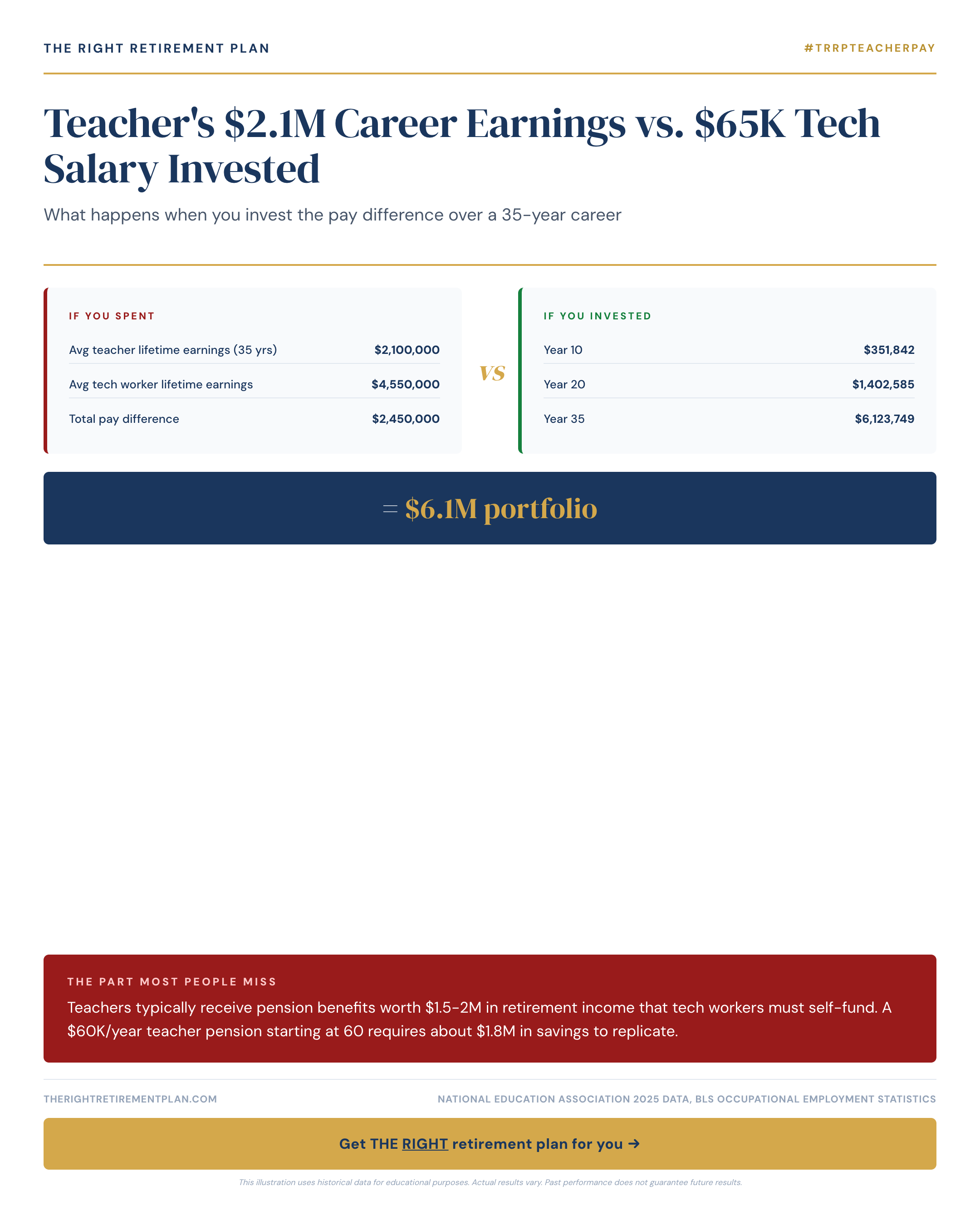
Teacher's $2.1M Career Earnings vs. $65K Tech Salary Invested

Teacher's $2.1M Career Earnings vs. $65K Tech Salary Invested

A teacher earning $65K with pension benefits can accumulate $2.1M in lifetime retirement value, while a tech worker needs strategic investing to match this security through self-funded retirement savings.

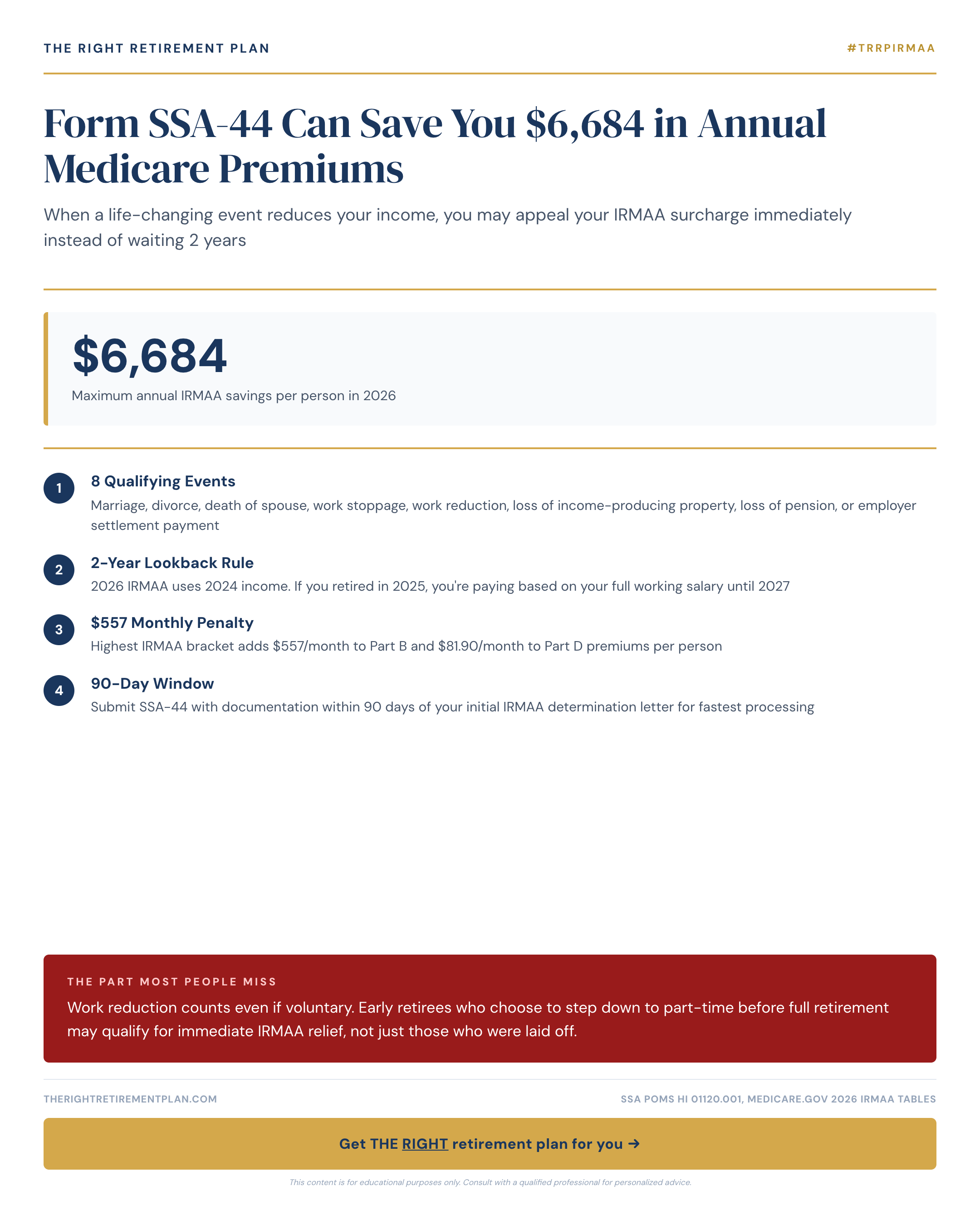
Form SSA-44 Can Save You $6,684 in Annual Medicare Premiums

Form SSA-44 Can Save You $6,684 in Annual Medicare Premiums

Form SSA-44 lets you appeal Medicare IRMAA surcharges immediately after life-changing income reductions, potentially saving thousands annually instead of waiting two years for automatic adjustments.

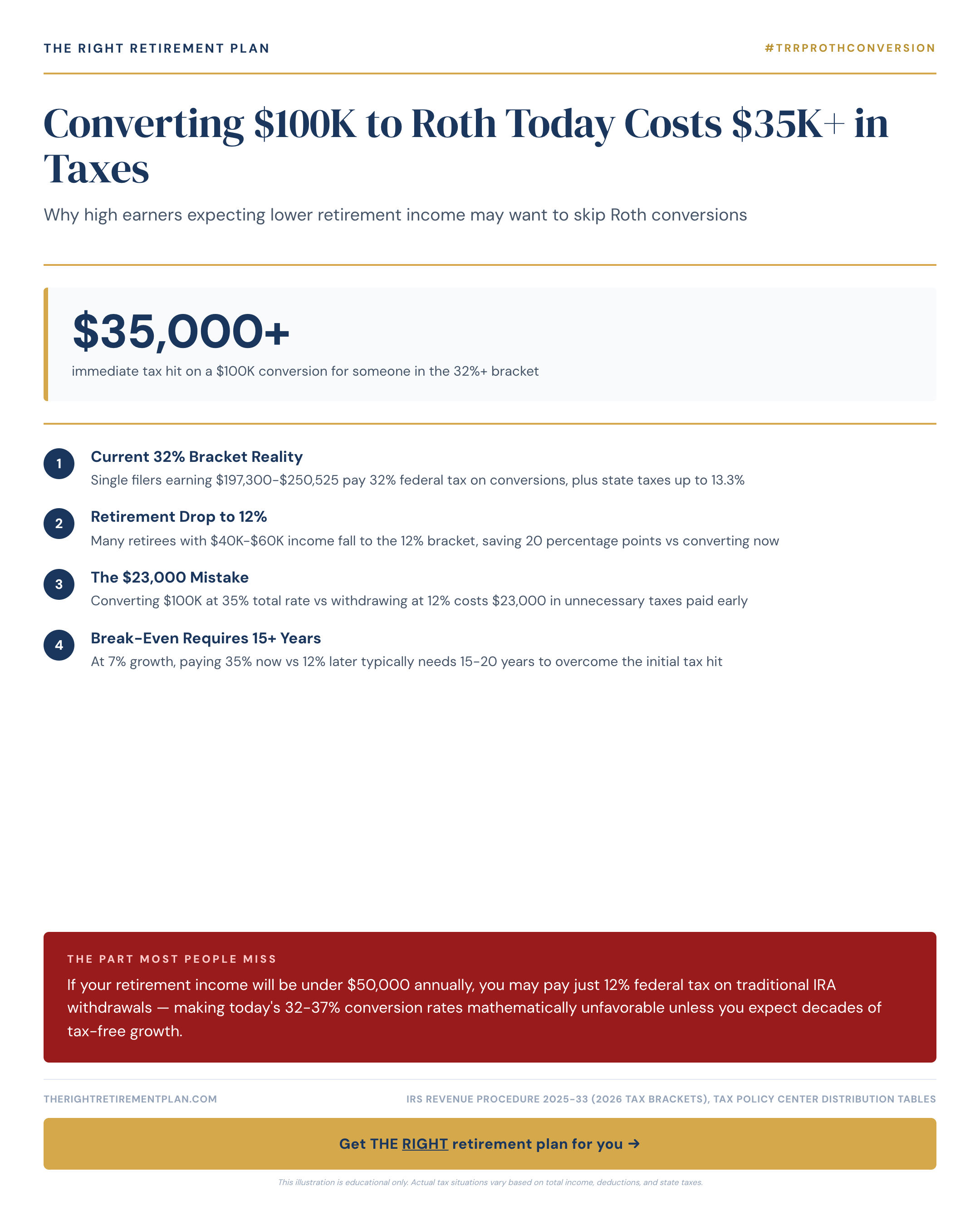
Converting $100K to Roth Today Costs $35K+ in Taxes

Converting $100K to Roth Today Costs $35K+ in Taxes

High earners considering Roth conversions should think twice if they expect lower retirement income, as converting $100K today could trigger $35K+ in taxes while future withdrawals might face just 12% rates.

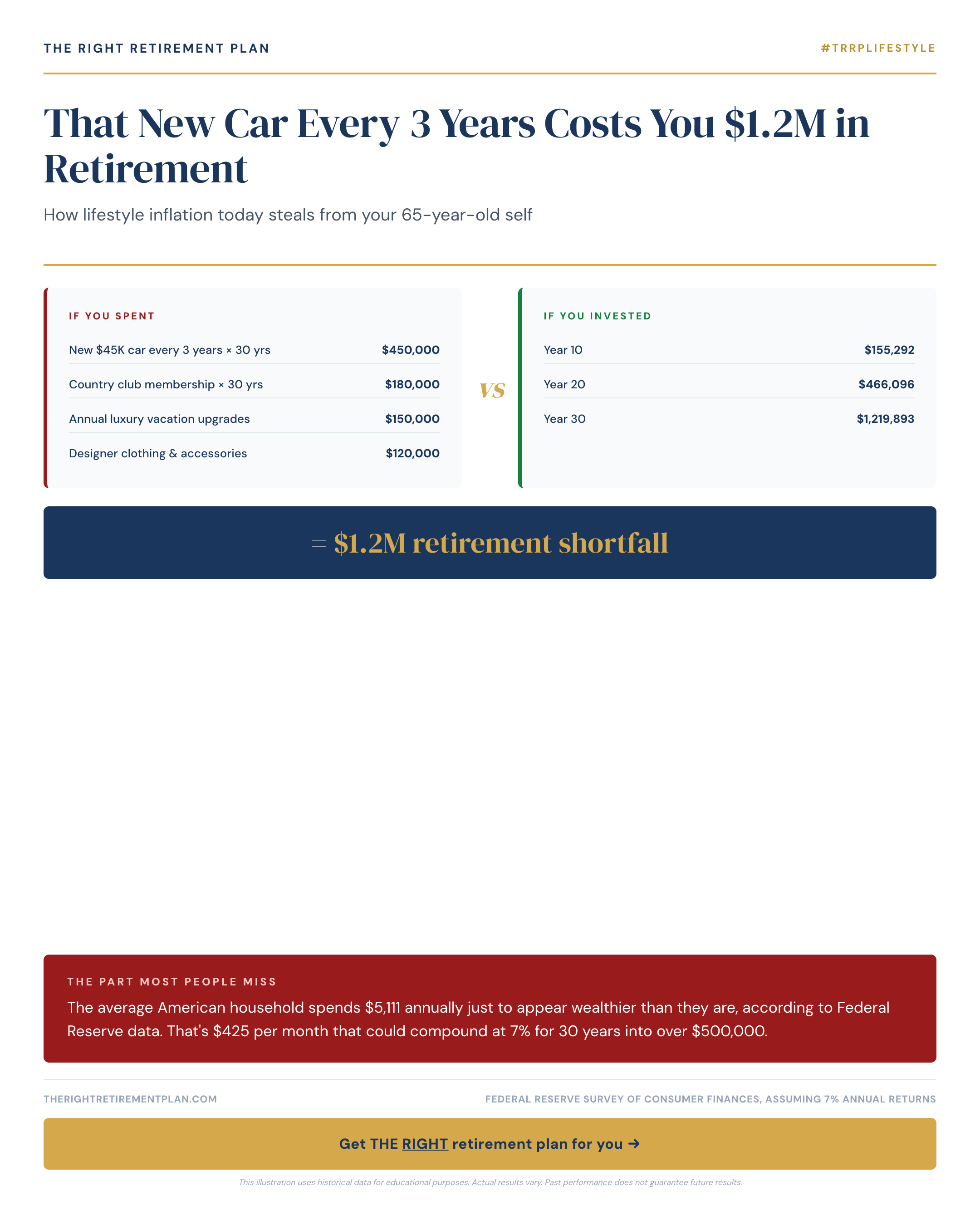
That New Car Every 3 Years Costs You $1.2M in Retirement

That New Car Every 3 Years Costs You $1.2M in Retirement

That new car every 3 years could cost you $1.2 million in retirement savings. Learn how lifestyle inflation today steals from your future self and what Maryland retirees can do about it.

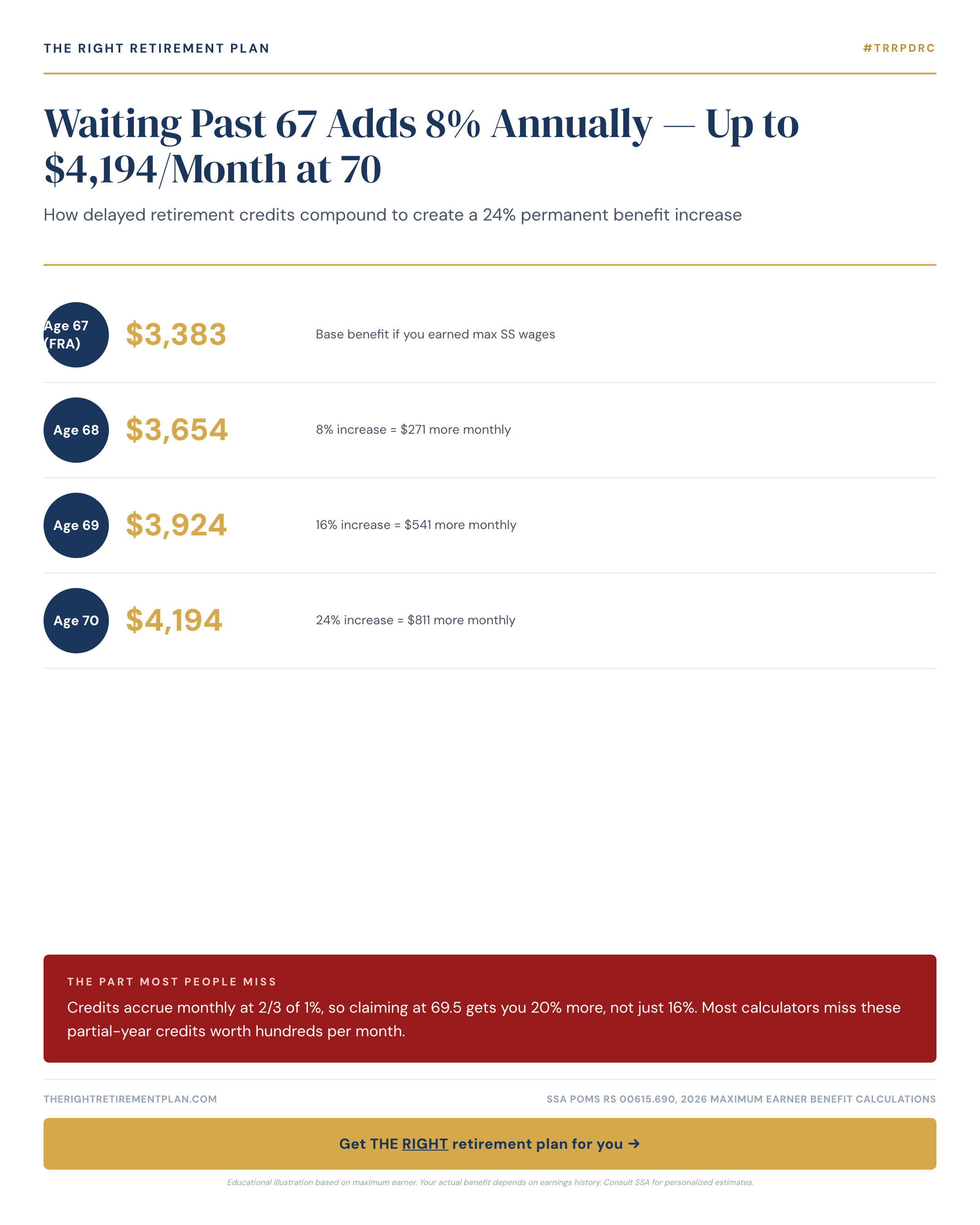
Waiting Past 67 Adds 8% Annually — Up to $4,194/Month at 70

Waiting Past 67 Adds 8% Annually — Up to $4,194/Month at 70

Delayed retirement credits add 8% annually to Social Security benefits for each year you wait past 67, potentially increasing a $3,822 monthly benefit to $4,194 by age 70. Learn how partial-year delays work and when the guaranteed 8% return makes mathematical sense for your situation.
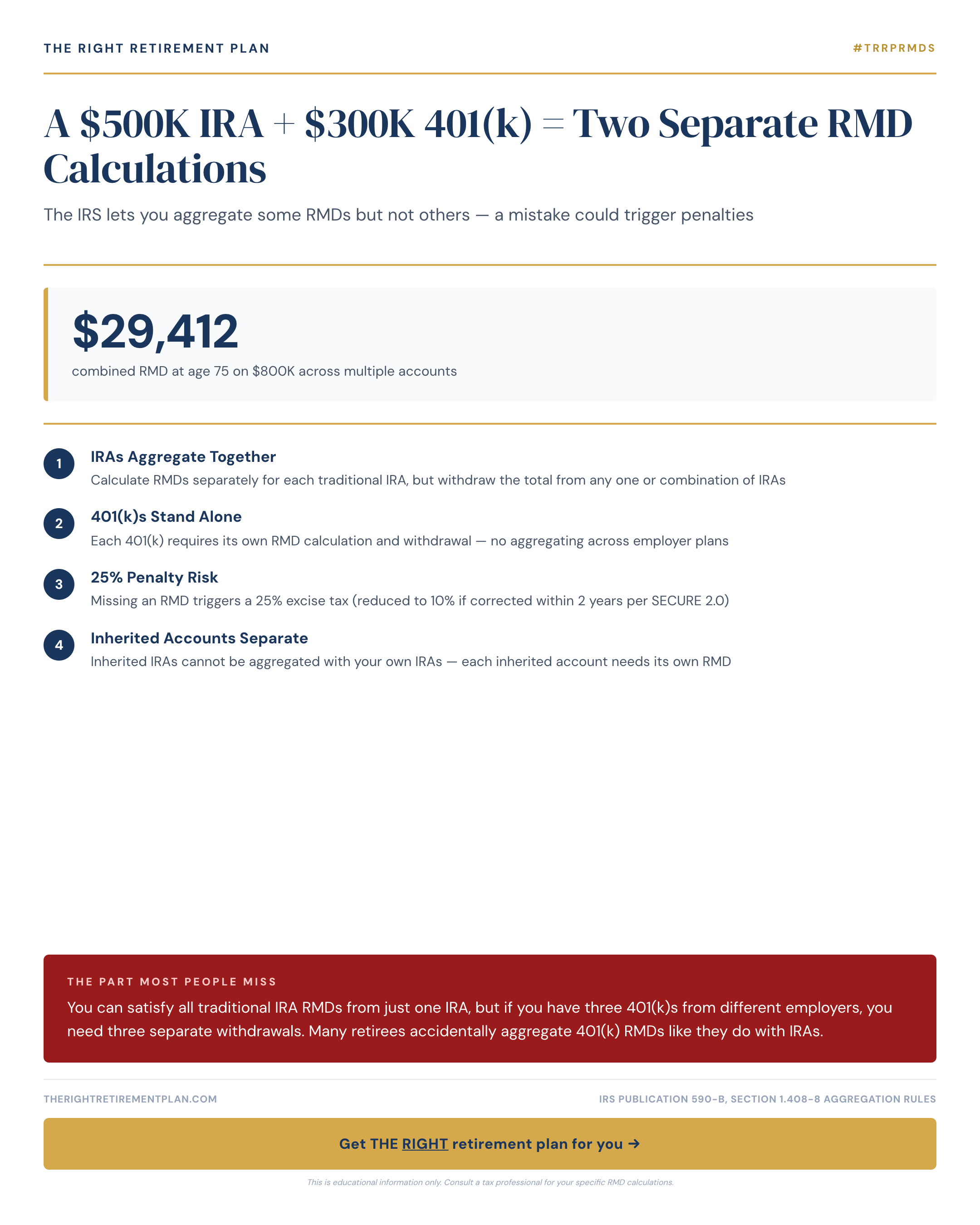
A $500K IRA + $300K 401(k) = Two Separate RMD Calculations

A $500K IRA + $300K 401(k) = Two Separate RMD Calculations

Understanding RMD aggregation rules can save you from costly penalties — you can combine IRA withdrawals but must take separate distributions from each 401(k) account.

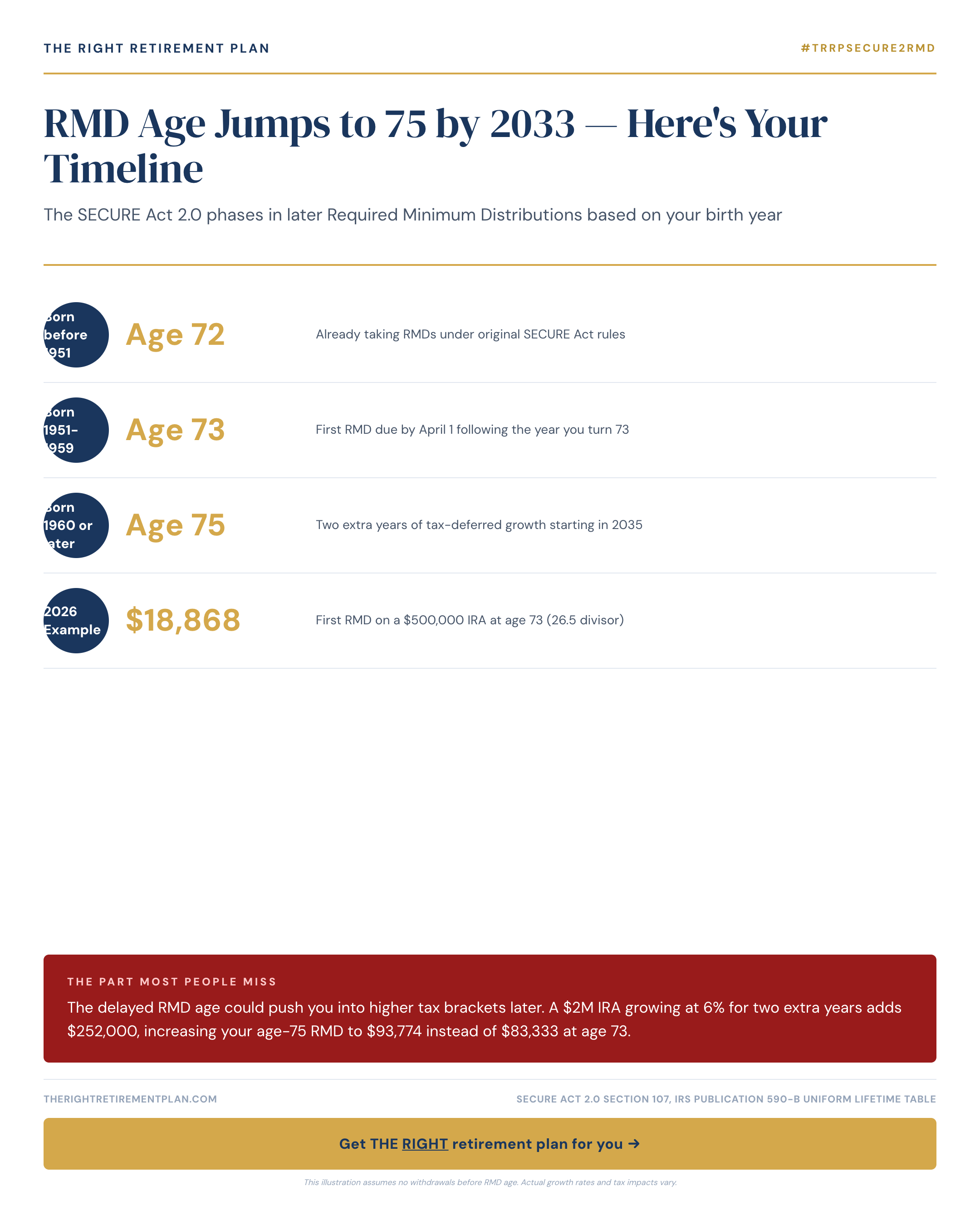
RMD Age Jumps to 75 by 2033 — Here's Your Timeline

RMD Age Jumps to 75 by 2033 — Here's Your Timeline

The SECURE Act 2.0 gradually raises Required Minimum Distribution ages to 75 by 2033, giving your retirement accounts more time to grow but potentially creating higher tax bills later.

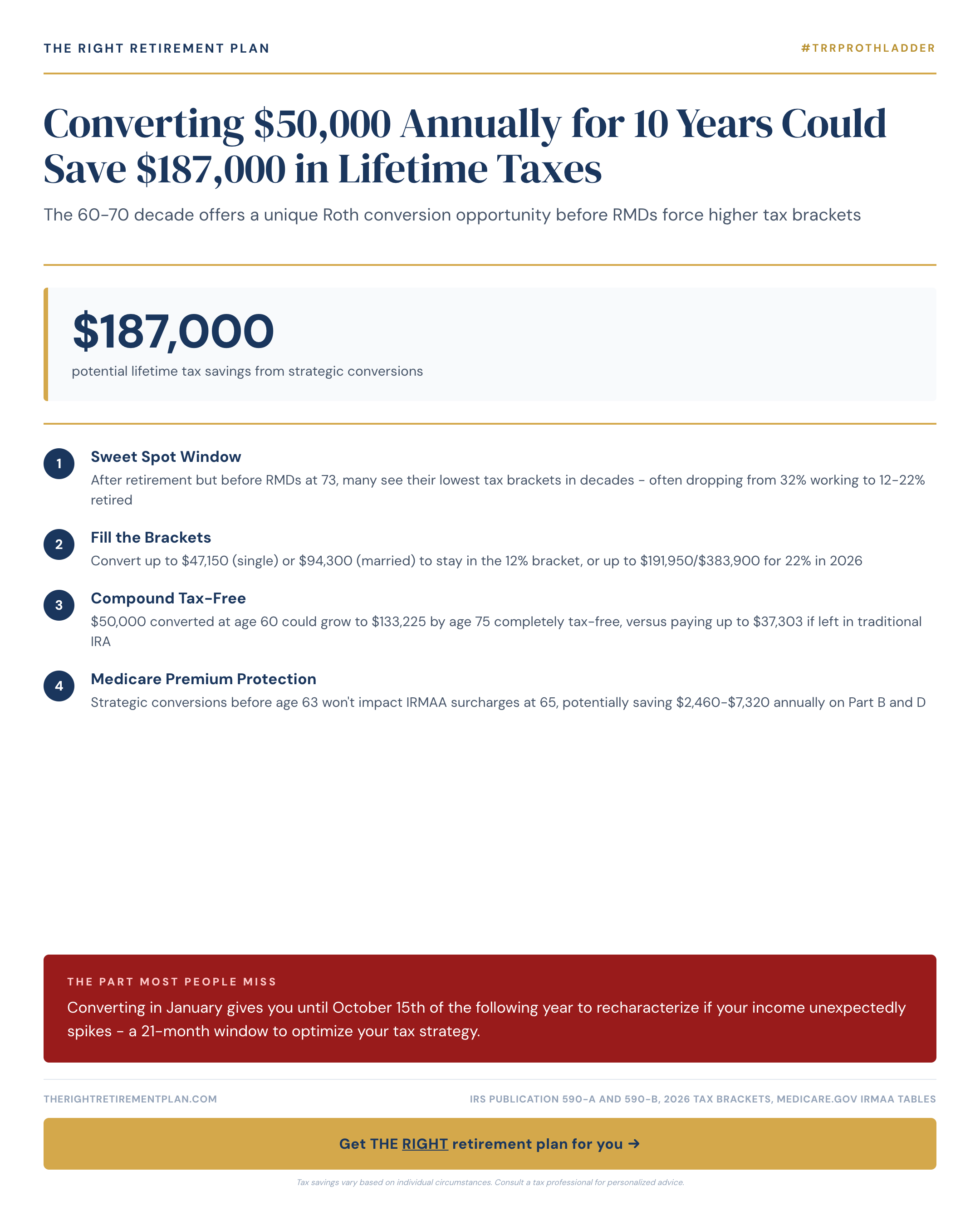
Converting $50,000 Annually for 10 Years Could Save $187,000 in Lifetime Taxes

Converting $50,000 Annually for 10 Years Could Save $187,000 in Lifetime Taxes

Converting $50,000 annually to a Roth IRA during your 60s could save $187,000 in lifetime taxes by avoiding higher brackets when RMDs begin at age 75.

$1,816 Monthly Income Triggers Free Medicare Part B

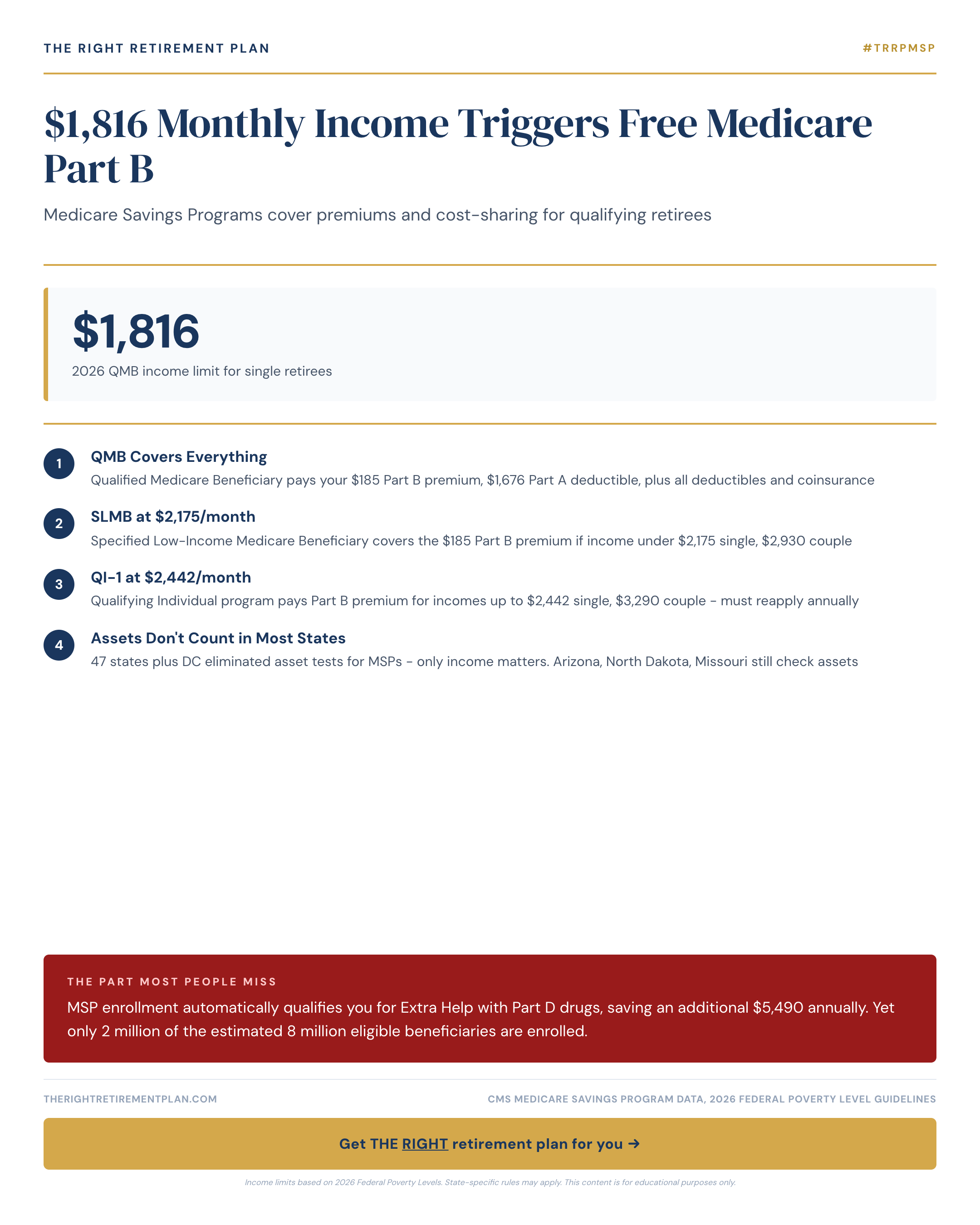
$1,816 Monthly Income Triggers Free Medicare Part B

Medicare Savings Programs provide free Medicare Part B coverage for retirees with monthly incomes around $1,816, plus automatic qualification for Extra Help with prescription drugs worth $5,490 annually.

Earn $62,160 at Age 64? Lose $21,120 of Social Security

Earn $62,160 at Age 64? Lose $21,120 of Social Security

If you claim Social Security at 64 while earning $62,160, the earnings test will withhold $21,120 of your benefits in 2026. However, these "lost" benefits aren't actually gone forever—they're restored through higher monthly payments once you reach full retirement age.

Want personalized guidance?

Take the free Retire Ready Score to see where your plan stands, then talk to an advisor if you want help.

Take the Free Assessment