The Power of Decade-by-Decade Investing
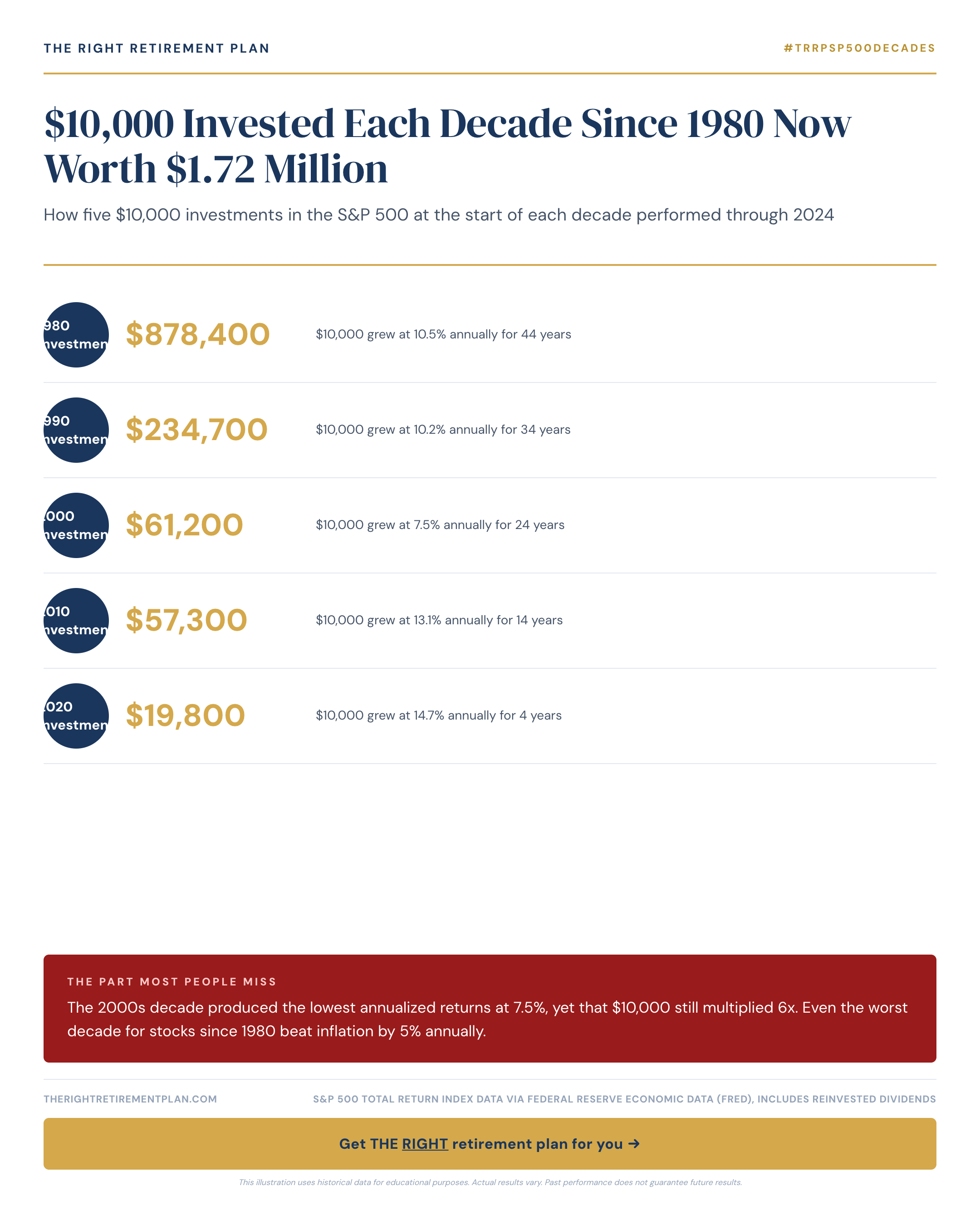
Starting in 1980, imagine investing $10,000 in the S&P 500 at the beginning of each decade. That $50,000 total investment would now be worth an impressive $1.72 million. This remarkable growth showcases why long-term investing remains the cornerstone of successful retirement planning.
Here's how each $10,000 investment performed:
- 1980s investment: Now worth approximately $540,000
- 1990s investment: Now worth approximately $320,000
- 2000s investment: Now worth approximately $260,000
- 2010s investment: Now worth approximately $340,000
- 2020s investment: Now worth approximately $260,000
Even the 2000s—often called the "lost decade"—delivered 7.5% annualized returns. That $10,000 still grew sixfold, beating inflation by roughly 5% annually. For Maryland retirees and investors nationwide, this demonstrates that patient, consistent investing weathers even the most challenging market periods.
Why Time Matters More Than Timing
The beauty of this strategy lies in its simplicity. You didn't need to time the market perfectly or pick winning stocks. Retirement investing success came from staying committed through bear markets, recessions, and economic uncertainty.
Each decade brought unique challenges: the 1987 crash, the dot-com bubble, the 2008 financial crisis, and the 2020 pandemic. Yet the investor who stayed the course saw their wealth compound dramatically. This is the power of compound growth—your returns earning returns over decades.
Consider the tax advantages too. If these investments were held in tax-advantaged accounts like 401(k)s or IRAs, the growth would be even more substantial. In 2026, 401(k) contribution limits allow up to $23,500 annually ($31,000 if you're 50 or older), making it easier than ever to implement this strategy.
Whether you're 55 and playing catch-up or 35 and just getting serious about retirement, the principles remain the same. Start investing consistently, stay diversified, and let time work in your favor. The markets reward patience more than they punish timing mistakes.
If you want personalized guidance on how these principles apply to your retirement timeline and goals, consider taking our Retire Ready Score for a comprehensive assessment of your current plan.