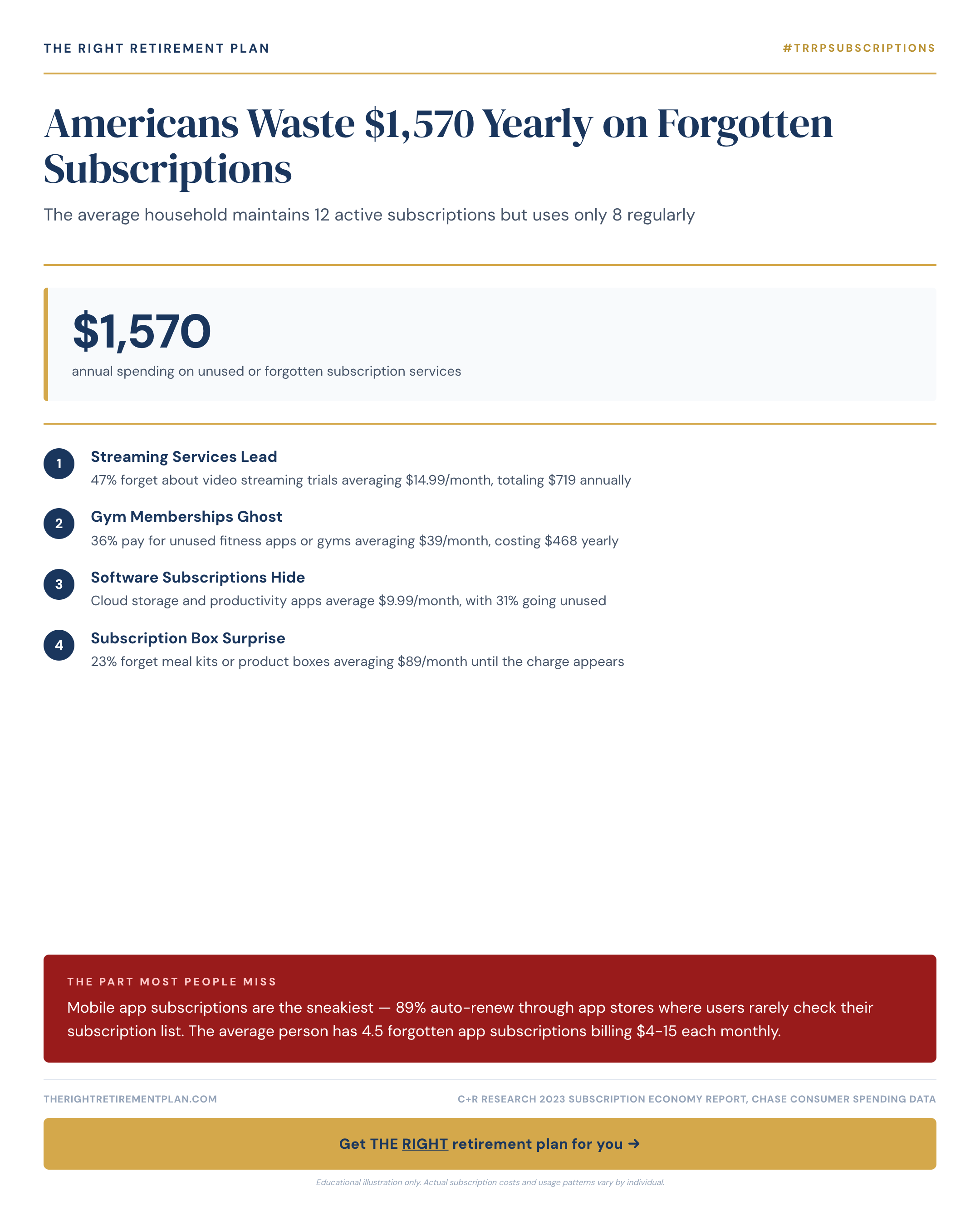
The average household maintains 12 active subscriptions but uses only 8 regularly, creating a silent drain on retirement savings that adds up to $1,570 per year. For pre-retirees already juggling healthcare premiums, mortgage payments, and catch-up contributions, these forgotten expenses can derail carefully planned budgets.
The Hidden Subscription Trap
Mobile app subscriptions are the sneakiest culprits in this financial drain. Research shows that 89% of app subscriptions auto-renew through app stores, where users rarely check their active subscription lists. The typical person carries 4.5 forgotten app subscriptions, each billing between $4-15 monthly.
Beyond apps, streaming services multiply quickly. What starts as Netflix and Spotify often grows to include Hulu, Disney+, Amazon Prime, Apple Music, and specialized platforms for fitness or meditation. Each seems reasonable individually, but collectively they can exceed $100 monthly.
The problem intensifies with annual subscriptions. That $99 software renewal or $79 membership fee hits your credit card without warning, often during months when you're already stretched thin. Many Maryland retirees discover dozens of these charges when reviewing statements for tax preparation.
Why This Matters for Retirement Planning
Every dollar spent on unused subscriptions is a dollar not invested for your future. Consider this: $1,570 annually invested with a 7% return compounds to over $31,000 in 20 years. For someone approaching retirement, that's significant purchasing power lost to services they don't even use.
Subscription creep also reflects broader spending habits that can sabotage retirement budgets. If you're not tracking small recurring expenses now, you'll likely struggle with fixed-income budgeting later. Retirement planning requires precision—knowing exactly where every dollar goes each month.
The 2026 contribution limits for 401(k) plans allow catch-up contributions of $7,500 for those 50 and older, but only if you have the cash flow available. Forgotten subscriptions could be consuming money better directed toward these tax-advantaged accounts.
Start by auditing your bank and credit card statements from the past three months. Cancel unused subscriptions immediately, and set calendar reminders before annual renewals. Consider using a subscription tracking app or spreadsheet to monitor your active services.
If you want personalized guidance on optimizing your retirement finances beyond subscription management, take our free Retire Ready Score to see how your overall plan measures up.