Why Estate Planning Can't Wait in Retirement
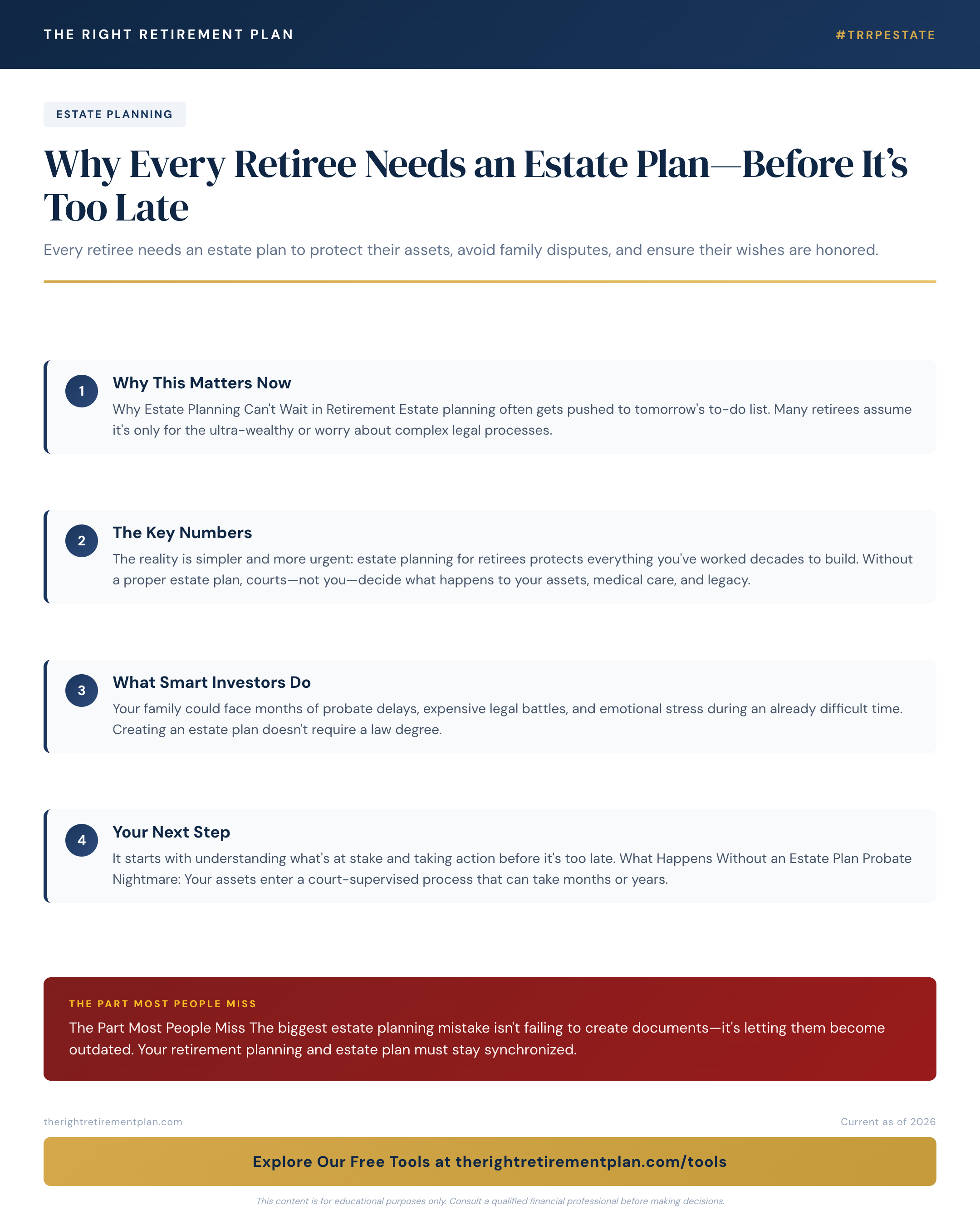
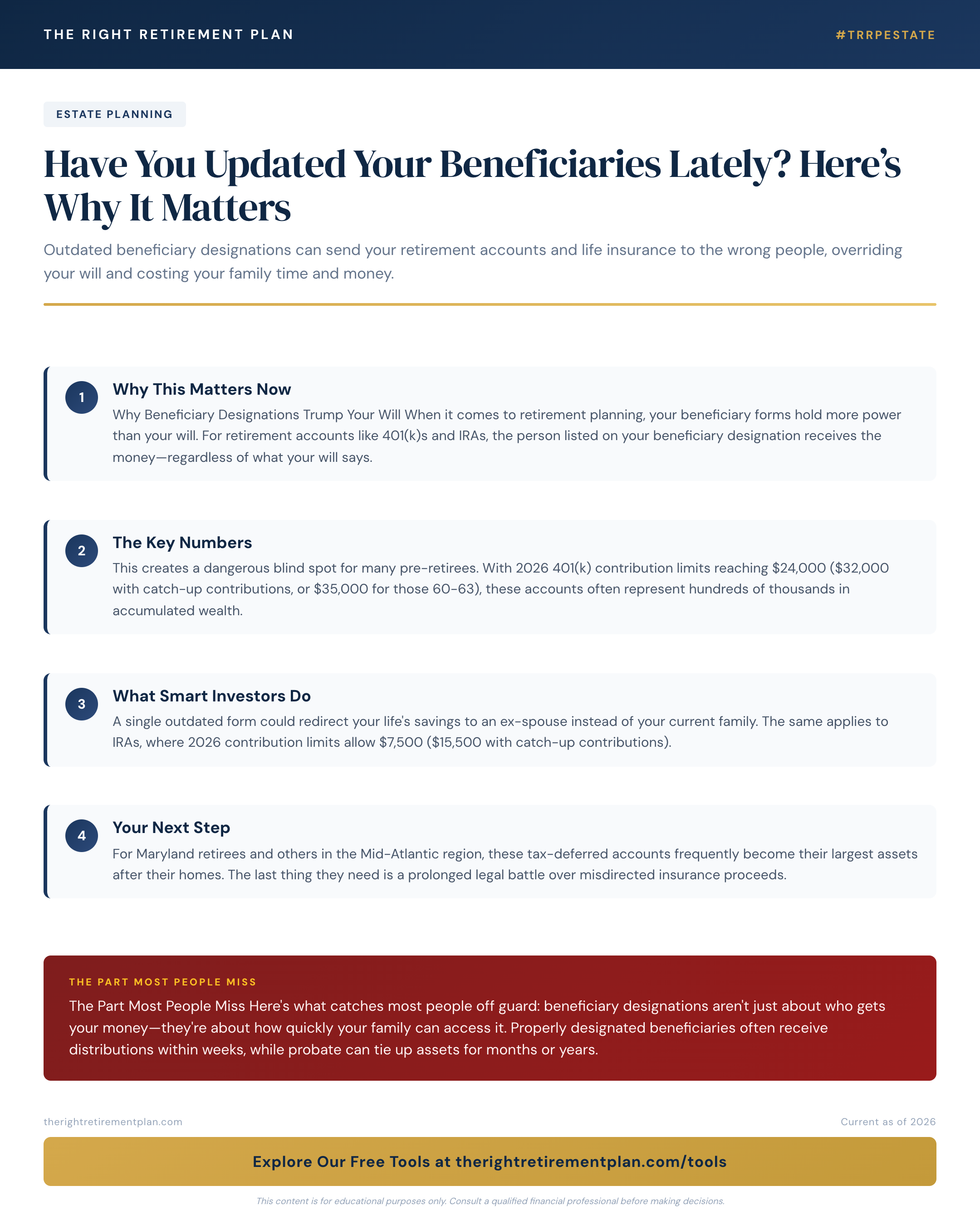
Estate planning often gets pushed to tomorrow's to-do list. Many retirees assume it's only for the ultra-wealthy or worry about complex legal processes. The reality is simpler and more urgent: estate planning for retirees protects everything you've worked decades to build.
Without a proper estate plan, courts—not you—decide what happens to your assets, medical care, and legacy. Your family could face months of probate delays, expensive legal battles, and emotional stress during an already difficult time.
The good news? Creating an estate plan doesn't require a law degree. It starts with understanding what's at stake and taking action before it's too late.
What Happens Without an Estate Plan
Probate Nightmare: Your assets enter a court-supervised process that can take months or years. During this time, your family may struggle to access funds they desperately need. Everything becomes public record, eliminating privacy for your financial affairs.
Family Conflicts: Even close-knit families can fracture when trying to interpret unclear wishes. Maryland retirees often tell us they never expected their children to disagree—until there was no written guidance to follow.
Wrong Decision-Makers: Courts appoint guardians for incapacitated individuals without input from family. A stranger might control your healthcare and financial decisions, making choices you'd never approve.
Unintended Heirs: State intestacy laws determine who inherits your assets. Your estate might go to distant relatives while bypassing the people you actually care about most.
The solution is straightforward: document your wishes clearly while you're able to make these important decisions.
Essential Documents Every Retiree Needs
Will: Your foundation document specifying who inherits your property. Without one, state law decides for you.
Trust: Helps avoid probate, maintains privacy, and provides ongoing management of your assets. Particularly valuable for retirees with substantial retirement accounts or real estate.
Powers of Attorney: Designate trusted individuals to handle financial and legal matters if you become incapacitated. Choose someone who understands your values and financial situation.
Healthcare Directive: Provides specific medical care instructions, especially for end-of-life decisions. Relieves your family from making difficult choices without guidance.
These documents work together as a comprehensive safety net for you and your loved ones.
Take Control of Your Legacy Today
Estate planning for retirees isn't about preparing for death—it's about protecting life as you know it. Start with the essential documents, keep everything current, and work with professionals who understand retirement complexities.
Don't let another year pass hoping everything will work out. Your family deserves clarity, and you deserve peace of mind. If you'd like personalized guidance on aligning your estate plan with your retirement goals, consider taking our Retire Ready Score assessment.