When you lose a spouse at 62, navigating Social Security survivor benefits becomes one of your most important financial decisions. The timing of when you claim these benefits versus your own retirement benefit can dramatically impact your monthly income for the rest of your life.
Understanding Your Survivor Benefit Options
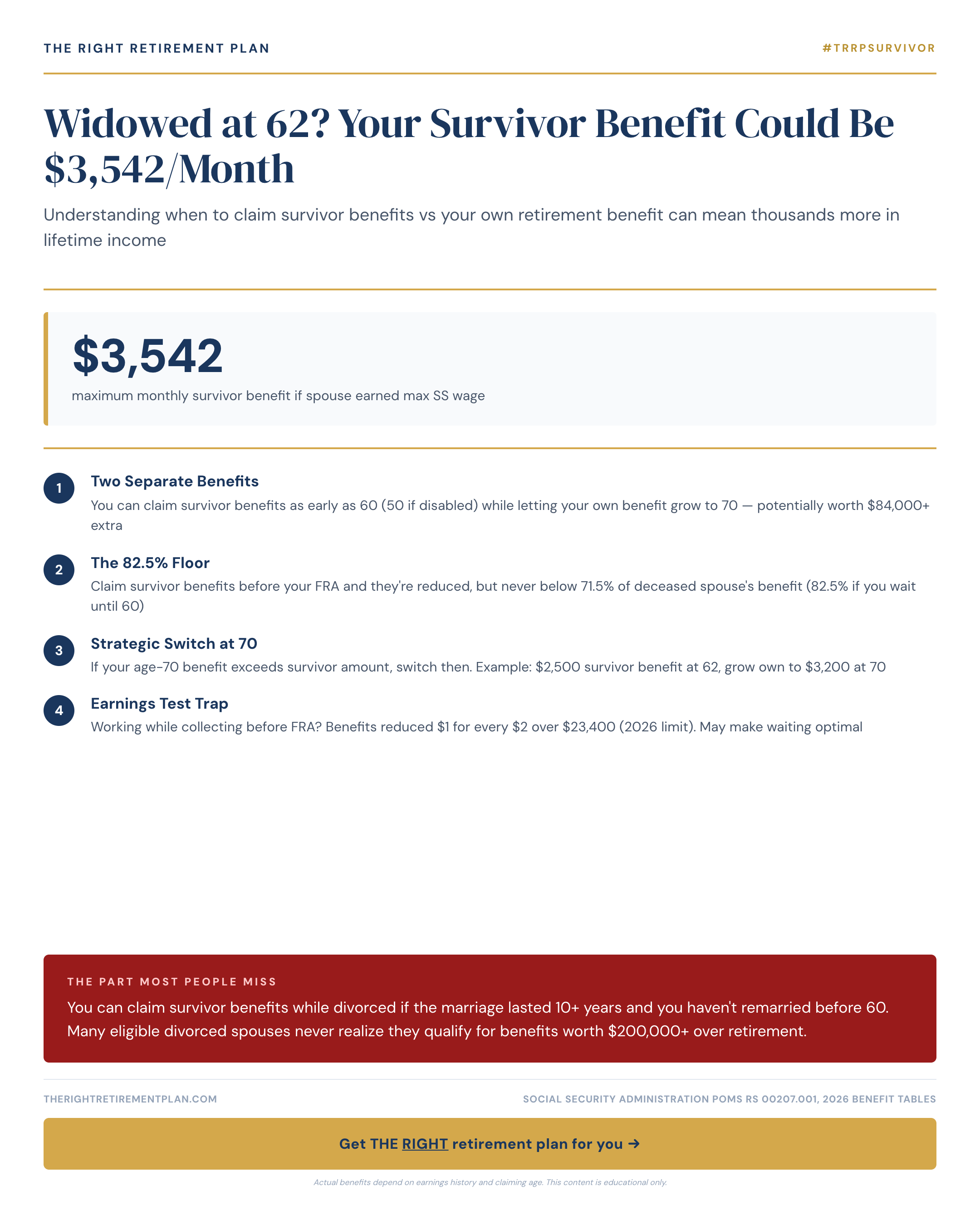
Survivor benefits can provide substantial monthly income, potentially reaching $3,542 or more depending on your spouse's earnings history. You have several claiming strategies available:
- Claim survivor benefits as early as age 60 (or 50 if disabled)
- Wait until your full retirement age for 100% of your spouse's benefit
- Switch between survivor and your own retirement benefits at different times
- Delay your own benefits until age 70 while collecting survivor benefits
The key insight many Maryland retirees miss is that you can claim one benefit while allowing the other to grow. For example, you might claim reduced survivor benefits at 62, then switch to your own (potentially larger) retirement benefit at 70.
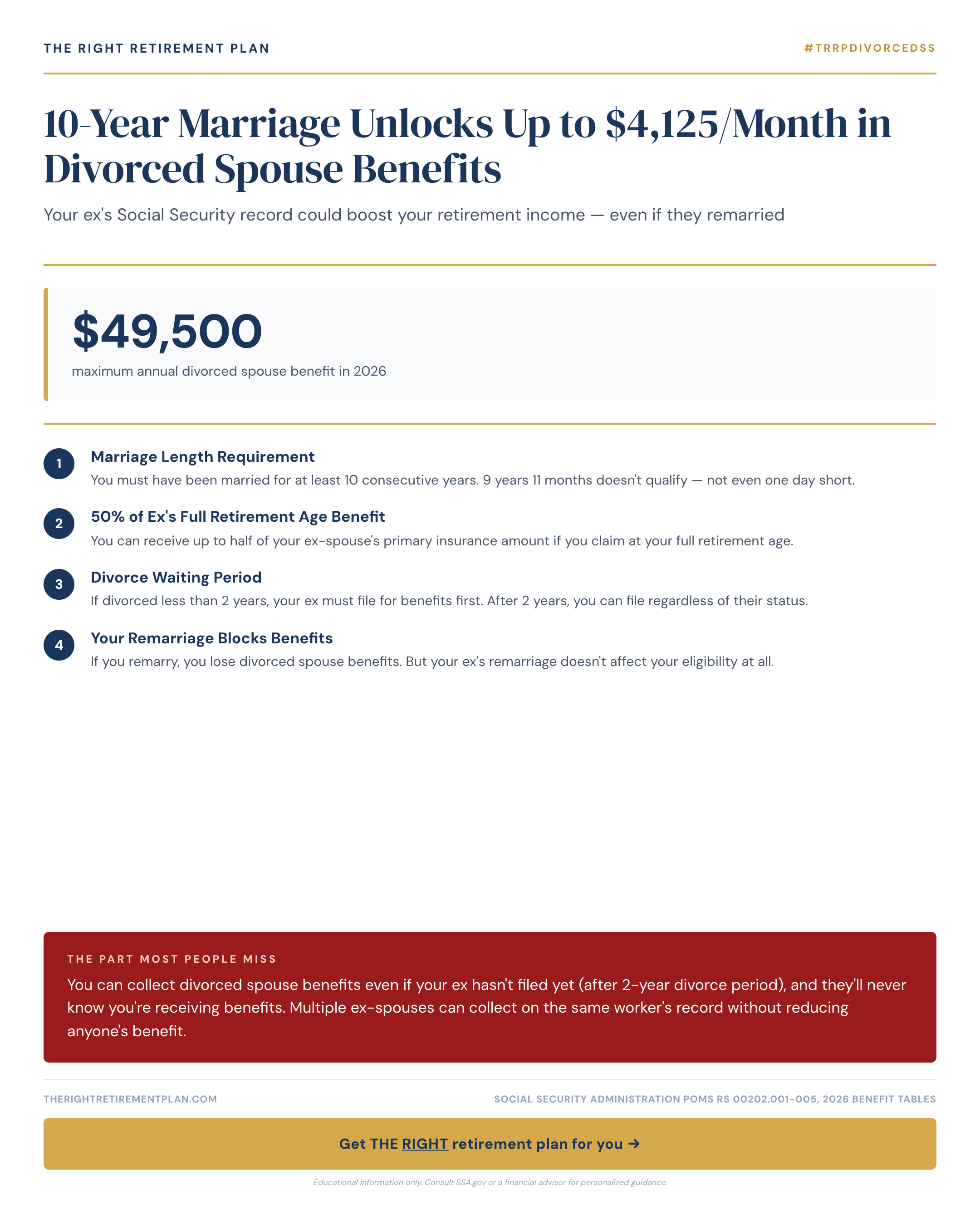
For divorced spouses, you may qualify for survivor benefits even after divorce if your marriage lasted at least 10 years and you haven't remarried before age 60. This often-overlooked rule can provide access to benefits worth $200,000 or more over your lifetime.
Maximizing Your Monthly Income
The optimal strategy depends on comparing your potential benefits. If your spouse had higher lifetime earnings, survivor benefits might exceed your own retirement benefit. Conversely, if you had the higher income, you might claim survivor benefits first, then switch to your own benefit after it reaches maximum value at age 70.
Consider this example: If your survivor benefit is $2,800 monthly but your own retirement benefit would be $3,200 at age 70, claiming survivor benefits at 62 while delaying your own until 70 could maximize your lifetime income.
Planning Your Next Steps
These retirement decisions have lasting consequences, and getting the timing wrong can cost tens of thousands of dollars over your lifetime. Each situation involves unique factors like your age, benefit amounts, health status, and other income sources.
If you want personalized guidance on how survivor benefit strategies apply to your specific situation, consider taking our free Retire Ready Score assessment for insights tailored to your circumstances.