Why Retirement Income Planning Beats Chasing Returns
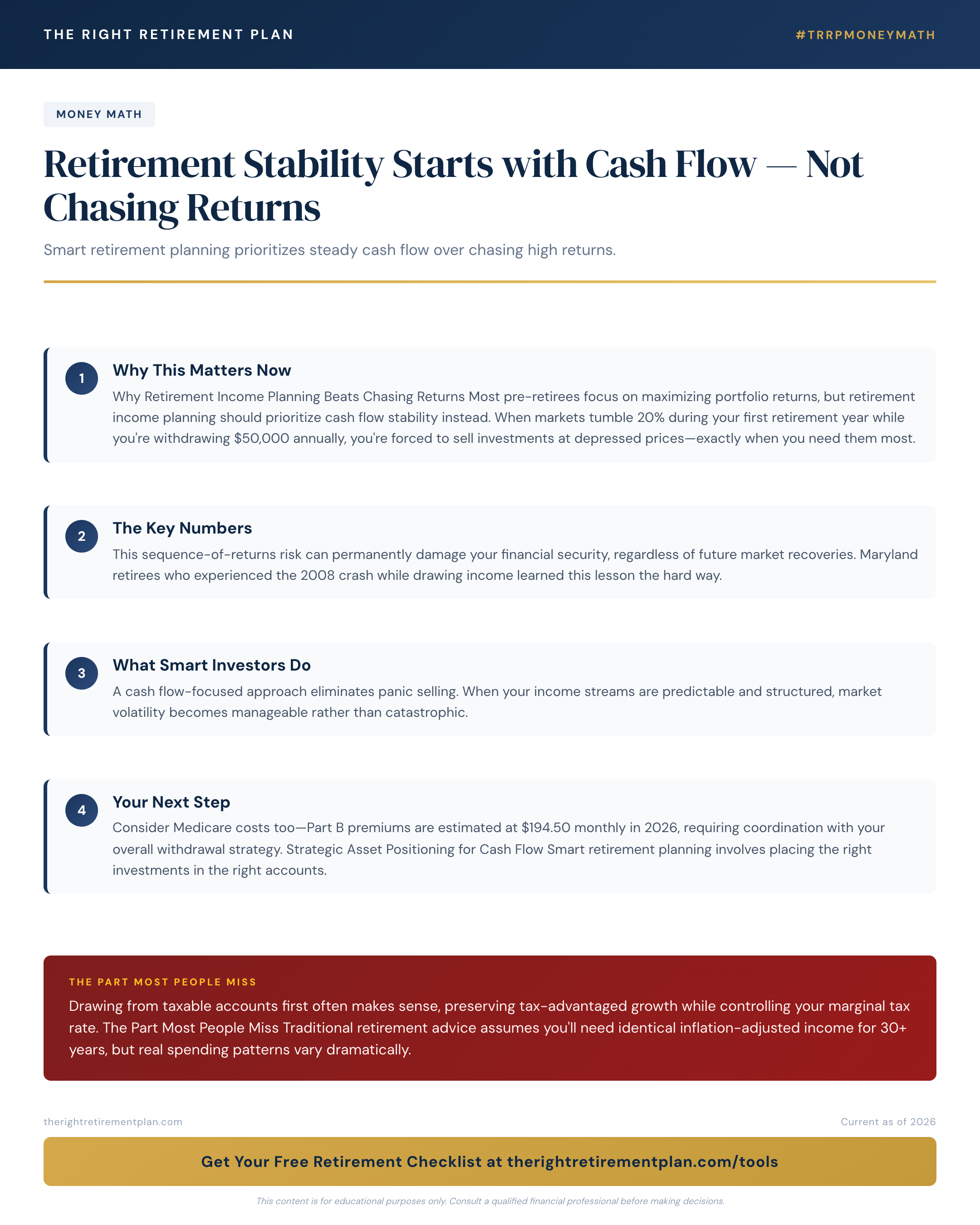
Most pre-retirees focus on maximizing portfolio returns, but retirement income planning should prioritize cash flow stability instead. When markets tumble 20% during your first retirement year while you're withdrawing $50,000 annually, you're forced to sell investments at depressed prices—exactly when you need them most.
This sequence-of-returns risk can permanently damage your financial security, regardless of future market recoveries. Maryland retirees who experienced the 2008 crash while drawing income learned this lesson the hard way.
A cash flow-focused approach eliminates panic selling. When your income streams are predictable and structured, market volatility becomes manageable rather than catastrophic.
Building Your 2026 Income Foundation
Retirement withdrawal strategy success starts with multiple income sources working together:
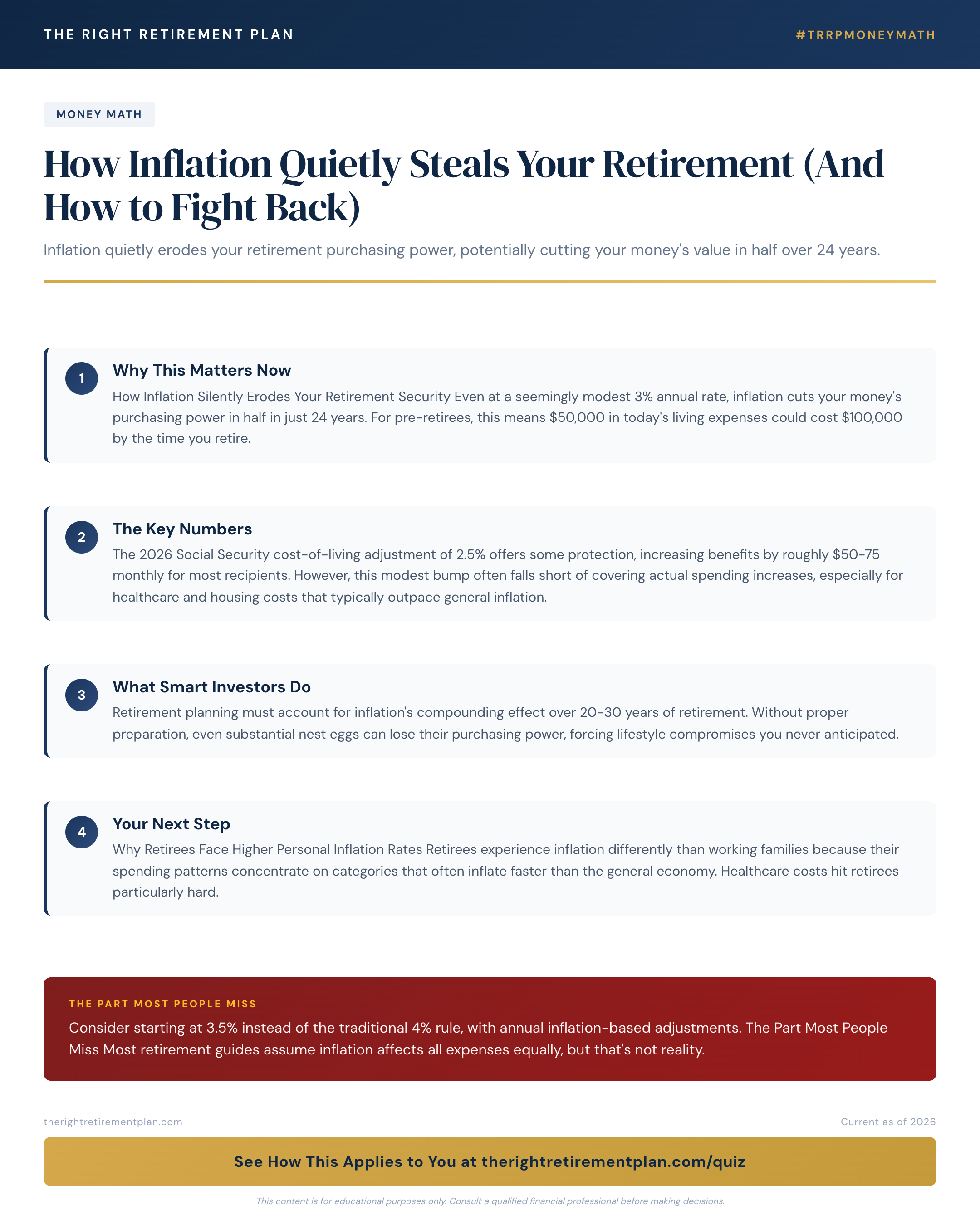
• Social Security optimization — With 2026's projected 2.5% COLA, timing your claim can impact lifetime benefits by hundreds of thousands
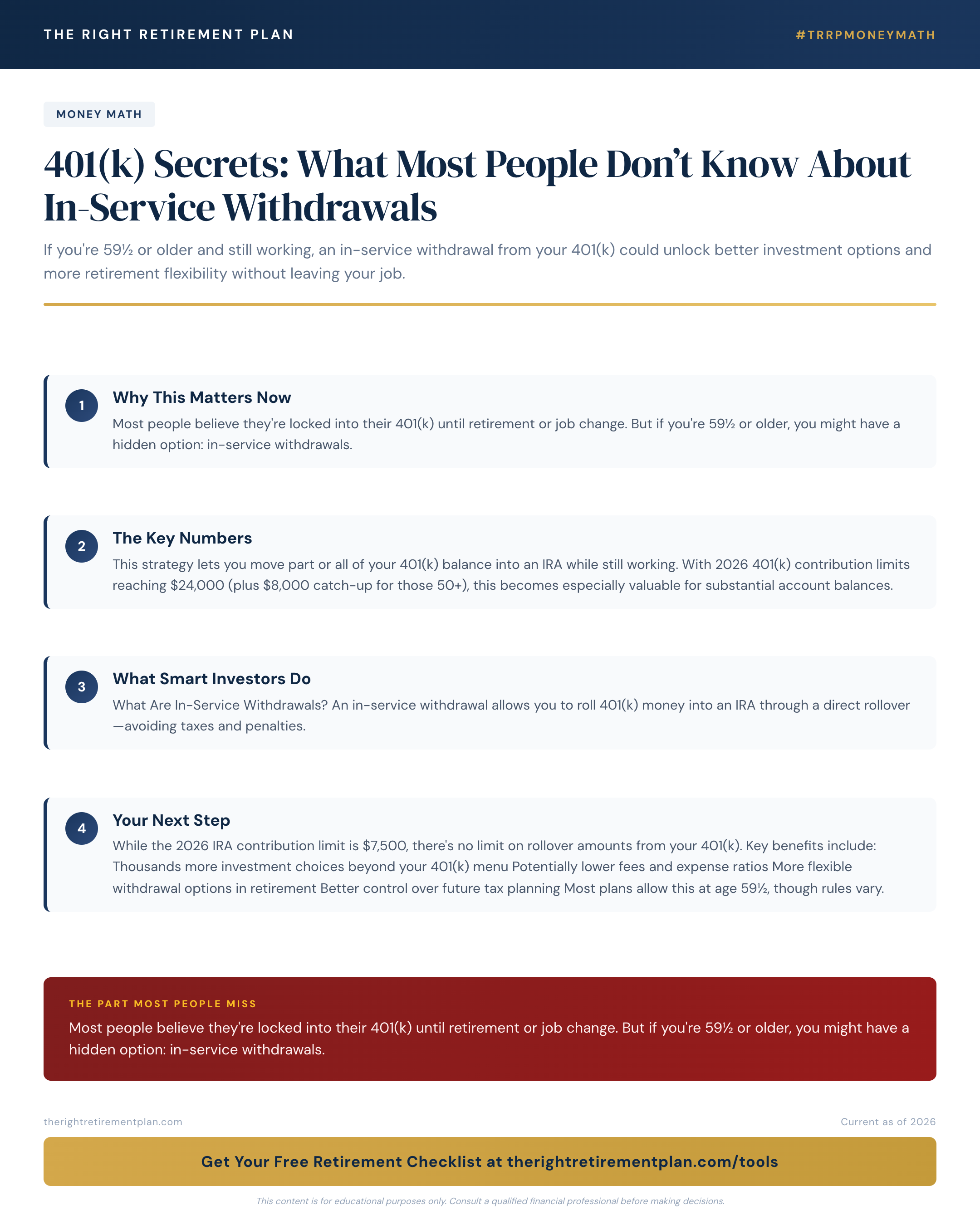
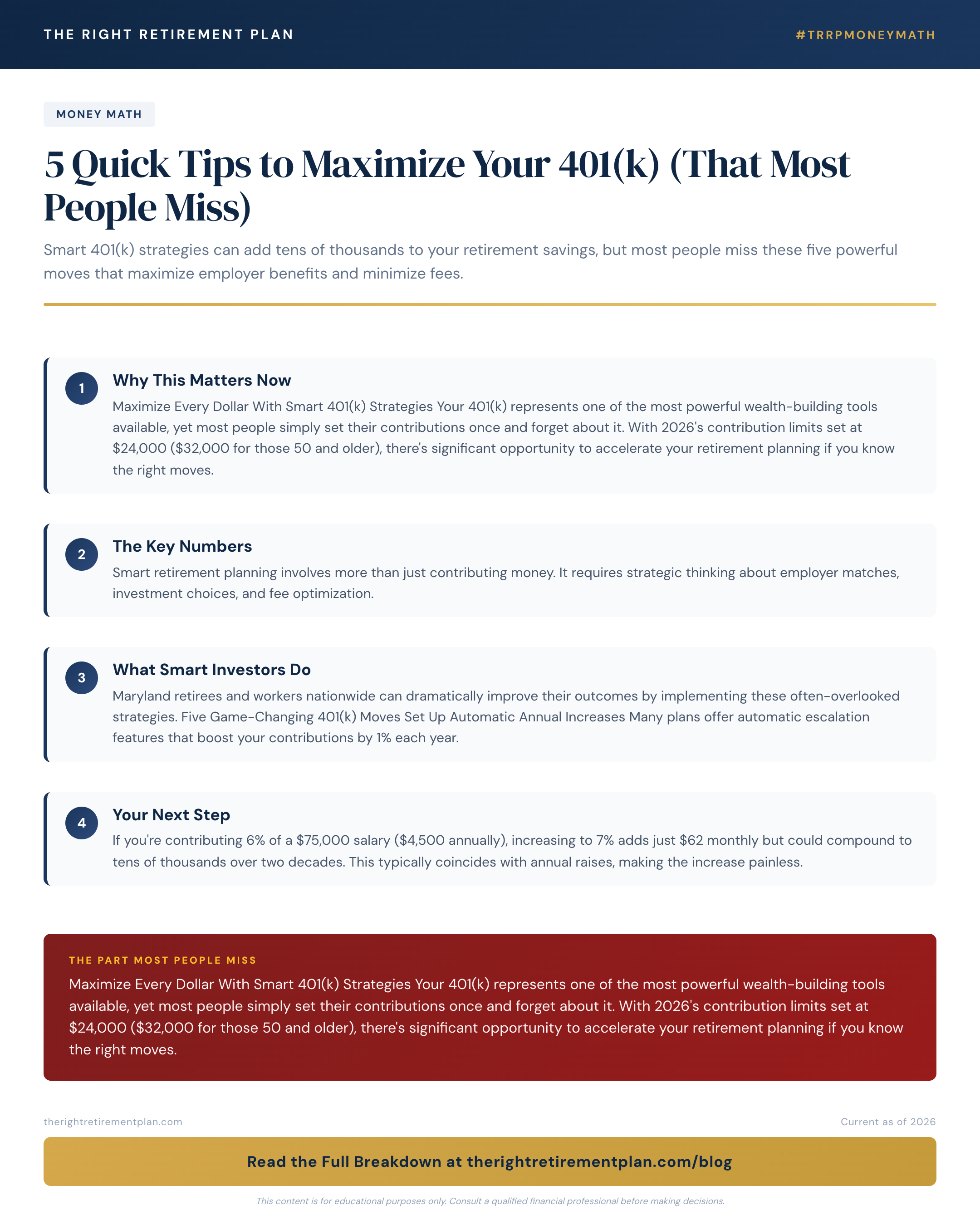
• Tax-efficient withdrawals — Coordinate traditional 401(k) distributions (up to $24,000 in 2026 contributions, plus catch-ups) with Roth conversions
• Cash reserves — Maintain 12-24 months of expenses in stable investments to ride out market storms
• Income-generating assets — Dividends, bond ladders, and annuities provide steady payments regardless of market conditions
For high earners still contributing, 2026 IRA limits of $7,500 ($8,000 for ages 60-63) offer final opportunities to build tax-advantaged income streams.
Consider Medicare costs too—Part B premiums are estimated at $194.50 monthly in 2026, requiring coordination with your overall withdrawal strategy.
Strategic Asset Positioning for Cash Flow
Smart retirement planning involves placing the right investments in the right accounts. Income-generating bonds and dividend stocks work best in tax-deferred accounts, while growth assets can appreciate in taxable accounts or Roth IRAs.
This positioning strategy becomes crucial for managing tax brackets during retirement. Drawing from taxable accounts first often makes sense, preserving tax-advantaged growth while controlling your marginal tax rate.
---
Creating a comprehensive retirement income strategy requires coordinating Social Security timing, tax-efficient withdrawals, healthcare planning, and risk management. If you want personalized guidance on building your cash flow foundation, consider taking our Retire Ready Score to see how your current plan measures up.