The Real Cost of Weekend Indulgences
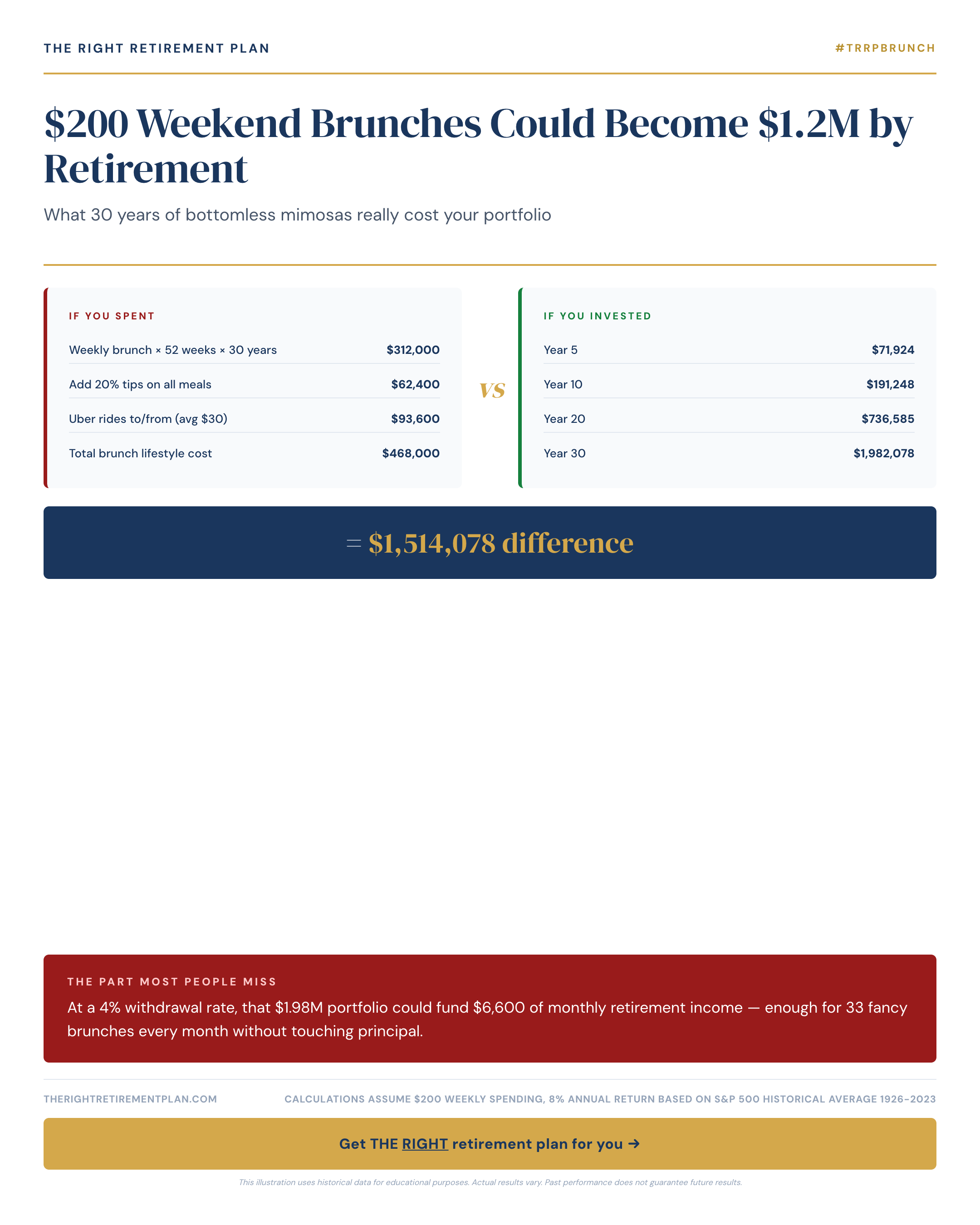
That $200 weekend brunch might seem harmless, but the numbers tell a different story. If you're spending $200 every weekend on dining out, that's $10,400 per year disappearing from your potential retirement savings.
Over 30 years, assuming a 7% annual return, this seemingly small expense could grow to approximately $1.2 million if invested instead. For Maryland retirees and others in the Mid-Atlantic region, this represents a significant opportunity cost that many overlook during their peak earning years.
Here's how the math works:
- Weekly brunch cost: $200
- Annual total: $10,400
- Investment timeline: 30 years
- Expected return: 7% annually
- Final value: $1,200,000+
Understanding Compound Growth
The power of compound interest transforms small, consistent investments into substantial wealth over time. When you invest that $200 weekly instead of spending it, you're not just saving money—you're putting it to work.
Each dollar invested early has decades to compound. The $200 you skip this weekend could become $1,500 by retirement when given 30 years to grow. This concept applies to all discretionary spending, from daily coffee runs to monthly subscription services.
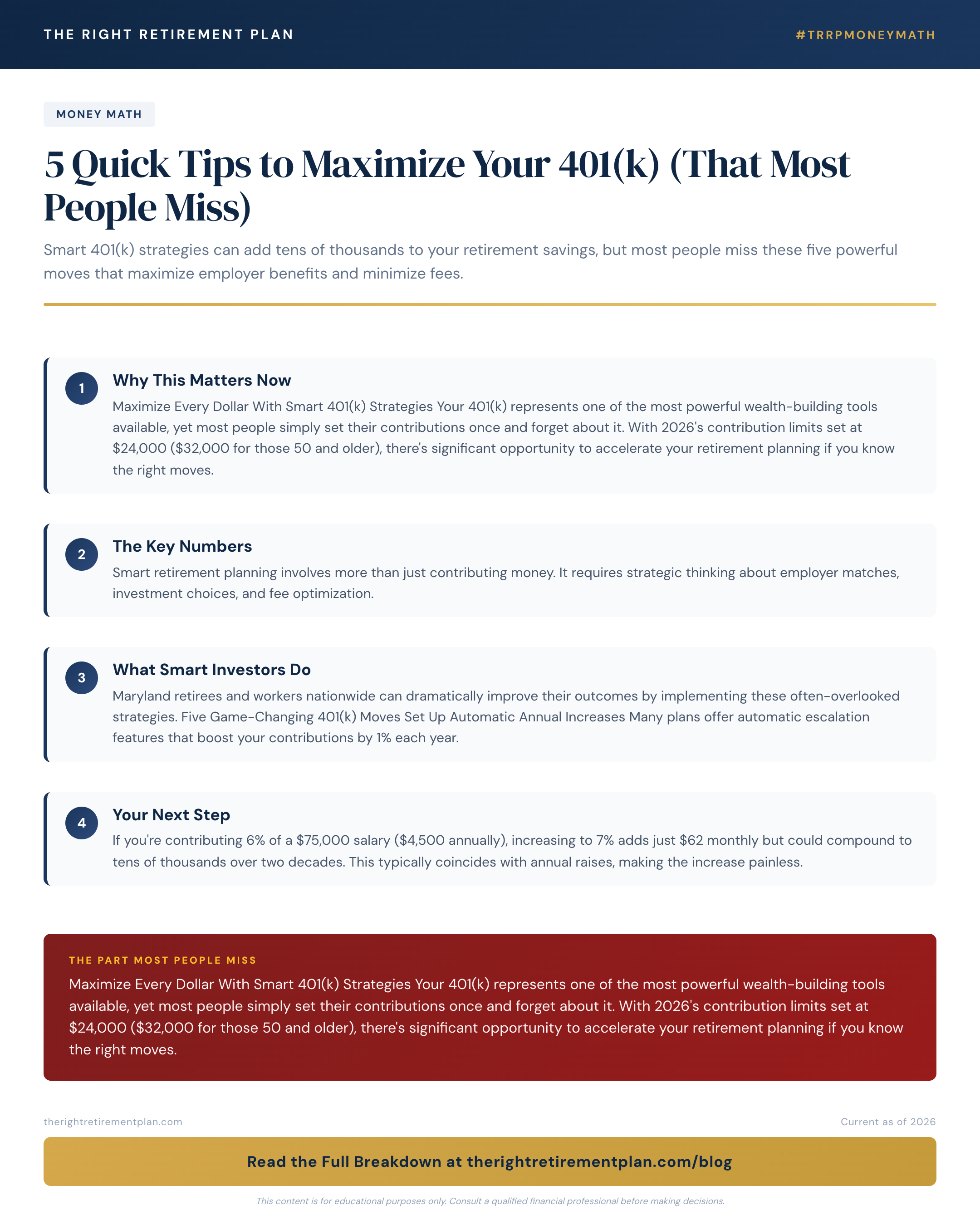
Consider redirecting just half of your weekend dining budget toward retirement accounts like 401(k)s or IRAs. In 2026, you can contribute up to $23,500 to a 401(k) if you're under 50, or $31,000 if you're 50 or older with catch-up contributions.
Smart Alternatives Without Sacrifice
You don't need to eliminate all lifestyle pleasures to build wealth. Instead, look for creative alternatives:
- Host brunch at home with friends (cost: $40-60 total)
- Choose less expensive restaurants on alternating weekends
- Invest the savings automatically so you don't miss the money
Creating Your Strategy
Building retirement wealth isn't about deprivation—it's about conscious choices. Start by tracking your discretionary spending for one month. Identify patterns like weekend dining, entertainment subscriptions, or impulse purchases that could be redirected toward your future.
Small changes in spending habits, when invested consistently over decades, create substantial retirement security. If you want personalized guidance on optimizing your retirement strategy, consider taking our Retire Ready Score to see how your current plan measures up.