The Six Documents That Protect Your Family
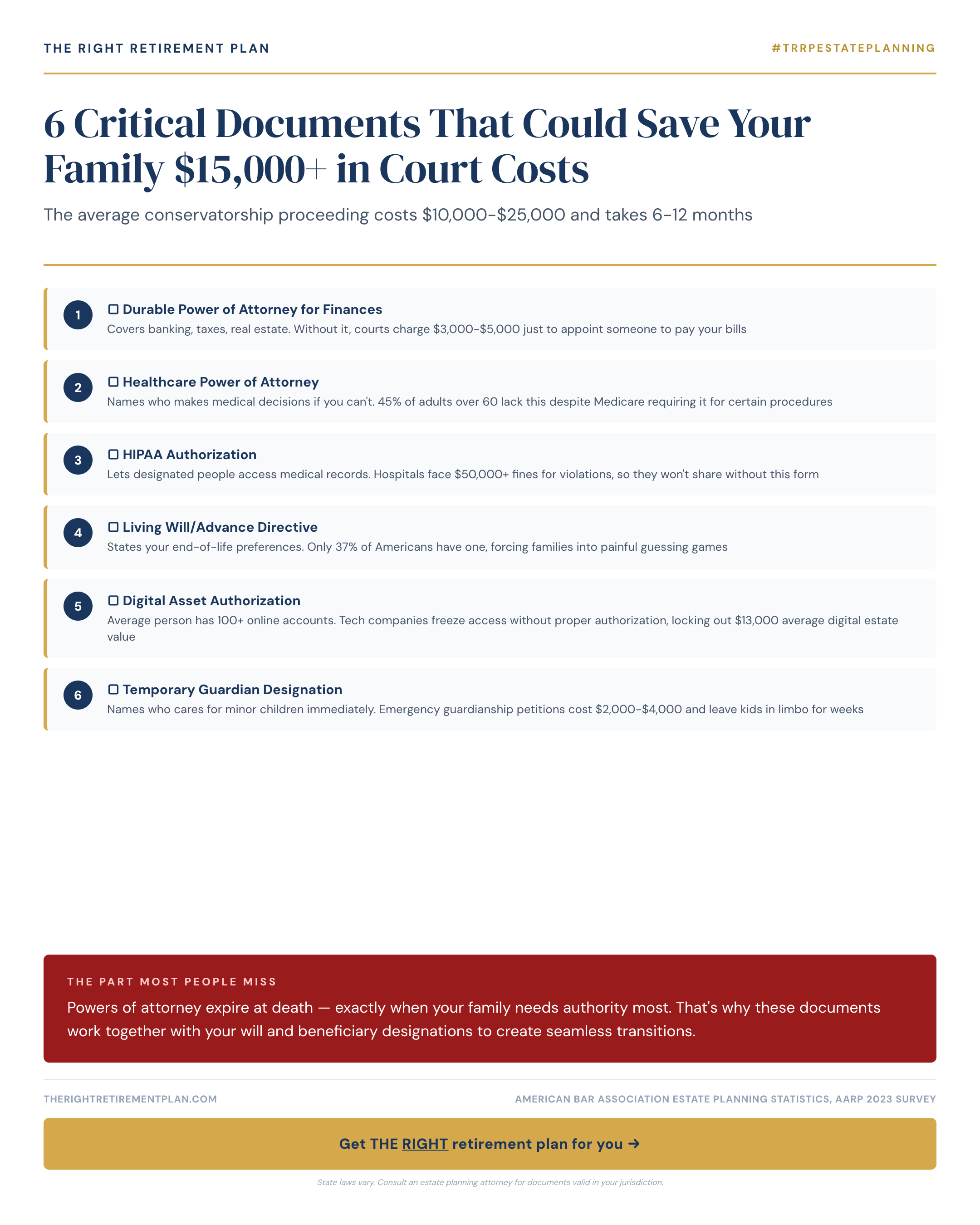
When incapacity strikes without warning, families across Maryland and beyond face devastating legal costs. The average conservatorship proceeding costs $10,000-$25,000 and drags on for 6-12 months while loved ones battle in court for basic decision-making authority.
Smart estate planning prevents this nightmare scenario. Six critical documents work together to create seamless transitions and protect your family from expensive legal proceedings:
• Durable Power of Attorney for Finances — grants authority over banking, investments, and property decisions
• Advance Healthcare Directive — covers medical decisions and end-of-life preferences
• HIPAA Authorization — allows access to medical records and communication with doctors
• Will or Trust — directs asset distribution and names guardians for dependents
• Beneficiary Designations — ensures retirement accounts and life insurance transfer directly
• Digital Asset Authorization — provides access to online accounts and digital property
These estate planning documents must be current, properly executed, and accessible when needed. Outdated forms or missing signatures can render them worthless during family emergencies.
Why Standard Forms Often Fall Short
Generic online templates rarely address state-specific requirements or complex family situations. A power of attorney valid in Virginia might lack necessary provisions for Maryland banking institutions. Similarly, healthcare directives need precise language to satisfy local hospital policies.
Professional advisors in the Annapolis area often see families discover gaps too late. Powers of attorney that exclude specific financial institutions, healthcare directives missing mental health provisions, or beneficiary forms forgotten after job changes create costly vulnerabilities.
Document coordination matters equally. Your will and beneficiary designations must align, or conflicting instructions trigger probate delays and family disputes.
Timing Your Estate Planning Review
Review your documents annually and after major life events like marriage, divorce, new grandchildren, or significant asset changes. The 2026 federal estate tax exemption remains at $13.61 million per person, but state requirements vary significantly.
Don't wait until health issues arise. Capacity challenges make document updates legally complex or impossible, leaving families vulnerable to conservatorship proceedings that proper estate planning could have prevented entirely.
If you want personalized guidance on protecting your family's financial future, consider taking our Retire Ready Score assessment.