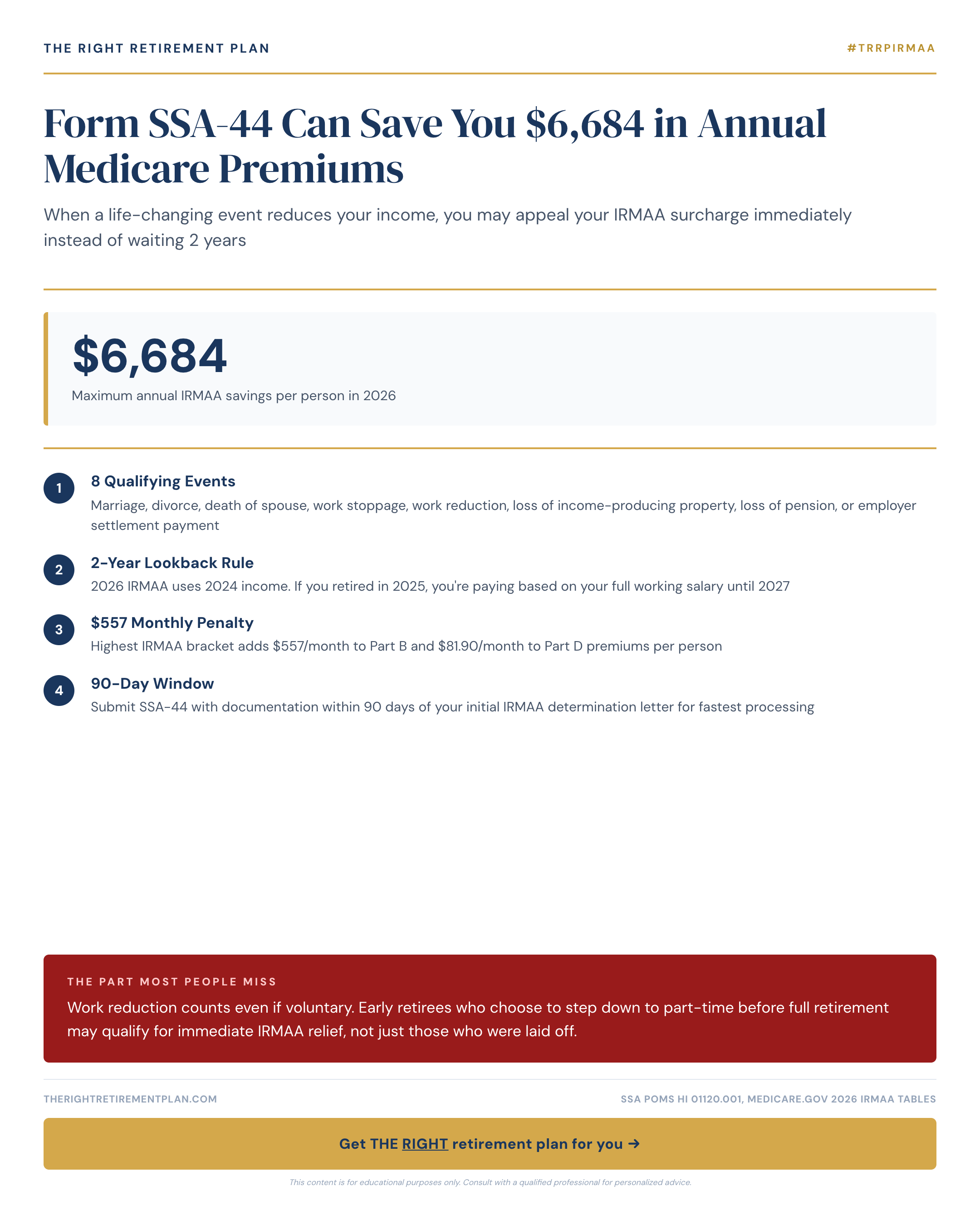
When your income drops significantly due to retirement or other major life changes, you shouldn't have to pay inflated Medicare premiums based on outdated earnings data. Form SSA-44 provides immediate relief from IRMAA (Income-Related Monthly Adjustment Amount) surcharges, potentially saving you thousands of dollars annually.
Understanding IRMAA and Income-Based Appeals
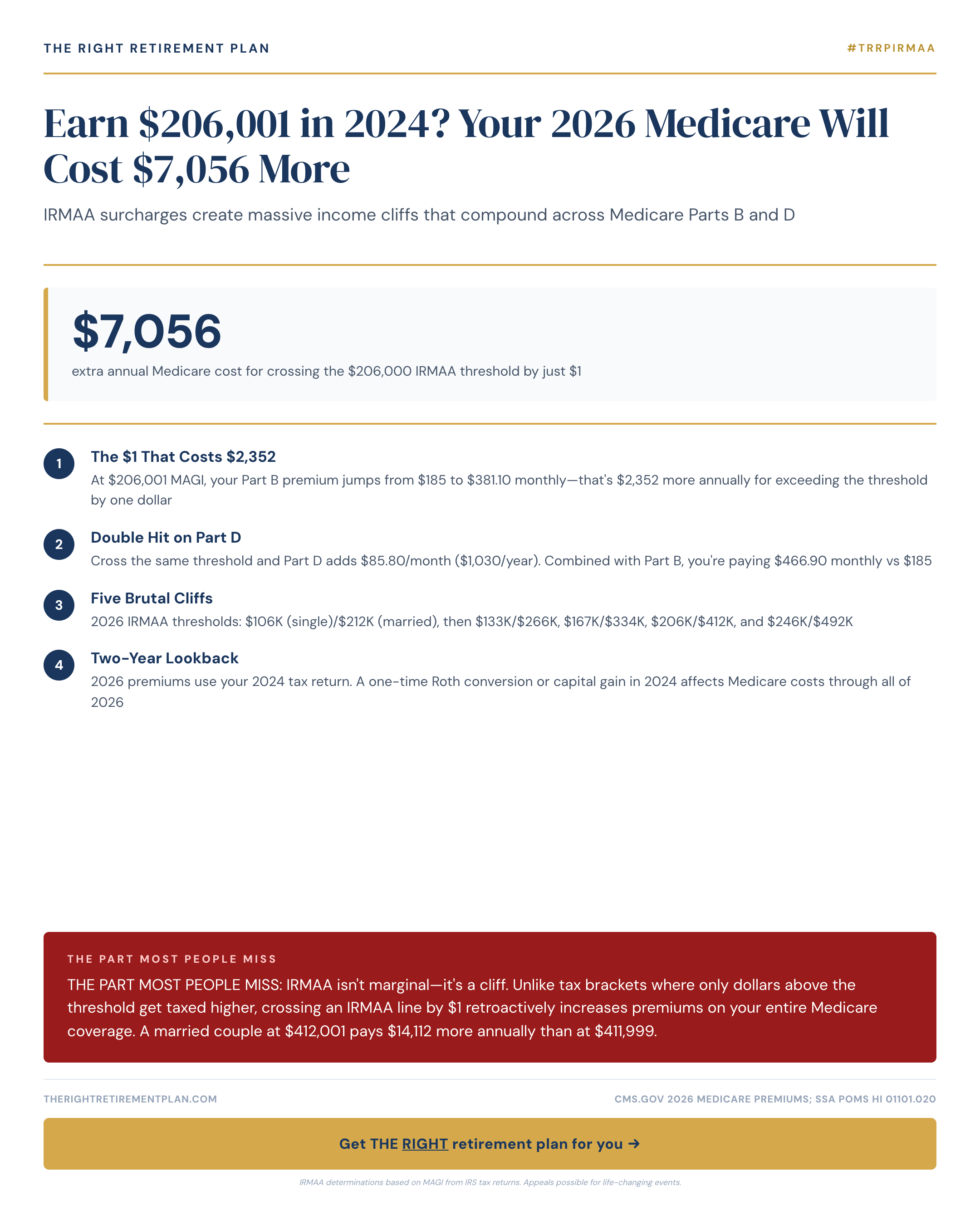
Medicare uses your tax return from two years prior to determine if you'll pay higher Part B and Part D premiums. For 2026, if your 2024 modified adjusted gross income exceeded $106,000 (single) or $212,000 (married filing jointly), you'll face IRMAA surcharges ranging from $70 to $560 monthly per person.
This creates a frustrating situation: retirees often pay inflated premiums for up to two years after their income actually drops. That's where Medicare IRMAA appeals through Form SSA-44 become crucial.
Life-changing events that qualify for immediate appeals include:
- Work reduction or stoppage (including voluntary retirement)
- Loss of pension income
- Divorce or marriage
- Death of spouse
- Loss of income-producing property
The Voluntary Retirement Advantage
Here's what many Maryland retirees don't realize: voluntary work reduction qualifies for IRMAA relief. You don't need to be laid off or forced into early retirement. If you choose to step down to part-time work or retire early, you can appeal your Medicare premium surcharges immediately.
For example, a couple in the Annapolis area earning $250,000 annually who retire and reduce their income to $150,000 could save approximately $6,684 annually in Medicare premiums by filing Form SSA-44 rather than waiting for automatic adjustments.
The appeal process requires documentation proving your income change and its cause. Social Security reviews appeals within 30-60 days, and approved reductions often include retroactive refunds.
How to File Your Appeal
Submit Form SSA-44 with supporting documentation to your local Social Security office or mail it directly to the Medicare IRMAA Life-Changing Event office. Include tax returns, pay stubs, retirement letters, or other proof of income reduction.
Required documentation typically includes:
- Most recent tax return
- Proof of income change (final pay stub, retirement letter)
- Form SSA-44 completed in full
Understanding these Medicare premium rules can significantly impact your retirement budget. If you want personalized guidance on how Medicare costs fit into your overall retirement strategy, consider taking our free Retire Ready Score assessment.