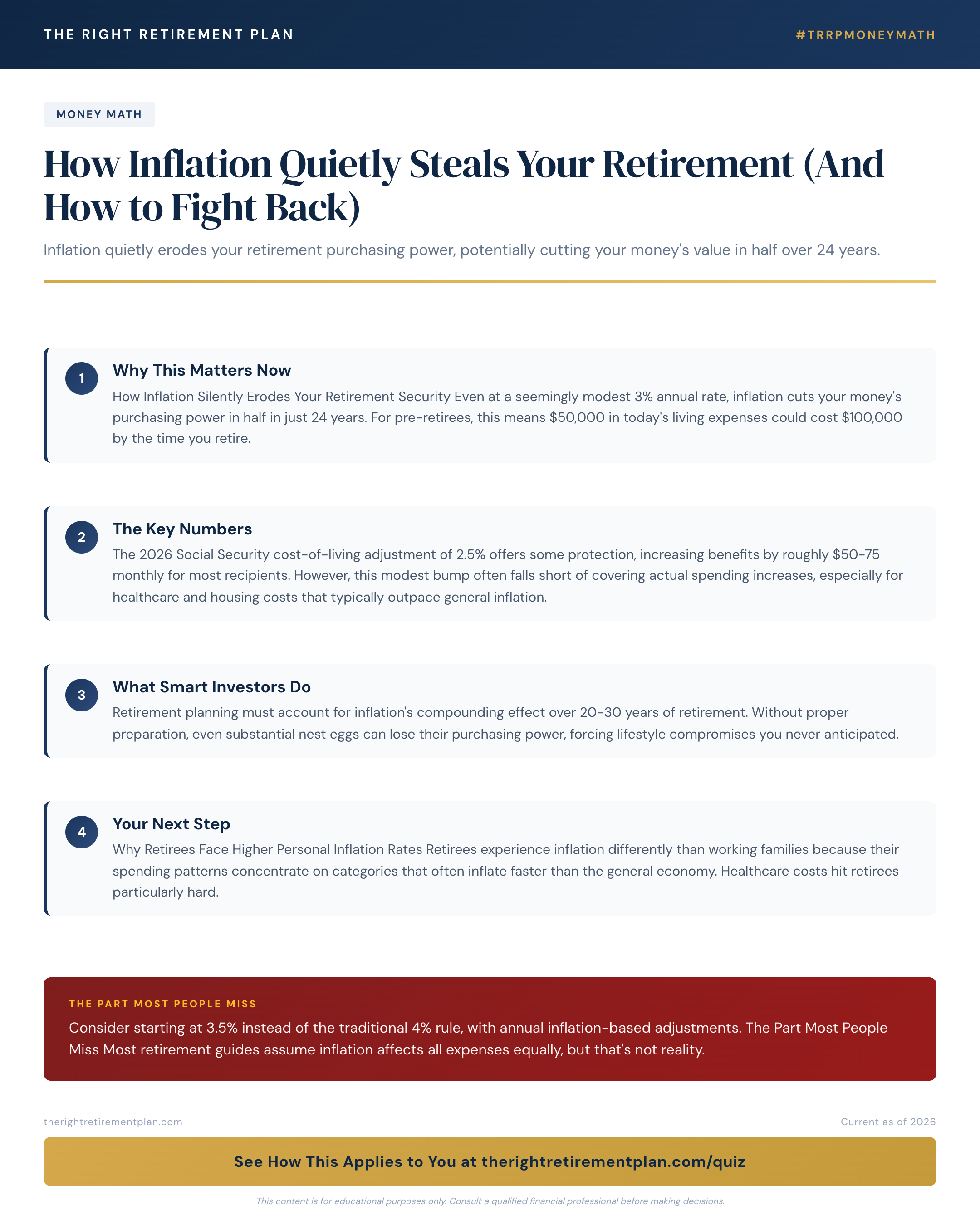
How Inflation Silently Erodes Your Retirement Security
Even at a seemingly modest 3% annual rate, inflation cuts your money's purchasing power in half in just 24 years. For pre-retirees, this means $50,000 in today's living expenses could cost $100,000 by the time you retire.
The 2026 Social Security cost-of-living adjustment of 2.5% offers some protection, increasing benefits by roughly $50-75 monthly for most recipients. However, this modest bump often falls short of covering actual spending increases, especially for healthcare and housing costs that typically outpace general inflation.
Retirement planning must account for inflation's compounding effect over 20-30 years of retirement. Without proper preparation, even substantial nest eggs can lose their purchasing power, forcing lifestyle compromises you never anticipated.
Why Retirees Face Higher Personal Inflation Rates
Retirees experience inflation differently than working families because their spending patterns concentrate on categories that often inflate faster than the general economy.
Healthcare costs hit retirees particularly hard. Medicare Part B premiums reach $194.50 monthly in 2026, and a typical retiring couple may need $300,000-400,000 just for medical expenses throughout retirement. Property taxes, home maintenance, and insurance premiums frequently increase at 4-6% annually—well above general inflation rates.
Maryland retirees and others in the Mid-Atlantic region face additional pressure from above-average housing costs. Fixed income sources like pensions and bond interest don't adjust upward, making retirees vulnerable to purchasing power erosion over time.
Your retirement withdrawal strategy needs to anticipate these higher personal inflation rates rather than relying on government inflation statistics that may not reflect your actual experience.
Proven Strategies to Outpace Inflation
Maintain Growth Investments: Keep 40-70% of your portfolio in stocks, depending on your risk tolerance. Historical data shows equities have outpaced inflation over long periods, though past performance doesn't guarantee future results.
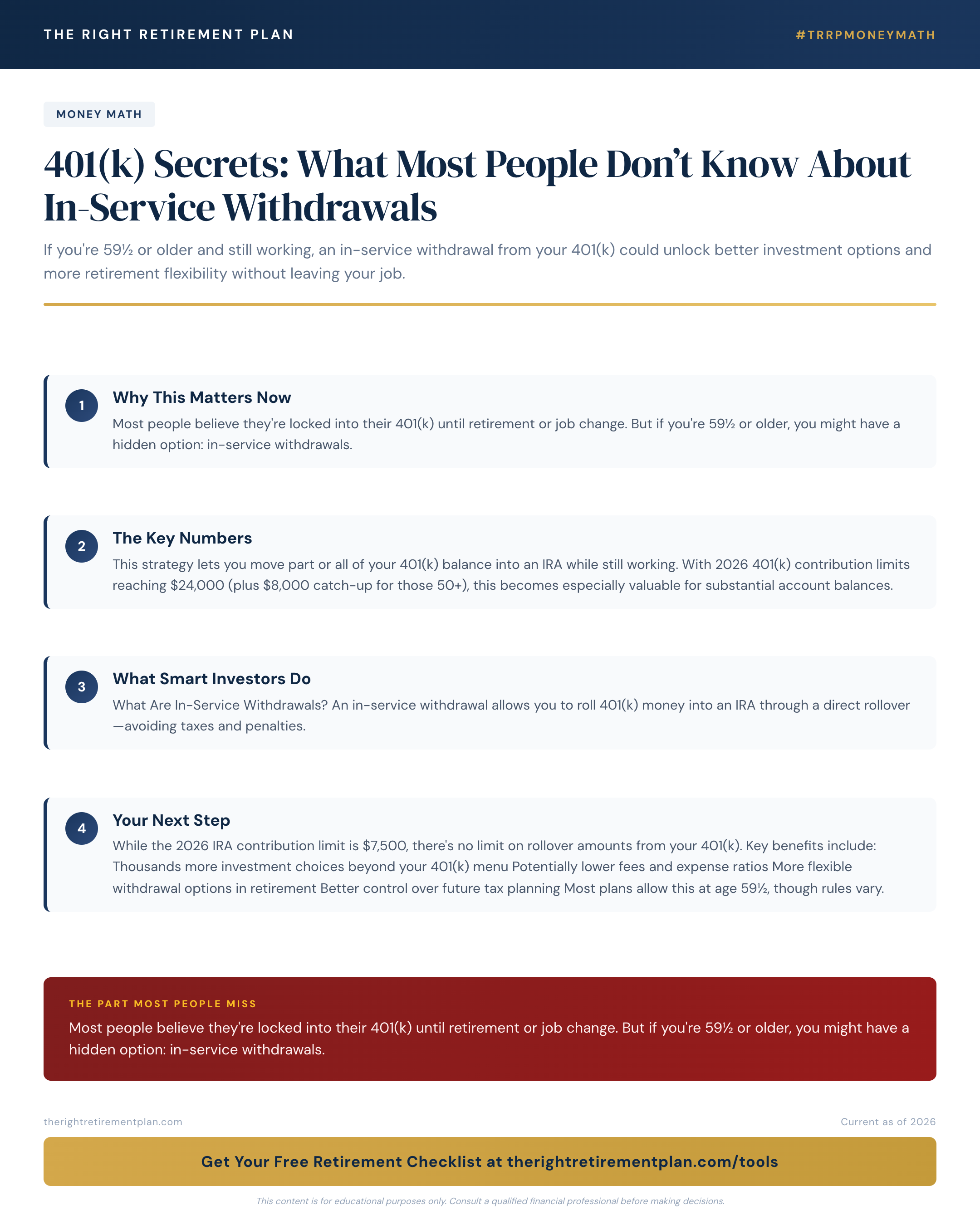
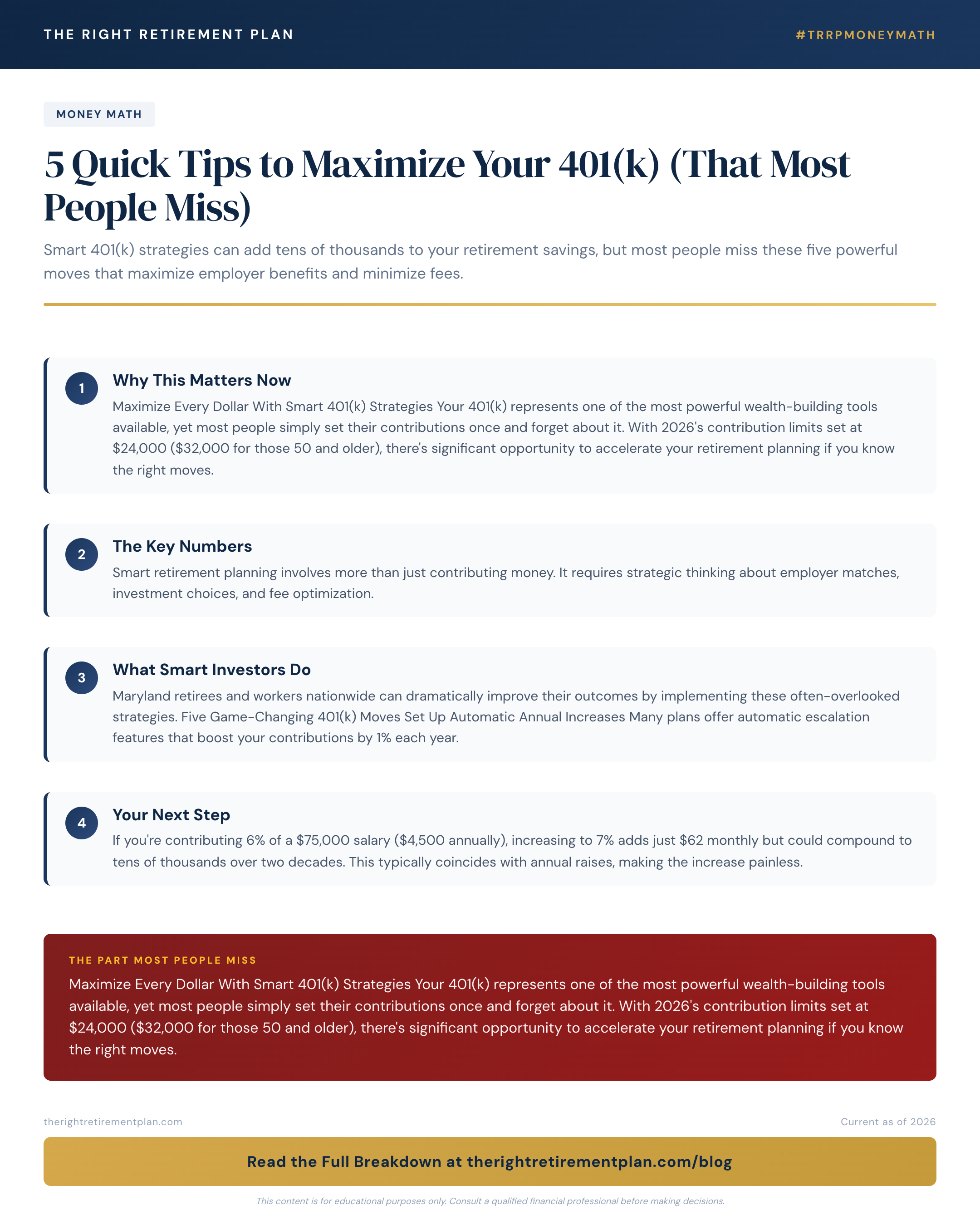
Maximize 2026 Contribution Limits: Take advantage of increased limits—$24,000 for 401(k) plans, $7,500 for IRAs, plus enhanced catch-up contributions of $8,000 for ages 60-63. Building a larger foundation helps withstand inflation's erosion.
Delay Social Security When Possible: Benefits grow 8% annually if you delay past full retirement age until 70. Since Social Security adjusts for inflation, this creates a powerful inflation-protected income stream.
Implement Dynamic Withdrawal Strategies: Rather than fixed annual withdrawals, adjust based on market performance and actual inflation. Consider starting at 3.5% instead of the traditional 4% rule, with annual inflation-based adjustments.
Ready to create an inflation-resistant retirement plan? Take our Retire Ready Score to get personalized guidance on protecting your purchasing power.