Topic Guide

Investing

Investing fundamentals for pre-retirees — how stocks, bonds, and funds work, what the data says about active vs passive management, and timeless principles from Buffett, Dalio, and decades of market history.

Key Facts — 2026

S&P 500 avg nominal return
~10.0%
Active funds underperforming (20yr)
95%
Avg index fund expense ratio
0.03–0.10%
Lump sum beats DCA (historically)
~67%

10 articles on Investing

All current for 2026. All free. No email required.

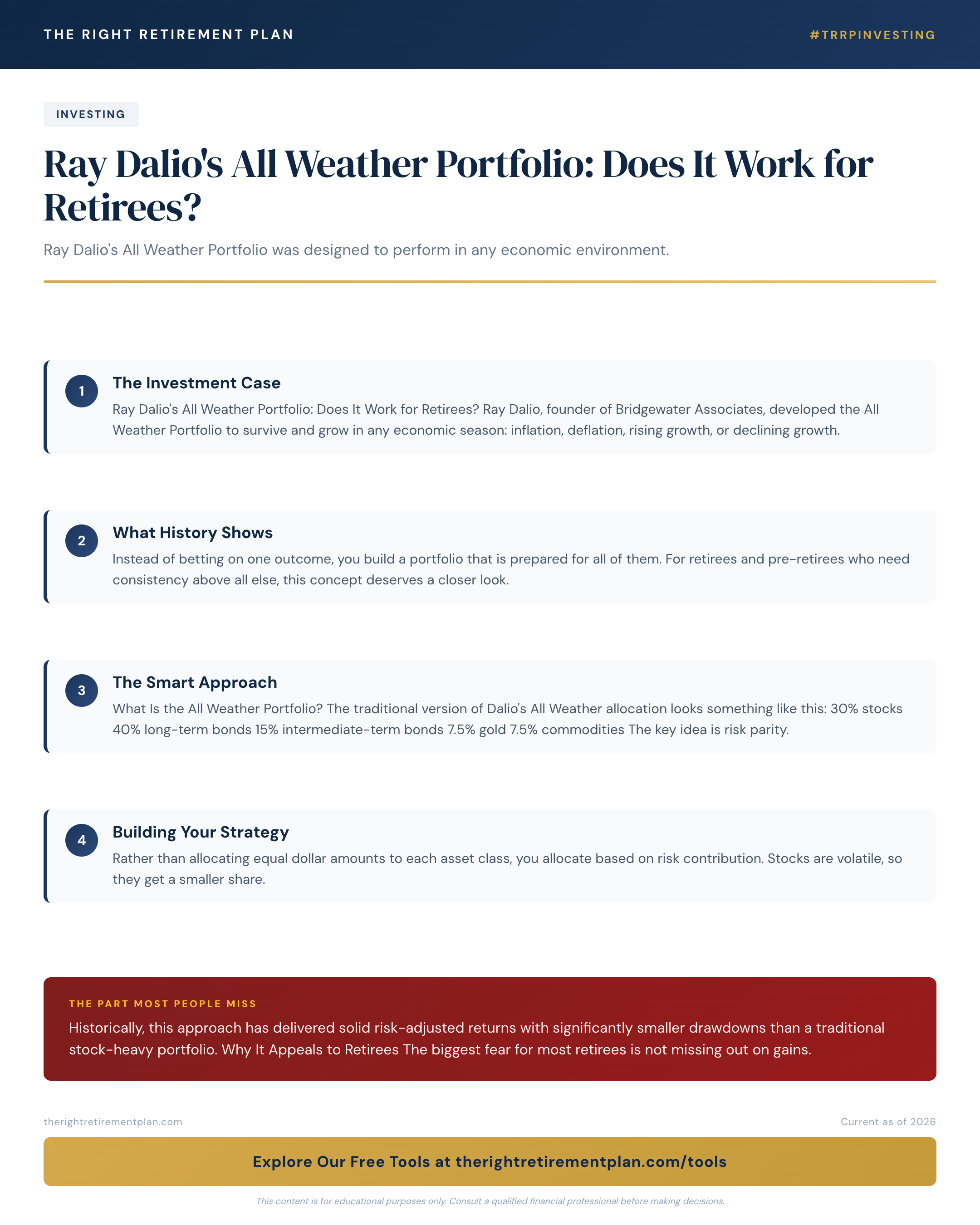
Ray Dalio's All Weather Portfolio: Does It Work for Retirees?

Ray Dalio's All Weather Portfolio: Does It Work for Retirees?

Ray Dalio's All Weather Portfolio was designed to perform in any economic environment. But does a strategy built by one of the world's largest hedge funds translate to the needs of everyday retirees? Here is what you should know before applying risk parity to your retirement savings.
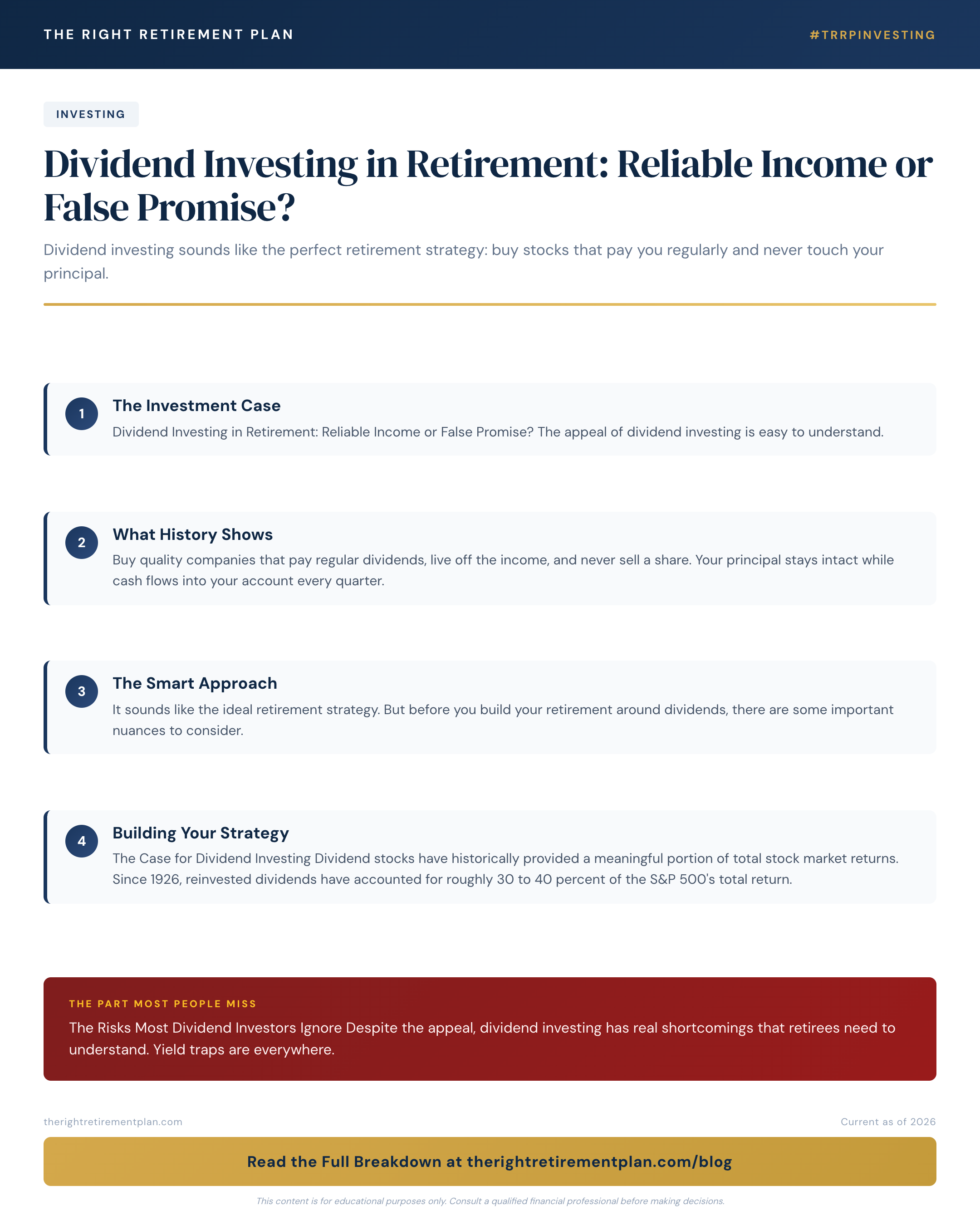
Dividend Investing in Retirement: Reliable Income or False Promise?

Dividend Investing in Retirement: Reliable Income or False Promise?

Dividend investing sounds like the perfect retirement strategy: buy stocks that pay you regularly and never touch your principal. But the reality is more complicated than the sales pitch. Here is what retirees need to understand before building a dividend-focused portfolio.

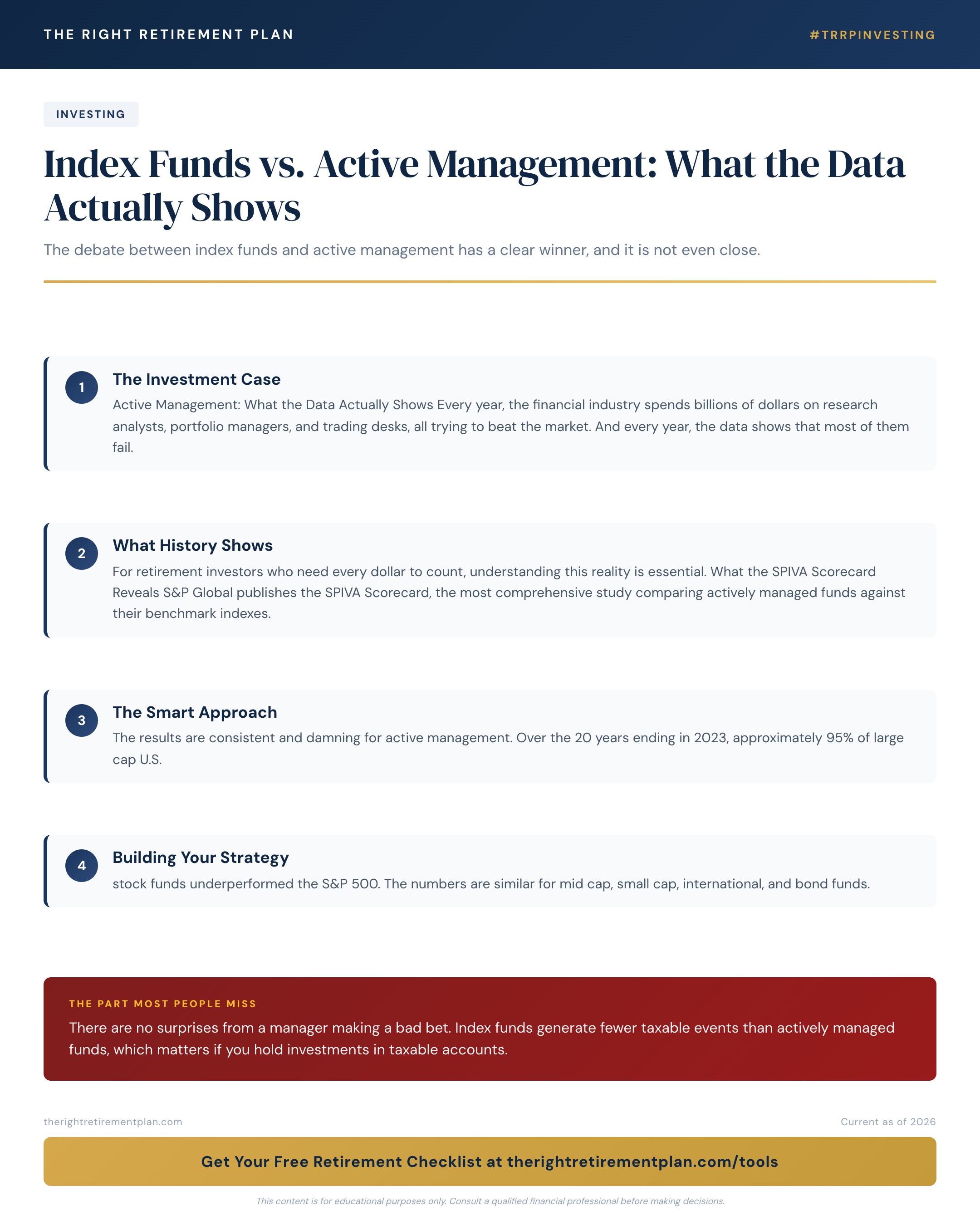
Index Funds vs. Active Management: What the Data Actually Shows

Index Funds vs. Active Management: What the Data Actually Shows

The debate between index funds and active management has a clear winner, and it is not even close. Here is what decades of data reveal about fund performance and why the cost difference matters even more when you are investing for retirement income.

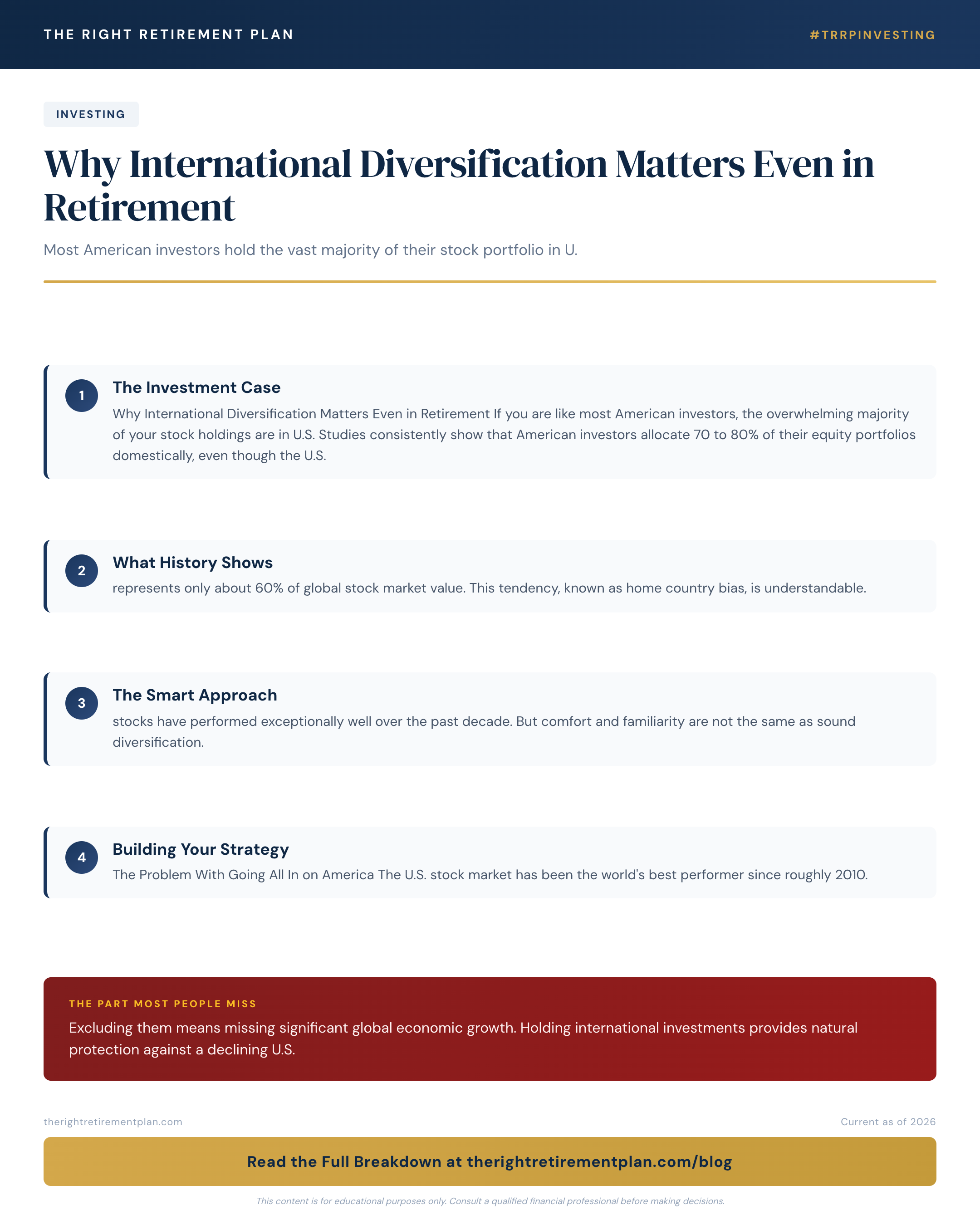
Why International Diversification Matters Even in Retirement

Why International Diversification Matters Even in Retirement

Most American investors hold the vast majority of their stock portfolio in U.S. companies. That home country bias may feel comfortable, but it introduces a concentration risk that could cost you dearly in retirement. Here is why going global still matters after 60.

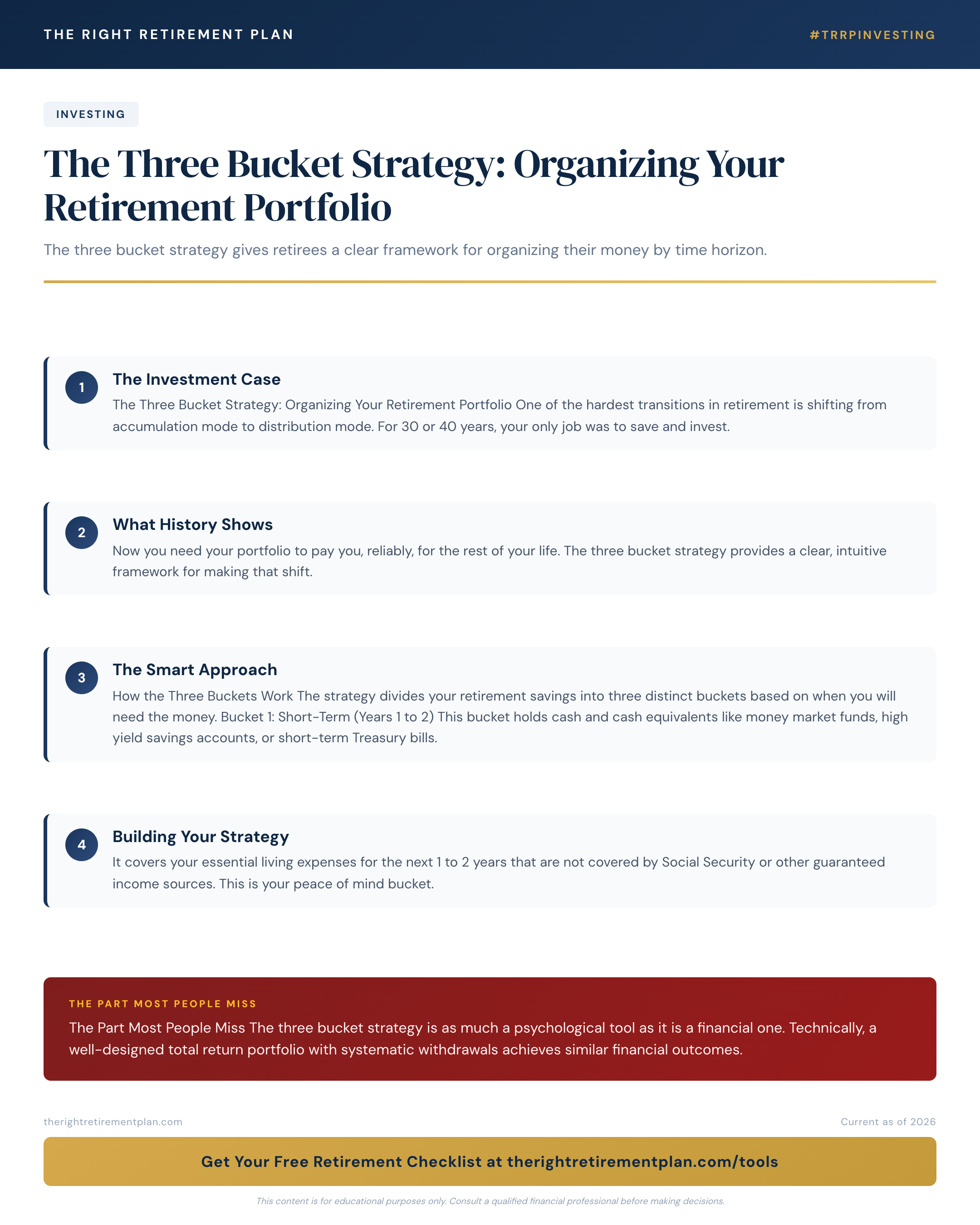
The Three Bucket Strategy: Organizing Your Retirement Portfolio

The Three Bucket Strategy: Organizing Your Retirement Portfolio

The three bucket strategy gives retirees a clear framework for organizing their money by time horizon. By separating short-term spending from long-term growth, you can weather market downturns without disrupting your income or your sleep.

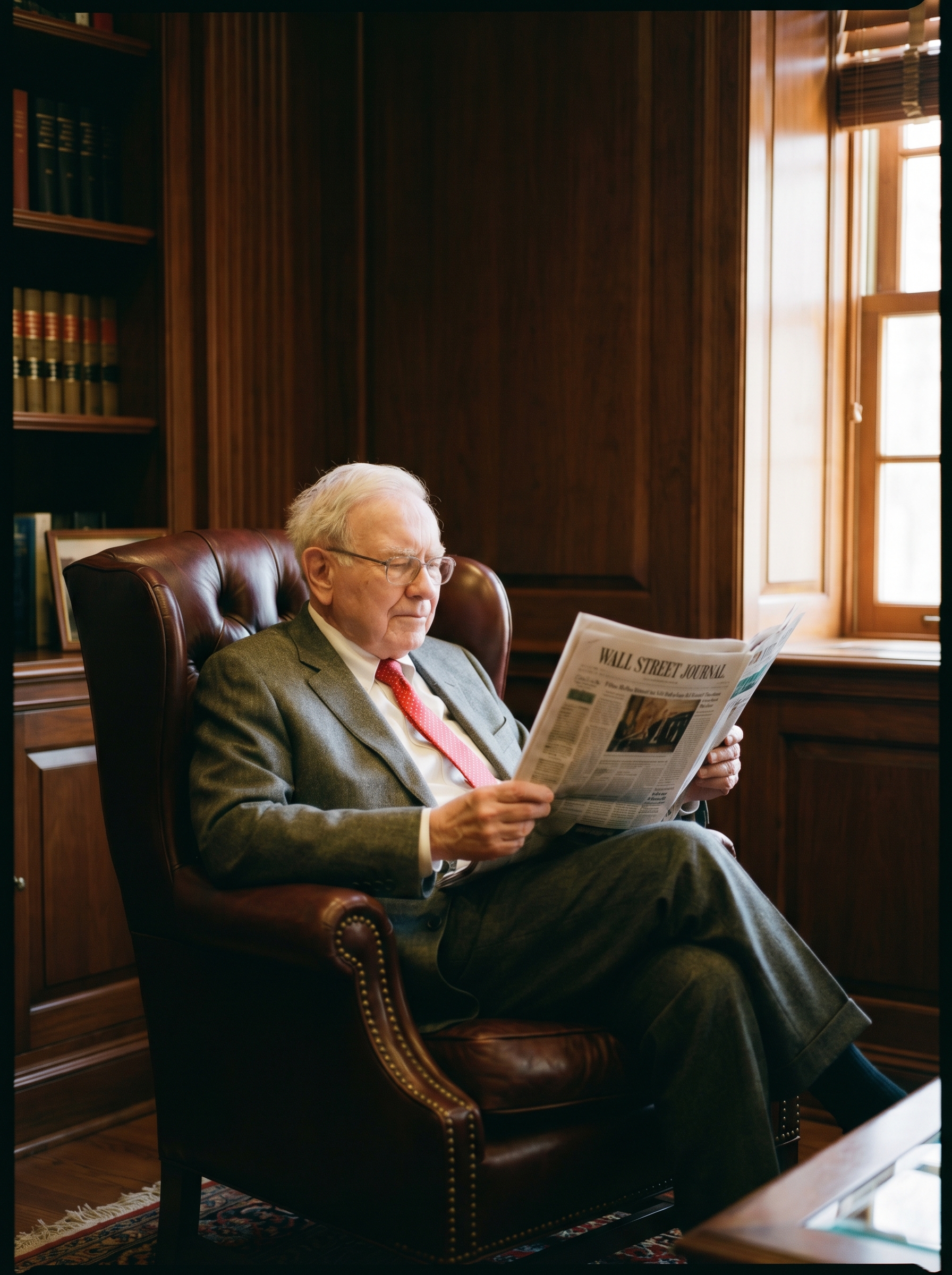
Warren Buffett's Rules for Retirement Investors

Warren Buffett's Rules for Retirement Investors

Warren Buffett has spent decades building wealth with a handful of timeless principles. Here is how his buy and hold philosophy, margin of safety thinking, and circle of competence framework apply directly to investors who are 5 to 10 years from retirement.

The 60/40 Portfolio Is Not Dead: Why Balanced Investing Still Works

The 60/40 Portfolio Is Not Dead: Why Balanced Investing Still Works

After a brutal 2022 for both stocks and bonds, headlines declared the 60/40 portfolio dead. But decades of evidence say otherwise. Here is why balanced investing remains one of the most sensible approaches for pre-retirees building a retirement income plan.

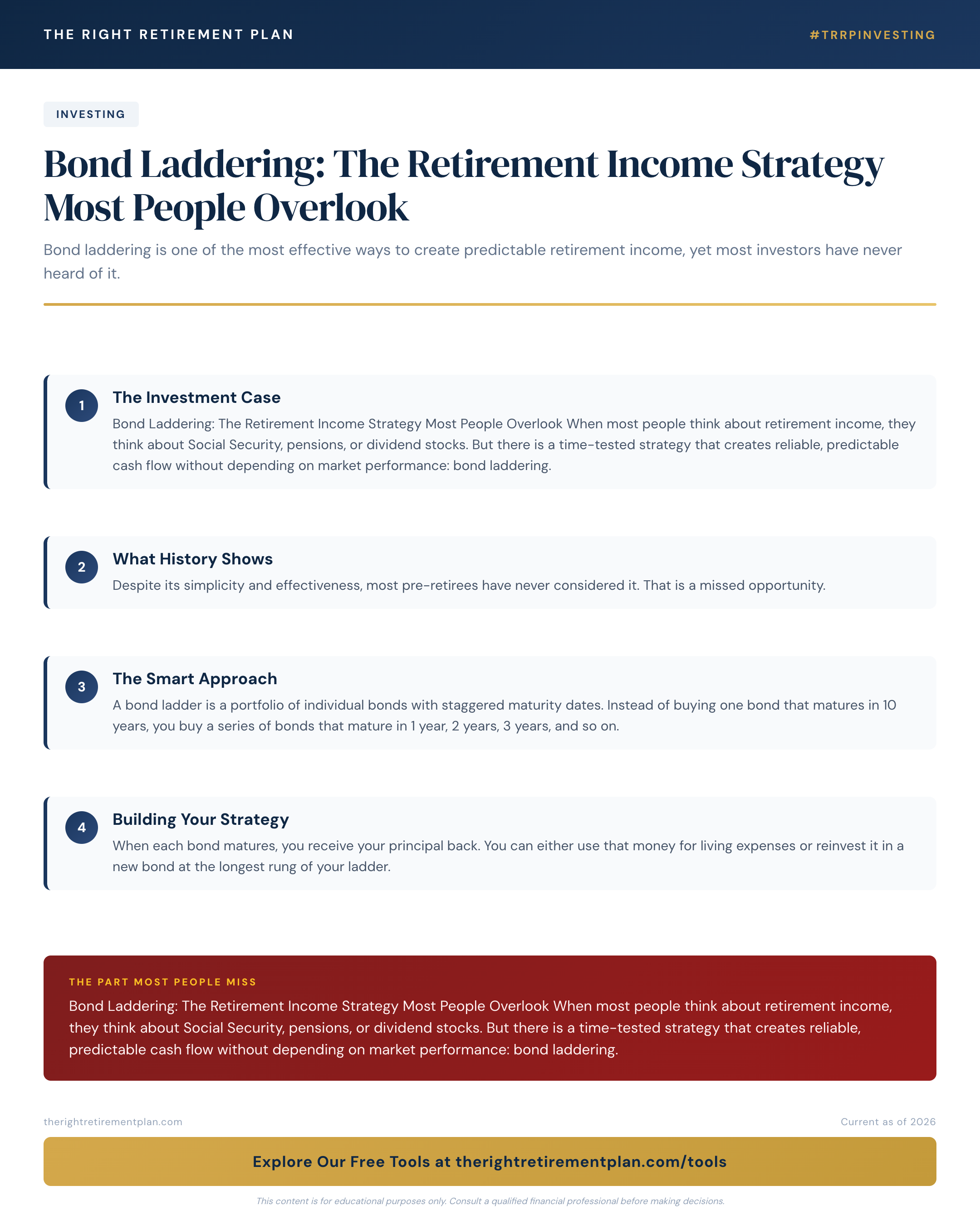
Bond Laddering: The Retirement Income Strategy Most People Overlook

Bond Laddering: The Retirement Income Strategy Most People Overlook

Bond laddering is one of the most effective ways to create predictable retirement income, yet most investors have never heard of it. Here is how this straightforward strategy works and why it deserves a place in your retirement income plan.

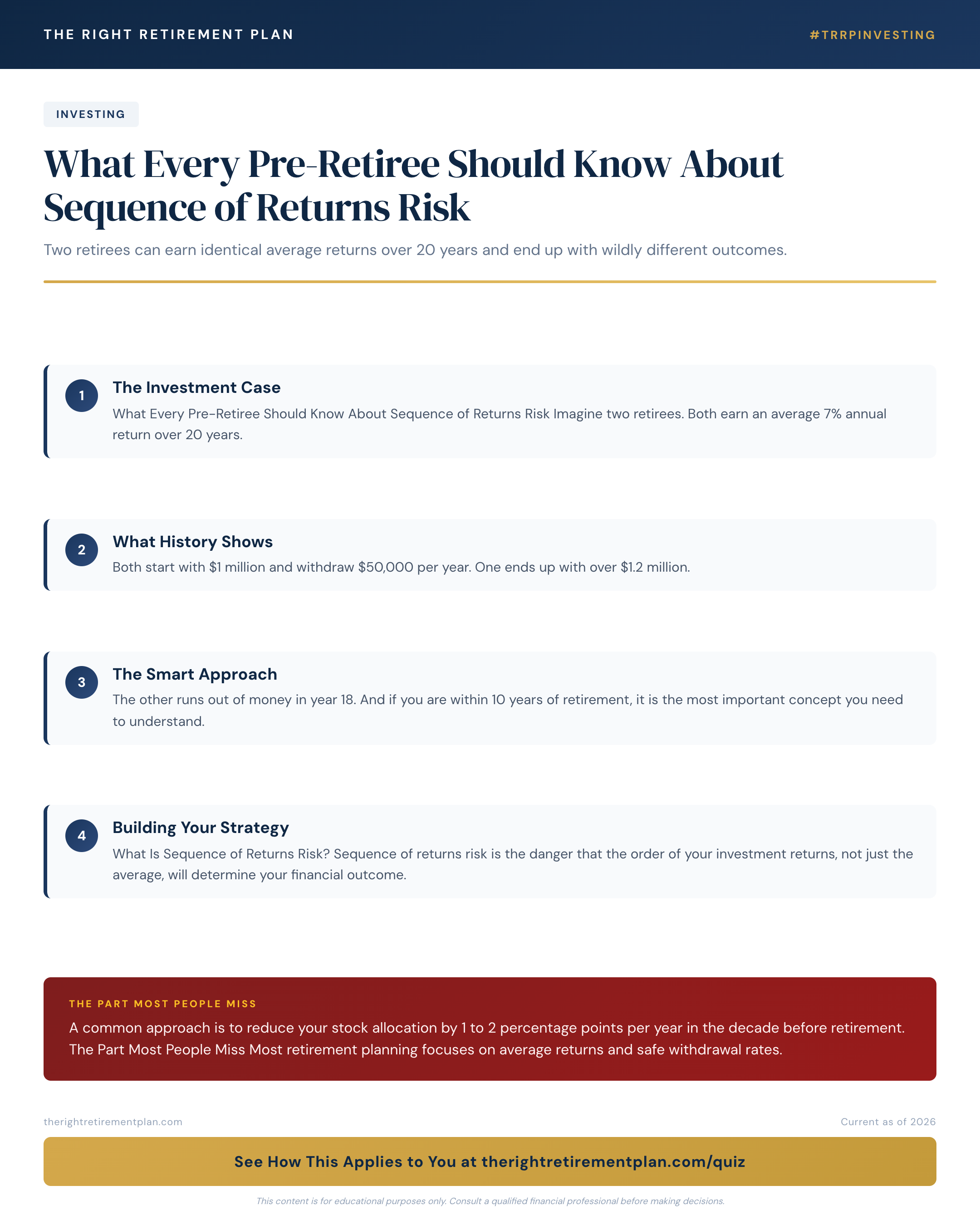
What Every Pre-Retiree Should Know About Sequence of Returns Risk

What Every Pre-Retiree Should Know About Sequence of Returns Risk

Two retirees can earn identical average returns over 20 years and end up with wildly different outcomes. The difference is sequence of returns risk, and it is the single biggest threat to early retirement portfolios. Here is how it works and how to protect yourself.

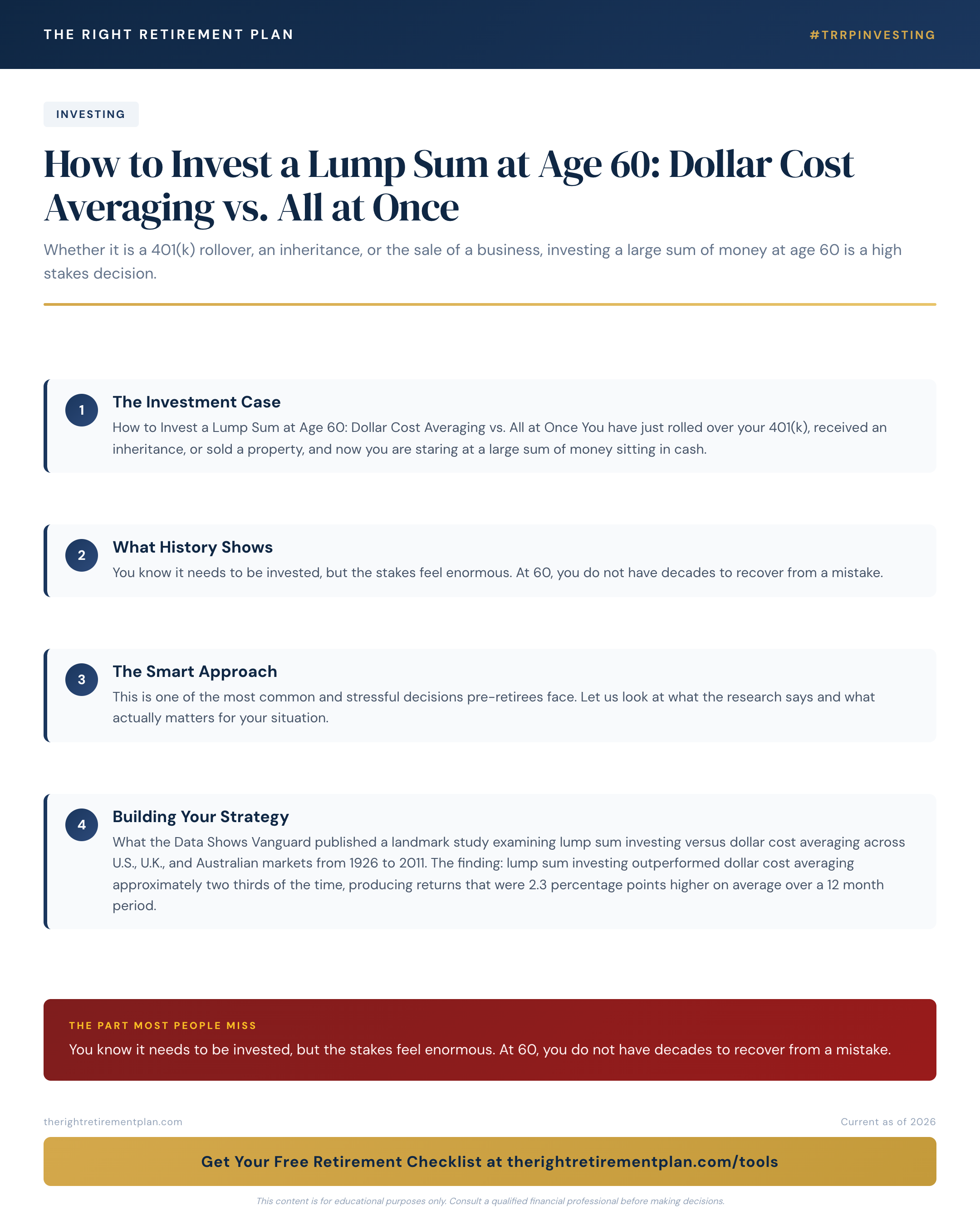
How to Invest a Lump Sum at Age 60: Dollar Cost Averaging vs. All at Once

How to Invest a Lump Sum at Age 60: Dollar Cost Averaging vs. All at Once

Whether it is a 401(k) rollover, an inheritance, or the sale of a business, investing a large sum of money at age 60 is a high stakes decision. Research shows that lump sum investing wins more often, but dollar cost averaging might still be the right choice. Here is why.

Frequently Asked Questions

Common questions about investing, answered in plain English.

Key Terms

Financial concepts related to investing.

Ready to see how investing fits your plan?

Take the free Retire Ready Score assessment and see where your retirement strategy stands.

Take the Free Assessment